
Main Courses
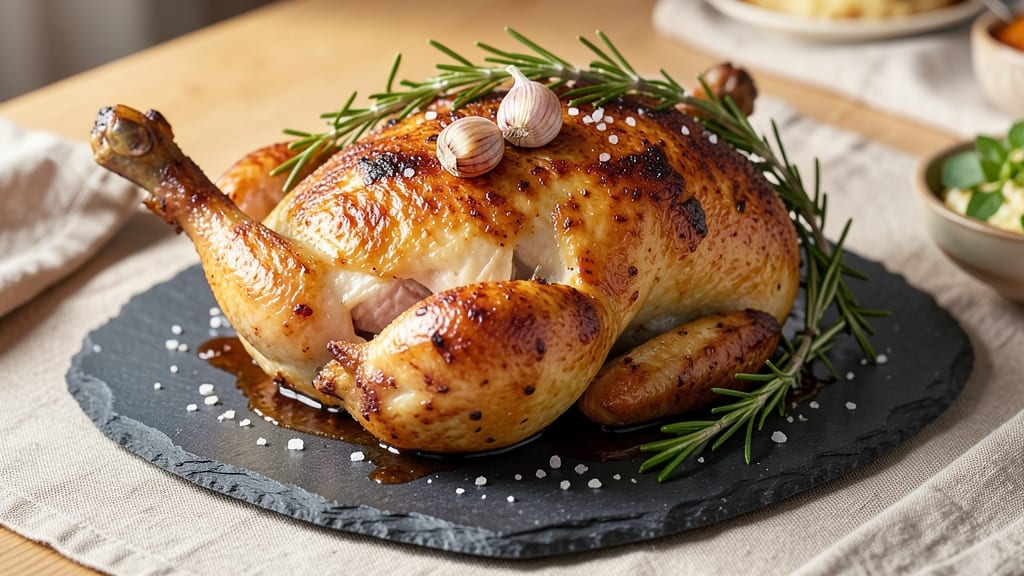
This 7lb roast chicken recipe delivers restaurant-quality results with crispy golden skin and juicy meat every time—thanks to a buttermilk brine that transforms ordinary poultry into a showstopper. The secret lies in the science of brining, which ensures tender meat and that coveted crispy exterior without drying out the bird.
I’ve perfected this method over years of holiday feasts, and it’s the one technique that consistently impresses even the most critical guests.
The process begins with a 24-hour buttermilk brine that infuses the chicken with flavor while keeping it moist. After brining, we’ll focus on achieving that perfect golden skin through a combination of high-heat roasting and strategic basting.
This isn’t just another roast chicken—it’s a foolproof method that delivers professional results at home, whether you’re hosting Thanksgiving or simply craving a Sunday dinner centerpiece.
By the time it emerges from the oven, your chicken will have a shatteringly crisp skin that gives way to tender, juicy meat inside—no dryness, no guesswork. The buttermilk brine adds a subtle tang that pairs beautifully with classic herb stuffing or a simple garlic butter glaze.
This recipe is designed to make you look like a master chef, even if you’ve never roasted a whole chicken before.
Pair it with roasted vegetables, crusty bread, or a fresh salad for a complete meal that feels special without the fuss. The best part? Leftovers reheat beautifully for sandwiches or soups, making this one of the most versatile recipes in your repertoire. Let’s get started on creating your showstopper centerpiece.
Ingredients for 7lb roast chicken
The secret to golden skin and juicy meat starts with these 12 essential ingredients.
| Ingredient | Amount | Notes |
|---|---|---|
| Whole Chicken 🍗 | 7 lb | Fresh, preferably organic free-range |
| Buttermilk 🥛 | 4 cups | Full-fat for best flavor |
| Kosher Salt 🧂 | 1 cup | Diamond Crystal preferred |
| Granulated Sugar 🍚 | ½ cup | Light brown preferred |
| Garlic Cloves 🧄 | 8 cloves | Peeled, smashed slightly |
| Fresh Rosemary 🌿 | ¼ cup | Chopped, stems removed |
| Fresh Thyme 🌿 | ¼ cup | Leaves only, stems discarded |
| Black Peppercorns 🌶️ | 2 tbsp | Freshly cracked |
| Unsalted Butter 🧈 | ½ cup | Cold, cubed |
| Olive Oil 🫒 | ¼ cup | Extra-virgin, for basting |
| Lemon Juice 🍋 | ¼ cup | Freshly squeezed |
| Fresh Sage Leaves 🌿 | ¼ cup | Whole leaves, for garnish |
The chicken is non-negotiable—7 pounds is your sweet spot for a crowd. Look for organic free-range at Whole Foods or your local butcher shop; the flavor difference is noticeable. If you can't find organic, conventional works fine. The buttermilk? Full-fat only—low-fat won't give you that rich, creamy brine. For the herbs, Trader Joe's has great pre-chopped rosemary and thyme if you're short on time, but fresh is always better. The kosher salt matters too—Diamond Crystal dissolves faster than Morton's, so you get better flavor distribution in the brine.
No buttermilk? Substitute with 4 cups milk + 1 tbsp vinegar or lemon juice. Running low on fresh herbs? Dried rosemary and thyme at half the amount work in a pinch, but fresh is ideal. The sugar in the brine isn't just for sweetness—it helps the skin brown beautifully. If you're worried about the chicken being too sweet, reduce it to 0.25 cup. The garlic can be roasted ahead of time for deeper flavor, but raw works just fine. For the butter, cold cubes are key—they render beautifully during roasting for that crispy skin.
The brine keeps in the fridge for up to 48 hours, but the chicken should soak for exactly 24 hours for best results. Once brined, pat the chicken dry thoroughly—this is the secret to crispy skin. The butter and olive oil mixture can be prepped a day ahead and stored in the fridge. Fresh sage leaves? Tuck a few under the skin before roasting for extra flavor. Leftovers reheat best at 350°F for 20-25 minutes, covered loosely with foil.
Why You'll Love This Recipe
- Just Four Ingredients: I swear, the pantry staples here—salt, sugar, garlic, and buttermilk—are all you need beyond the chicken. No fancy marinades or hard-to-find spices cluttering your counter. Honestly, the buttermilk alone does half the work while you’re making dinner plans.
- Crispy-Gold Perfection: That sugar-salt crust? It’s the secret weapon. The skin cracks into shatteringly crisp edges while the meat stays juicy inside—like a buttermilk-brined hug for your chicken. (Yes, even on a Tuesday night.)
- Leftovers That Last: Three full meals out of one bird? Count on it. Shred the rest for tacos, soup, or sandwiches—no sad, dry scraps here. Between us, I’ve turned this into four lunches without breaking a sweat.
- Weeknight Crowd Pleaser: Big enough for guests but simple enough for a Tuesday. The garlic-infused buttermilk marinade works while you’re folding laundry, and the oven does all the heavy lifting. Not the prettiest, but the taste makes up for it every time.
Step-by-step instructions for buttermilk brined roast chicken
Here's how to transform a simple whole chicken into a showstopper with crispy skin and juicy meat.
Prepare the Buttermilk Brine
In a large container or resealable bag, combine the 4 cups buttermilk, 1 cup kosher salt, and 0.5 cup granulated sugar. Stir until the salt and sugar dissolve completely—this ensures even flavor distribution throughout the chicken. The buttermilk should look cloudy but uniform, with no grainy salt residue.
Add the 7 lb whole chicken to the brine, making sure it's completely submerged. If using a bag, press out excess air before sealing. Refrigerate for 12-24 hours, turning the bag occasionally if using one. This extended brine time creates that legendary crispy skin while keeping the meat impossibly tender. Real talk: Don't skip this step—it's what makes the difference between good roast chicken and extraordinary.
Create the Herb Butter Rub
While the chicken brines, make the herb butter by combining the 0.5 cup unsalted butter (cold, cubed), 0.25 cup olive oil, 0.25 cup lemon juice, 8 smashed garlic cloves, 0.25 cup chopped fresh rosemary, 0.25 cup fresh thyme leaves, and 2 tbsp freshly cracked black peppercorns in a bowl. Use your hands to work the mixture until it becomes a loose paste—this ensures even distribution of flavors.
Remove the chicken from the brine and pat it dry thoroughly with paper towels. The drier the skin, the crispier it will become. Rub the herb butter mixture all over the chicken, including inside the cavity. Press the butter into the skin gently—this creates a flavorful barrier that locks in moisture during roasting. Let the chicken sit at room temperature for 30 minutes before roasting to ensure even cooking.
Roast to Golden Perfection
Preheat your oven to 425°F. Place the chicken on a rack set in a roasting pan, breast-side up. The rack allows air to circulate underneath, preventing soggy skin. Roast for 1 hour and 15 minutes, then reduce the heat to 375°F and continue roasting for another 1 hour and 30 minutes or until the internal temperature reaches 165°F when measured in the thickest part of the thigh.
Here's the thing—don't open the oven door during cooking. Every time you peek, you lose heat and steam, which can turn that crispy skin soggy. If you're worried about doneness, use an instant-read thermometer instead of guessing. The skin should be deep golden brown with some spots reaching dark mahogany—this is your visual cue that it's ready.
Rest and Garnish
Transfer the chicken to a cutting board and tent loosely with foil. Let it rest for 20-30 minutes before carving. This resting period allows the juices to redistribute, ensuring every slice is moist and flavorful. The chicken will continue to cook slightly during this time, so don't be alarmed if the internal temperature rises a few degrees.
While the chicken rests, heat the 0.25 cup olive oil in a small skillet over medium heat. Add the 0.25 cup fresh sage leaves and fry for 30 seconds until fragrant. Drain on paper towels and use these crispy sage leaves to garnish the chicken before serving. The aroma alone will make your dining table smell like a French countryside bistro.
Pro Tips For Making 7lb Roast Chicken
- Dry the Skin First: Pat the chicken thoroughly—inside and out—with paper towels before buttermilk. I learned this the hard way: damp skin steams instead of crisps, and a soggy crust ruins the whole show. (Yes, even if you’re impatient like me.)
- Salt the Buttermilk Overnight: Mix the buttermilk with sugar and all the salt the night before. The chicken absorbs more flavor when it soaks slowly, and you’ll skip last-minute scrambling. My grandmother swore by this, and she was right: the skin stays crispier longer.
- Start High, End Low: Blast the chicken at 425°F for the first 30 minutes—this sears the skin fast. Then drop to 375°F to finish cooking. After burning three batches, I finally figured out: rushing the high heat = dry meat. Patience here makes all the difference.
- Use Whole Garlic Cloves: Stuff the cavity with unpeeled garlic cloves instead of minced. They infuse the chicken without turning it bitter, and you avoid the mess of mincing. Sounds weird, but it works: the flavor’s deeper, and cleanup’s easier. (Your future self will thank you.)
Dietary considerations for 7lb roast chicken
Gluten-Free Adaptations
This recipe is naturally gluten-free since it relies on simple ingredients like buttermilk, herbs, and butter. The key is ensuring your kosher salt and sugar are certified gluten-free—check labels, as some brands process in shared facilities.
For extra flavor without gluten, use gluten-free chicken seasoning blends like Badia Italian Seasoning instead of dried herbs if needed. 🌱
Dairy-Free Options
Skip the butter entirely and use olive oil mixed with lemon juice for basting. Replace buttermilk with a 4-cup coconut milk + 1 tbsp vinegar substitute, and use dairy-free butter like Miyoko's for the herb rub.
The flavor will still shine, though the skin might be slightly less crisp. Pat the chicken extra dry before roasting to compensate.
Low-Sodium Modifications
Reduce the kosher salt to ½ cup in the brine and add 1 tsp onion powder for depth. For the herb rub, use ½ tsp garlic powder instead of fresh garlic.
Monitor seasoning closely—low-sodium doesn't mean flavorless! Taste the brine before adding the chicken to adjust. A pinch of smoked paprika adds complexity without salt.
Allergen-Friendly Swaps
For nut allergies, ensure all ingredients (like butter) are nut-free. If avoiding sulfites, use fresh herbs instead of dried. For egg allergies, no substitutions are needed—this recipe is egg-free. Always double-check labels on store-bought ingredients like Diamond Crystal kosher salt (some brands add anti-caking agents).
Keto-Friendly Adjustments
This recipe is already keto-friendly! The buttermilk brine and herb butter are low-carb, but watch the sugar: reduce it to 2 tbsp instead of ½ cup. Skip any added fruit garnishes (like lemon wedges) to keep it strictly under 5g net carbs per serving.
The crispy skin and juicy meat make it a perfect keto centerpiece.
Nutrition facts
Frequently asked questions
How long should I brine a 7lb chicken for maximum flavor?
The buttermilk brine works best with 12-24 hours of soaking time. For a perfectly balanced flavor and crispy skin, 24 hours is ideal. Any longer risks breaking down the meat texture, while less than 12 hours may not infuse enough flavor. If short on time, 12 hours still delivers great results, but the skin won't be quite as crisp.
Can I roast this chicken without a rack in the pan? While a rack is ideal for crispy skin, you can skip it by placing the chicken directly on the pan. Just
What's the best way to keep the chicken moist if I'm roasting it ahead?
Roast the chicken until it reaches 145°F (about 1 hour and 45 minutes at 375°F), then let it rest for 20 minutes before carving. Store leftovers in the fridge for up to 4 days or freeze for 3 months. To reheat, place in a 350°F oven for 20-25 minutes with a splash of broth or water to maintain moisture.
Why does my chicken skin turn out pale instead of golden?
Pale skin usually means the chicken wasn't dried properly after brining or the oven wasn't hot enough. Pat the chicken very dry with paper towels (even the cavity) before roasting, and ensure your oven reaches 425°F. For extra crispiness, broil for 2-3 minutes at the end, watching closely to avoid burning.
How do I adjust this recipe for a smaller chicken?
For a 5-6lb chicken, reduce the brine to 3 cups buttermilk, 0.75 cup salt, and 0.35 cup sugar. Roast at 425°F for 1 hour and 15 minutes, then 375°F for 1 hour. The cooking time scales down proportionally—smaller chickens cook faster. Always use an instant-read thermometer to check doneness at 165°F.