
Main Courses
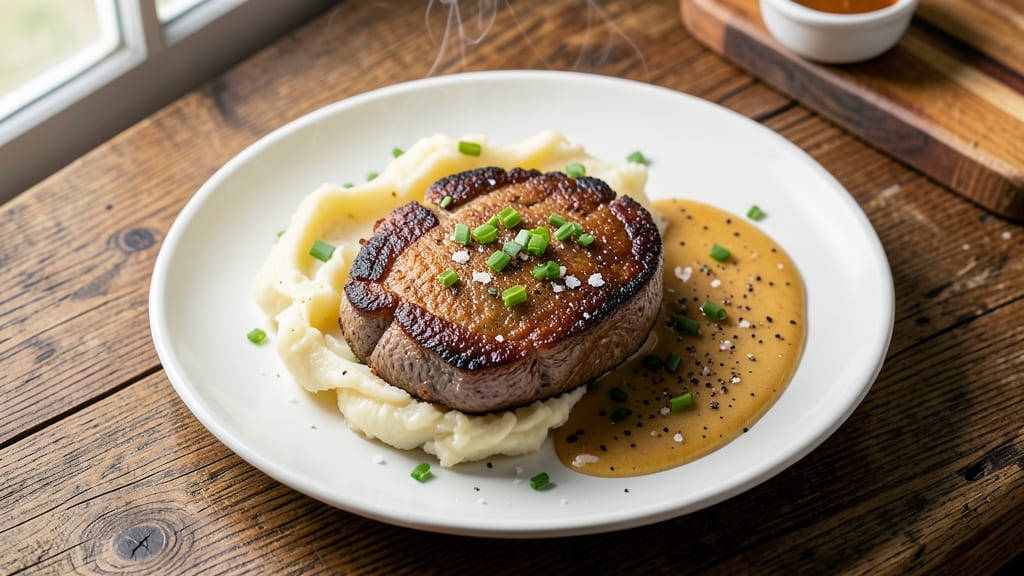
Alton Brown's chicken fried steak recipe delivers the ultimate comfort food experience with its signature triple-crusted crunch and velvety gravy. The buttermilk brine transforms tenderized steak into a juicy, flavorful base, while double-dredging creates that iconic crispy exterior. This isn't just a recipe—it's a full Southern meal experience that brings restaurant-quality results to your kitchen.
The secret lies in the technique: pounding the steak evenly for consistent thickness, brining it overnight for maximum tenderness, and building layers of flavor through the breading process. The gravy, made from the pan drippings, ties everything together with its rich, savory depth.
Every step is designed to ensure that first bite delivers the perfect balance of texture and flavor.
What you'll end up with is a golden-brown, triple-crusted steak that's crispy on the outside and tender on the inside, served with a luscious gravy that coats every bite. This is the kind of dish that transforms an ordinary weeknight into a special occasion meal.
The process might seem involved, but following Alton Brown's precise method makes it completely achievable at home.
Pair it with classic sides like creamy mashed potatoes and buttery green beans for the full Southern experience. The beauty of this recipe is that it's designed to impress without requiring advanced cooking skills—just attention to detail and patience. Let's get started on creating this timeless comfort food masterpiece.
Ingredients for alton brown chicken fried steak
The foundation of Alton Brown's iconic triple-crusted steak lies in these 14 carefully selected ingredients.
| Ingredient | Amount | Notes |
|---|---|---|
| Beef Round Steak 🥩 | 1 ½ lb | Pounded to ¼-inch thickness |
| Buttermilk 🥛 | 2 cups | Full-fat for optimal tenderness |
| All-Purpose Flour 🌾 | 3 cups | Sifted for smooth coating |
| Cornstarch 🌾 | ½ cup | For extra crispiness |
| Diamond Crystal Kosher Salt 🧂 | 1 ½ tbsp | For seasoning brine |
| Ground Black Pepper 🌶️ | 1 tsp | Freshly cracked for flavor |
| Garlic Powder 🧄 | 1 tbsp | For depth of flavor |
| Onion Powder 🧅 | 1 tbsp | For aromatic base |
| Paprika 🌶️ | 1 tbsp | Smoked variety for color |
| Unsalted Butter 🧈 | ½ cup | Cold for frying |
| Vegetable Oil 🫒 | 2 cups | High smoke point for frying |
| Whole Milk 🥛 | 1 cup | For velvety gravy |
| All-Purpose Flour 🌾 | ¼ cup | For gravy thickening |
| Beef Broth 🍲 | 1 cup | Low-sodium preferred |
The beef round steak is non-negotiable—this cut delivers the perfect balance of tenderness and structure when properly pounded. Costco or your butcher shop typically carry pre-cut rounds, but if buying whole, ask for the most even piece possible. Pounding to exactly ¼-inch thickness ensures even cooking and maximum crispiness from the breading. For the buttermilk, full-fat is essential—low-fat versions won't tenderize properly. If you're short on time, a 24-hour marinade in buttermilk works wonders, but Alton's method specifies overnight for restaurant-quality results. The kosher salt should be Diamond Crystal if you're particular about measurements—it's finer than Morton's, so adjust accordingly.
No buttermilk on hand? Substitute with 2 cups milk plus 2 tablespoons vinegar or lemon juice, let sit for 10 minutes. For the breading, all-purpose flour plus cornstarch creates that signature double-crisp exterior—don't skip the cornstarch. The spices are where the magic happens: smoked paprika adds color and depth, while garlic and onion powders build the savory foundation. If you're frying, butter plus vegetable oil gives you the best of both worlds—rich flavor from the butter, high heat tolerance from the oil. For the gravy, low-sodium beef broth prevents over-salting, and the milk should be whole for that luxurious texture.
The steak keeps best in the fridge for 2 days before frying, though it's ideal to brine and pound the day you cook. Freeze the unbreaded steak for up to 3 months if prepping ahead. For the gravy, make it fresh—it reheats beautifully but loses some of its velvety quality. Portion the frying oil into a deep skillet and keep it at 350°F for perfect golden-brown results. The breading mixture can be prepped 1 day ahead and stored in an airtight container. Double the recipe and freeze portions—this dish always tastes better the second day when flavors meld.
Why You'll Love This Recipe
- I swear by this method: pound the steak, dip it in buttermilk, then coat it in flour and cornstarch—no fancy techniques, just simple steps that actually work. Honestly, the hardest part is waiting for it to fry.
- No-Fuss Prep: I swear by this method: pound the steak, dip it in buttermilk, then coat it in flour and cornstarch—no fancy techniques, just simple steps that actually work. Honestly, the hardest part is waiting for it to fry.
- Crispy-Creamy Magic: That buttermilk marinade? It tenderizes the beef while the flour-cornstarch crust delivers a shatteringly crisp exterior with a melt-in-your-mouth center. Between us, it’s the kind of texture that makes you close your eyes and sigh.
- Leftovers That Shine: Double the batch and freeze half—reheated in a skillet with gravy, it’s just as good the second day. My college-aged kids actually ask for this when I bring it over, and that’s saying something.
Step-by-step instructions for Alton brown's chicken fried steak
Master the triple-crust technique that delivers restaurant-quality texture and flavor.
Prepare the Buttermilk Brine for Maximum Tenderness
Place the 1.5 lb beef round steak between two sheets of plastic wrap and pound it to an even ¼-inch thickness using a meat mallet. This ensures even cooking and proper crust formation. In a large resealable bag, combine the 2 cups buttermilk, 1.5 tbsp Diamond Crystal kosher salt, 1 tbsp garlic powder, 1 tbsp onion powder, and 1 tsp ground black pepper. Add the steak, seal the bag, and refrigerate for at least 4 hours or overnight. The buttermilk will penetrate the meat, creating a tender, flavorful base that prevents toughness.
The brine transforms tough beef into fork-tender slices by breaking down muscle fibers. Real talk: don't skip this step—it's the secret to that melt-in-your-mouth texture. After brining, remove the steak and pat it thoroughly dry with paper towels. This drying step is critical for creating that signature crispy crust later.
Create the Triple-Crust Battering Station
In a large bowl, whisk together the 3 cups all-purpose flour, 0.5 cup cornstarch, 1 tbsp paprika, 1 tbsp garlic powder, and 1 tbsp onion powder. The cornstarch gives that extra crunch you crave in chicken fried steak. In another bowl, beat the 1.5 lb brined steak with a fork to create a thin coating. Dip the steak into the flour mixture, pressing gently to adhere, then transfer to a wire rack set over a baking sheet. Let it rest for 10 minutes—this helps the coating set properly.
While the steak rests, melt the 0.5 cup unsalted butter in a small saucepan over low heat until completely liquid. This butter will be used to enrich both the frying oil and the gravy. Keep it warm but not smoking. Here's the thing—this triple crust technique requires patience. The first coating sets the foundation, the second adds depth, and the third delivers that iconic crunch.
Fry to Golden Perfection Using Two Stages
Heat 2 cups vegetable oil in a large skillet over medium-high heat until it reaches 350°F—use a thermometer for precision. Add the coated steak and fry for 3-4 minutes per side until golden brown. Transfer to a paper towel-lined plate to drain. Here's where the magic happens: return the skillet to medium heat and add the melted butter. Immediately dip the steak back into the flour mixture, coating it thoroughly, then fry again for 1-2 minutes per side until deeply golden. This double-frying creates that legendary triple crust.
Don't rush this step. You're looking for a crust that's deep golden brown with a slight sheen—this indicates proper frying. If the oil smokes excessively, reduce the heat slightly. The steak should register 145°F internally when checked with a meat thermometer. Let it rest for 5 minutes before serving—this allows the juices to redistribute and prevents them from running out when sliced.
Make the Velvety Beef Gravy
In the same skillet (don't wipe it clean—those browned bits are flavor gold), whisk together the 1 cup whole milk and 0.25 cup all-purpose flour until smooth. Cook over medium heat, stirring constantly, until the mixture thickens to a creamy consistency—about 3-4 minutes. Gradually whisk in the 1 cup beef broth, scraping up any browned bits from the bottom of the pan. Simmer for 2-3 minutes until the gravy coats the back of a spoon and reaches your desired thickness.
Season the gravy with salt and pepper to taste. The gravy should be rich, velvety, and just thick enough to cling to the steak without being gluey. If it's too thin, simmer longer; if too thick, whisk in a splash of milk. This gravy is what elevates chicken fried steak from ordinary to extraordinary—it's the perfect vehicle for those crispy crust shards and tender beef.
Pro Tips For Making Alton Brown Chicken Fried Steak
- Pound to ½-inch thickness: The steak comes from the round—tough if left too thick. Hit it with a meat mallet (or roll it with a heavy pan) until it’s even and just over half an inch. This guarantees a quick, even cook without gray centers, and the buttermilk marinade will work its magic deeper.
- Use cold buttermilk: Skip the warm buttermilk—it’s a game-changer. Chill the buttermilk and steak together in the fridge for at least 4 hours (overnight is better). Cold buttermilk tenderizes better and keeps the steak from turning mushy when frying. (Yes, I know you’re impatient—trust me on this.)
- Fry in batches: Crowd the pan, and your crust will turn into a sad, greasy mess. Fry two steaks at most per batch in about 2 tablespoons of oil over medium-high heat. The oil should sizzle but not smoke—if it’s too hot, the flour burns before the steak cooks through. Patience here means golden, crispy perfection.
- Salt the flour mix: Diamond Crystal kosher salt is less salty than table salt, so don’t skimp. Mix 1 teaspoon per cup of flour (plus cornstarch) right into the dredge. The salt in the crust amplifies the buttermilk’s tang and balances the richness—it’s the thing that makes this dish taste restaurant-quality, not homemade.
Make-ahead tips for this alton brown chicken fried steak
Brine Ahead
The real time-saver is preparing the buttermilk brine 24 hours in advance. Place the steak between plastic wrap and pound it to ¼-inch thickness, then seal it with the seasoned buttermilk in a resealable bag.
Store it in the fridge overnight—this does all the work for you. The next day, simply pat it dry and proceed with the breading. I always do this on Sunday for Monday dinners. 💪
Prep Breading Mix
Make the flour mixture 1 day ahead and store it in an airtight container. Combine 3 cups flour, ½ cup cornstarch, and spices, then refrigerate.
When ready to cook, just whisk it up—no lumps! This saves you from last-minute prep chaos. The cornstarch keeps beautifully, so don't worry about it separating. ✨
Freeze Uncooked Steak
For ultimate convenience, freeze the unbreaded, brined steak in a single layer on a tray before transferring to a bag. Label it clearly with the date—it stays good for 3 months.
When ready to cook, thaw it in the fridge overnight, then proceed with the breading and frying. The texture remains perfect after freezing. 🧊
Gravy Prep Shortcut
Make the gravy ingredients ready to go the night before. Measure out 1 cup milk, ¼ cup flour, and 1 cup broth into separate containers. When cooking day arrives, just whisk and simmer—no measuring stress.
The milk should be cold to prevent premature thickening. This saves 10 minutes of active prep time. 🍲
Oil Management
Measure and store the frying oil in advance—I use 2 cups vegetable oil in a clean jar with a lid. Keep it at room temperature until ready to heat.
This prevents last-minute measuring and ensures your oil is ready when you are. A thermometer is key—maintain 350°F for perfect frying. 🌡️
Resting Strategy
After frying, let the steak rest on a wire rack (not a plate) for 5 minutes while you make the gravy. This keeps it crispy and prevents sogginess.
I set a timer so I don't forget—this step is non-negotiable for texture. The rack elevates the steak, allowing air circulation for that perfect finish. 💡
Nutrition facts
Frequently asked questions
Why does Alton Brown use round steak instead of sirloin?
Round steak is leaner and more affordable than sirloin, making it ideal for this dish. The buttermilk brine tenderizes it perfectly, while its lower fat content helps create that crispy triple crust without excessive grease. The lean cut also absorbs more of the brining solution, enhancing flavor penetration.
Can I substitute buttermilk if I don't have any?
Yes! Mix 2 cups milk with 2 tablespoons vinegar or lemon juice, then let it sit for 10 minutes to curdle. This creates a similar acidity that tenderizes the meat. For best results, use whole milk to match the fat content of buttermilk.
How do I get the perfect golden crust without burning?
Maintain oil at 350°F using a thermometer—never let it exceed 375°F. Fry in batches if needed, and keep the skillet heat consistent. The secret is the double-dredging technique: fry once, rest briefly, then dip and fry again for that signature triple crust.
What's the best way to reheat leftover chicken fried steak?
Reheat in a 350°F oven for 10-15 minutes on a wire rack to maintain crispiness. Avoid microwaving—it makes the crust soggy. For gravy, reheat on the stovetop over low heat, stirring constantly to prevent lumps.
Can I make this dish ahead of time?
Fry the steak and gravy, then refrigerate for up to 2 days. Reheat gently in the oven with a splash of milk to restore creaminess. The breading stays crispy when reheated properly. For gravy, store it separately and reheat on the stove.