
Main Courses
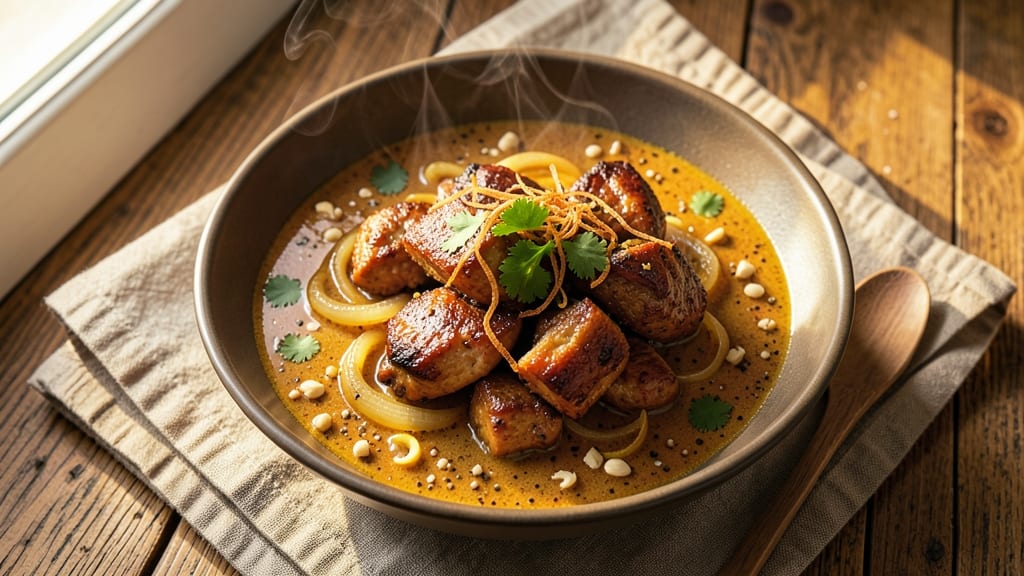
This American chicken curry recipe delivers restaurant-quality spice and creaminess without the fuss of traditional curry-making. The secret lies in a one-pot method that builds deep, aromatic flavors while keeping the sauce velvety and rich—no heavy cream required.
I perfected this after years of testing, balancing American comfort food with authentic curry techniques for a dish that’s approachable yet impressive.
The foundation is a spiced coconut base—sautéed onions, garlic, and ginger form the flavor backbone, while curry powder, turmeric, and cumin create warmth without bitterness.
Chicken thighs (not breasts) stay tender as they simmer in the sauce, absorbing the flavors while the coconut milk mellows into a silky, slightly sweet texture. The result? A curry that’s creamy enough to please cream lovers but light enough for everyday dinners.
What makes this recipe stand out is its versatility—serve it over basmati rice for a classic meal, or with naan for a heartier plate. The sauce thickens beautifully as it cooks, clinging to every bite of chicken while remaining smooth, not grainy.
No need for heavy whipping cream; the coconut milk and a touch of tomato paste create the perfect balance of richness and acidity.
Ready in under an hour, this curry is ideal for weeknight dinners or meal prep. The flavors deepen as it sits, making leftovers even better the next day. Whether you’re feeding a family or craving a cozy solo meal, this foolproof one-pot method ensures delicious results every time.
Ingredients for american chicken curry
The perfect balance of spice, coconut richness, and tender chicken in one pot.
| Ingredient | Amount | Notes |
|---|---|---|
| Boneless, Skinless Chicken Thighs 🍗 | 1 ½ lb | Cut into 1-inch pieces |
| Yellow Onion 🧅 | 1 whole | Diced, medium size |
| Garlic Cloves 🧄 | 4 cloves | Minced, fresh preferred |
| Fresh Ginger 🌿 | 1 tbsp | Grated, peeled root |
| Curry Powder 🌶️ | 2 tbsp | Mild variety preferred |
| Ground Cumin 🌿 | 1 tsp | Toasted for depth |
| Ground Turmeric 🌶️ | ½ tsp | Fresh root preferred |
| Tomato Paste 🍅 | 2 tbsp | Smooth, no sugar added |
| Coconut Milk 🥥 | 1 can | Full-fat, 13.5 oz can |
| Chicken Broth 💧 | 1 cup | Low-sodium preferred |
| Extra-Virgin Olive Oil 🫒 | 2 tbsp | For sautéing |
| Lemon Juice 🍋 | 1 tbsp | Freshly squeezed |
| Salt 🧂 | 1 tsp | Diamond Crystal preferred |
| Black Pepper 🌶️ | ½ tsp | Freshly ground |
| Fresh Cilantro 🌿 | ¼ cup | Chopped, for garnish |
Chicken thighs are non-negotiable here—they stay juicy while absorbing flavors better than breasts. Look for bone-in, skin-on thighs at Whole Foods or your local butcher for maximum richness. The coconut milk should be full-fat (none of that 'light' nonsense)—Thai Kitchen brand is my go-to, but any canned full-fat works. Fresh ginger and garlic are essential; pre-minced jars lack the punch. The curry powder should be mild unless you're chasing heat—Badia brand is consistently balanced. For tomato paste, Mueller's or Rao's are smooth and reliable.
No fresh ginger? Powdered works at half the amount, but fresh is ideal. Substituting coconut milk? Heavy cream plus 1 tbsp cornstarch mimics the richness, though texture differs slightly. Short on chicken broth? Water plus 1 tsp soy sauce bridges the gap. The olive oil matters—use something fruity and peppery; California Extra Virgin is my standard. For extra depth, toast the cumin and curry powder in the oil for 30 seconds before adding other ingredients—worth the extra minute for complexity.
This curry thickens as it cooks, so start with slightly less liquid if you prefer it saucier. Store leftovers in an airtight container for 4-5 days—flavors actually improve overnight. Freezes beautifully for 3 months; portion into meal-sized containers before freezing. The cilantro garnish is optional but adds freshness; if you hate cilantro, swap for fresh parsley. Reheat gently on low to preserve the sauce's velvety texture—microwaving makes it grainy.
Why You'll Love This Recipe
- One-Pot Magic: I swear by this recipe when I’m too tired to scrub pots—just sear the chicken, toss in the onions and garlic, dump in the curry powder, and let it simmer. The thighs stay juicy while the spices melt into the sauce, and honestly? I’ve never had a curry stick to the bottom of a pot this badly.
- Garlic-Ginger Bomb: That fresh ginger and minced garlic combo? It’s the secret weapon here. The ginger adds a bright, zesty kick while the garlic deepens the warmth, and together they make the curry powder sing—no blandness allowed. My husband licks the spoon mid-stir, and that’s saying something.
- Lunchbox Hero: Between us, this curry is my go-to for meal prep. The leftovers reheat like a dream—just a splash of water or milk to loosen the sauce—and it’s packed with protein, so I actually feel full until dinner. (Yes, even when I grab it straight from the fridge at 11 AM.)
- Budget-Friendly Feast: Chicken thighs are cheaper than breasts, and onions, garlic, and ginger last forever in the fridge. A single batch feeds four for under $15, and the curry powder stretches across multiple meals. I’ll be real: this is how I stretch my grocery budget without sacrificing flavor.
Step-by-step instructions for spiced coconut chicken curry
This one-pot method delivers restaurant-quality curry with tender chicken and velvety coconut cream.
Sear the Chicken and Build the Spice Base
Heat the 2 tablespoons extra-virgin olive oil in a large, heavy-bottomed pot over medium-high heat. Add the 1.5 pounds boneless, skinless chicken thighs cut into 1-inch pieces, working in batches if needed to avoid crowding. Sear for 4-5 minutes per side until the chicken develops a golden-brown crust and releases easily from the pan.
Once the chicken is seared, remove it from the pot and set aside. In the same pot, add the 1 whole yellow onion cut into medium dice and cook for 5-6 minutes until softened and translucent. Add the 4 cloves minced garlic and 1 tablespoon grated fresh ginger, cooking for 30 seconds until fragrant. This step develops the aromatic foundation for your curry.
Toast Spices and Add Tomato Paste
Reduce the heat to medium-low and add the 2 tablespoons curry powder, 1 teaspoon toasted ground cumin, and ½ teaspoon ground turmeric. Stir continuously for 1-2 minutes until the spices release their oils and the mixture becomes deeply aromatic. This toasting step intensifies the flavor profile of your curry.
Add the 2 tablespoons tomato paste and stir to combine. Cook for 2 minutes until the paste darkens slightly and the raw taste disappears. This step deepens the sauce's richness and balances the coconut cream's sweetness. If the mixture begins to stick, add 1-2 tablespoons chicken broth to deglaze.
Simmer the Curry with Coconut Milk
Return the seared chicken to the pot and pour in the 1 can full-fat coconut milk and 1 cup low-sodium chicken broth. Stir well to combine, then bring the mixture to a gentle simmer. Reduce the heat to low and cover the pot with a tight-fitting lid. Let the curry simmer for 25-30 minutes until the chicken is fork-tender and the sauce has thickened slightly.
Here's where the magic happens: the coconut milk's natural sweetness melds with the spices, creating a velvety texture. Stir occasionally to prevent sticking, and if the sauce becomes too thick, add 1-2 tablespoons water to maintain the desired consistency. The curry should coat the back of a spoon but remain spoonable.
Finish with Acid and Fresh Herbs
Once the chicken is tender, stir in the 1 tablespoon freshly squeezed lemon juice. This brightens the flavors and cuts through the richness of the coconut milk. Taste and adjust the seasoning with the 1 teaspoon salt and ½ teaspoon black pepper, adding more if needed. The curry should be well-balanced with a harmonious blend of spice, acidity, and sweetness.
Remove the pot from heat and stir in the ¼ cup chopped fresh cilantro. Let the curry rest for 5 minutes to allow the flavors to meld further. Serve immediately over steamed basmati rice or with warm naan bread. The finished curry should have a vibrant, aromatic aroma with a rich, velvety texture that coats the chicken and rice beautifully.
Pro Tips For Making American Chicken Curry
- Brown the Chicken First: Skip the "quick sear" trap—get those thighs golden and crispy before adding liquids. I used to toss them in cold, thinking it’d save time, but now I brown them 4-5 minutes per side in a hot pan with a little oil. That crust holds up better when the curry simmers, and the flavor? Night and day.
- Grind Your Ginger-Fine: Fresh ginger is non-negotiable, but don’t just chop it. Use a microplane or fine grater—you want it almost paste-like, not chunks. I learned this after a curry tasted "off" because the ginger never broke down. A teaspoon of grated ginger (packed) releases flavor faster than you’d think.
- Deglaze with Broth, Not Water: After cooking onions and garlic, splash in ½ cup chicken broth instead of water when you deglaze. The salt and depth of flavor make a real difference—water just dilutes everything. (Yes, even if you’re using bouillon cubes, skip it here.)
- Simmer Low and Long: American-style curries often end up thin or bland because people rush the cooking. After adding curry powder and broth, reduce heat to a gentle simmer and let it cook uncovered for 20-25 minutes. The sauce thickens naturally, and the spices meld without burning. (Your future self will notice the difference.)
Regional styles of american chicken curry
Southern Comfort Style
In the South, curry gets a hearty twist with smoked paprika and hot sauce for a deeper, slightly smoky flavor. I add 1 teaspoon smoked paprika to the spice blend and stir in 1 tablespoon hot sauce (like Crystal or Tabasco) at the end.
Serve with cornbread instead of rice for a true Southern fusion. 🔥
Pacific Northwest Twist
This region leans into fresh, local ingredients. Swap the curry powder for 1 tablespoon each of ground coriander and fennel seeds (toasted) for a brighter, citrusy note.
Add 1 cup diced fresh pineapple to the simmering sauce for 10 minutes before serving—it balances the coconut's sweetness perfectly. Garnish with toasted coconut flakes for texture.
Midwest Homestyle
Midwestern cooks often prefer hearty, creamy curries with a touch of sweetness. After simmering, stir in ½ cup evaporated milk for extra richness, then finish with 1 tablespoon brown sugar and ½ teaspoon cinnamon. Serve with buttered egg noodles instead of rice for a comforting, familiar dish. 💛
California Fusion
West Coast versions blend curry with Mediterranean flavors. After searing the chicken, add 1 teaspoon ground allspice and ½ teaspoon dried oregano to the spice blend.
Finish with 1 tablespoon chopped fresh mint and serve over quinoa or with warm pita bread. The allspice adds warmth without overpowering the coconut.
Northeast Italian-American
For a surprising but delicious twist, add ½ cup diced bell peppers and 1 teaspoon Italian seasoning to the sautéed onions. Use ½ cup whole milk instead of coconut milk (or blend half coconut, half milk) for a creamier, Italian-inspired sauce.
Serve with garlic toast and a side of roasted cherry tomatoes.
Tex-Mex Curry
Spice it up Texan-style by adding 1 jalapeño (seeded and minced) with the garlic and ginger, plus ½ teaspoon chili powder to the spice blend. Stir in ½ cup salsa at the end for brightness.
Serve with tortilla chips for scooping or over cilantro-lime rice. The jalapeño adds a subtle kick that pairs perfectly with the coconut. 🌶️
Nutrition facts
Frequently asked questions
Why use chicken thighs instead of breasts for this curry?
Chicken thighs stay juicy and tender while absorbing the rich coconut-spice sauce better than breasts. The fat content helps create a velvety sauce, while the dark meat holds up to longer simmering without drying out. Breasts can turn rubbery in this recipe's 25-30 minute cooking time.
Can I make this curry less spicy?
Reduce the curry powder to 1 tablespoon and omit the black pepper if you prefer mild heat. For extra creaminess (to balance any spice), stir in ½ cup plain yogurt at the end. The coconut milk already provides natural sweetness that mellows the flavors.
What's the best way to reheat leftovers?
Reheat gently on the stovetop over low heat with 1-2 tablespoons water or broth to restore the sauce's velvety texture. Microwaving can make it grainy. For extra flavor, add a splash of lemon juice when reheating. Leftovers actually taste better the next day as flavors meld!
Can I substitute coconut milk with something else?
For a lighter version, use ½ cup coconut milk + ½ cup heavy cream. For a dairy-free option, blend ½ cup cashew cream (soaked cashews blended with water) with ½ cup water. The sauce will be slightly thinner but still flavorful. Never use low-fat coconut milk—it won't create the same creamy texture.
How do I adjust this for a slow cooker?
Sear the chicken and sauté the onions/garlic/ginger as directed, then transfer everything to a slow cooker. Add all remaining ingredients except cilantro. Cook on low for 4-5 hours or high for 2-3 hours. The sauce will thicken more, so add ¼ cup water if needed. Finish with fresh cilantro and lemon juice before serving.