
Main Courses
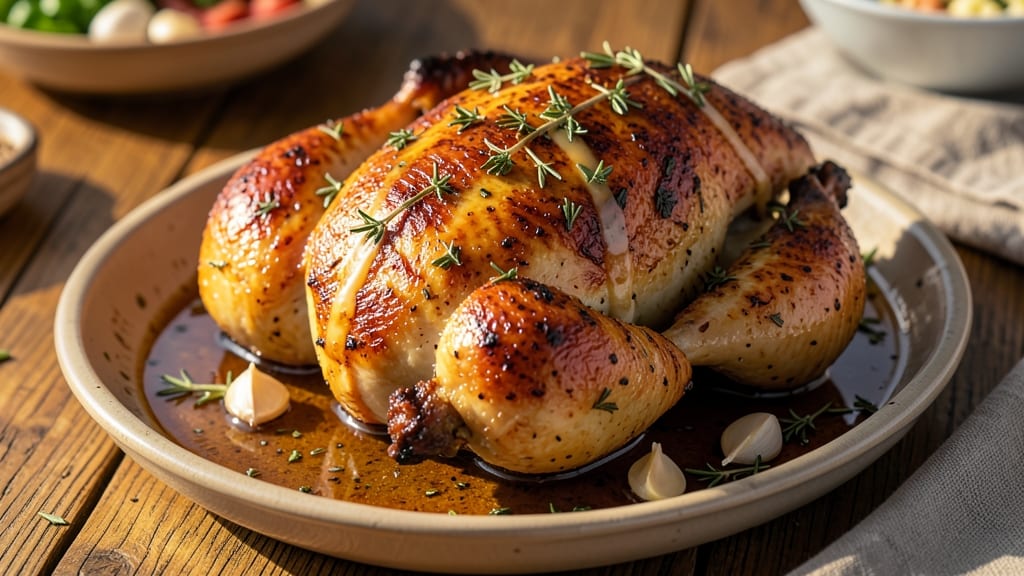
This American roasted chicken recipe delivers the perfect balance of crispy skin and juicy meat—the kind that makes every Sunday dinner feel like a celebration. The secret lies in a buttermilk brine that tenderizes the meat while creating that coveted golden crust.
After perfecting this method over years of holiday feasts and casual weeknight dinners, I can confidently say this is the only roasted chicken recipe you'll ever need.
The process begins with a simple but effective brine that infuses the chicken with flavor and moisture, ensuring it stays juicy even after roasting. A blend of aromatic herbs and spices—like thyme, rosemary, and garlic—adds depth, while the buttermilk creates a tender, flavorful base.
The real magic happens in the oven, where high heat transforms the skin into a crispy, shatteringly golden shell while keeping the meat perfectly tender.
What you'll end up with is a whole chicken that's impossible to resist—crispy on the outside, juicy and flavorful on the inside, with aromas that fill your kitchen and make everyone anticipate the first bite.
The method is straightforward but delivers restaurant-quality results, making it perfect for holidays, family gatherings, or even a special weeknight dinner.
Pair it with classic sides like roasted potatoes, garlic mashed potatoes, or a fresh green salad to complete the meal. The crispy skin alone will have everyone asking for seconds, proving that this isn't just another roasted chicken—it's the ultimate version.
Ingredients for american roasted chicken
Twelve ingredients transform a simple chicken into a showstopping centerpiece—crispy, juicy, and packed with aromatic depth.
| Ingredient | Amount | Notes |
|---|---|---|
| Whole Chicken 🍗 | 4 lb | Fresh, preferably organic, skin-on |
| Buttermilk 🥛 | 1 cup | Full-fat for optimal flavor |
| Fresh Thyme Leaves 🌿 | ½ cup | Or 2 tbsp dried thyme |
| Fresh Rosemary Sprigs 🌿 | ¼ cup | Finely chopped, aromatic |
| Garlic Cloves 🧄 | 6 cloves | Peeled, smashed for infusion |
| Kosher Salt 🧂 | 1 ½ cups | Diamond Crystal preferred |
| Black Peppercorns 🌶️ | 1 tbsp | Coarsely cracked, not ground |
| Unsalted Butter 🧈 | ½ cup | Cold, cubed for crispy skin |
| Olive Oil 🫒 | ¼ cup | Extra-virgin for richness |
| Fresh Lemon Juice 🍋 | ¼ cup | Brightens the flavor profile |
| Honey 🍯 | 2 tbsp | For glaze, optional but recommended |
| Fresh Sage Leaves 🌿 | ¼ cup | For garnish, optional |
The chicken is non-negotiable—4 pounds gives you generous portions for four, with crispy skin and juicy meat. Look for a bird with good marbling and vibrant color at Whole Foods or your local butcher. If you can't find organic, conventional works fine. The buttermilk is where the magic starts: full-fat delivers the best flavor and texture. If you're short on time, substitute with milk plus 1 tbsp vinegar or lemon juice. For the herbs, fresh is ideal, but dried works in a pinch—just double the amount. The rosemary and thyme should be fragrant and green, not wilted or discolored. If you're feeling fancy, grab a bouquet garnish from Trader Joe's for extra aroma.
No buttermilk? Milk plus 1 tbsp vinegar or lemon juice works perfectly. Short on fresh herbs? Dried thyme and rosemary at half the amount will still give you great flavor. The honey glaze is optional but adds a beautiful caramelized finish—local honey if you can find it. For the butter, European-style (like Plugrá) has more fat, which means extra crispiness. If you're watching calories, reduce the butter to 1/4 cup and increase the olive oil to 1/3 cup instead. The garlic should be peeled and smashed to release its oils fully—no need to mince it. And if you're feeling adventurous, add 1 tsp smoked paprika to the brine for a subtle smoky depth.
The brine can be prepped up to 24 hours ahead—it actually gets better as the flavors meld. Store it in the fridge in a sealed container. The chicken itself can be brined for 4-12 hours, but no longer—longer brining can make the meat mushy. Pat the chicken dry thoroughly before roasting; this step is critical for crispy skin. Leftovers keep for 3-4 days in the fridge, and the meat shreds beautifully for sandwiches or salads. For extra crispiness, broil the chicken for 2-3 minutes at the end—just watch it like a hawk to avoid burning.
Why You'll Love This Recipe
- One-Pan Magic: I swear by this recipe—just marinate the chicken in buttermilk and herbs, pop it in the oven, and walk away. No pans to wash, no fussing over sides.
- Herb-Packed Crisp: That buttermilk brine? It turns the skin golden and crisp while keeping the meat juicy. The thyme and rosemary smell like summer in your kitchen—honestly, I inhale the aromas before the meal even hits the table.
- Leftovers for Days: Roast a big bird on Sunday, and you’ve got lunch/dinner covered all week. Shred for tacos, slice for sandwiches, or toss in salads—it’s my go-to for busy mornings.
- Budget-Friendly Feast: A whole chicken costs less than takeout but feeds four. The buttermilk and herbs stretch the flavor without breaking the bank—plus, you’ll use every part of the bird. (Yes, even the bones for broth.)
Step-by-step instructions for buttermilk brined roasted chicken
This method guarantees restaurant-quality results with golden, crispy skin and impossibly juicy meat.
Prepare the Buttermilk Brine Mixture
In a large non-reactive container (I prefer a food-safe plastic bin), combine the 1 cup buttermilk, 1.5 cups kosher salt, 1 tablespoon coarsely cracked black peppercorns, 6 smashed garlic cloves, and 0.5 cup fresh thyme leaves. Stir until the salt fully dissolves—this ensures even distribution throughout the brine. The mixture should be thick but pourable.
Here's the thing—this buttermilk brine works magic by tenderizing the meat while infusing it with deep flavor. The acidity in the buttermilk breaks down proteins just enough to keep the chicken impossibly moist during roasting. Don't skip the peppercorns or thyme; they'll create aromatic layers of flavor that shine through the crispy skin.
Submerge the Chicken and Brine Overnight
Place the 4 lb whole chicken in the brine container, ensuring it's completely submerged. If it floats, weigh it down with a plate. Cover and refrigerate for 12-24 hours—this is non-negotiable for maximum juiciness. The longer it brines, the more tender and flavorful the chicken will be.
I always brine overnight because that's when the magic really happens. The chicken will absorb about 15-20% of its weight in brine, which translates to juicy, flavorful meat in every bite. After brining, rinse the chicken thoroughly under cold water and pat it completely dry with paper towels—this step is crucial for crispy skin.
Create the Herb Butter Rub
In a small bowl, mix together the 0.5 cup unsalted butter (cold, cubed), 0.25 cup olive oil, 0.25 cup fresh rosemary sprigs (finely chopped), 0.25 cup fresh sage leaves (chopped), and 2 tablespoons honey. The butter should be soft enough to rub but still hold its shape—this ensures it melts beautifully during roasting while creating a perfect glaze.
This herb butter isn't just flavor—it's the secret to that golden, caramelized crust. The honey adds a subtle sweetness that balances the savory herbs and creates a beautiful glaze. I like to work this mixture into the chicken skin right before roasting, making sure to get it into all those crevices where flavor needs to go.
Roast to Perfect Doneness
Preheat your oven to 425°F with a rack positioned in the lower third. Place the dried chicken on a rack set in a rimmed baking sheet (this allows air circulation for crispy skin). Rub the herb butter mixture all over the chicken, pressing gently to help it adhere. Roast for 1 hour 15 minutes until the internal temperature reaches 165°F at the thickest part of the thigh.
Here's where attention to detail matters: The skin should be deep golden brown with crispy edges that crackle when you touch them. If the skin browns too quickly, tent the chicken loosely with foil for the last 15 minutes of cooking to prevent over-browning. The juices should run clear when you pierce the thickest part of the thigh with a meat thermometer.
Rest and Finish with Lemon
Transfer the chicken to a cutting board and tent loosely with foil. Let it rest for 20 minutes—this allows the juices to redistribute throughout the meat. While it rests, mix together 0.25 cup fresh lemon juice with any accumulated pan juices. Brush this mixture over the chicken just before serving.
The lemon juice brightens all the rich flavors and adds a final pop of acidity that cuts through the richness. Serve the chicken whole or carved, with the crispy skin intact and the juices flowing. Each bite should deliver that perfect balance of crispy, juicy, and herb-infused flavor that makes this method worth every minute of waiting.
Pro Tips For Making American Roasted Chicken
- Use a Meat Thermometer: I learned this the hard way—roasting chickens by time alone leads to dry meat or undercooked centers. Aim for 165°F in the thickest part of the thigh, not the breast (it’ll finish cooking while resting). The breast hits temp faster, so pull it when the thigh reads 160°F and let it carry over.
- Pat Dry and Wait: Buttermilk soaks in fast, but a damp chicken won’t brown. Pat the skin thoroughly with paper towels, then let it sit uncovered in the fridge for 30 minutes. Sounds weird, but it works—you’ll get that golden crust instead of soggy skin.
- Don’t Overcrowd the Pan: I used to cram the chicken in with all the aromatics, thinking more flavor = better. Wrong. Give it room to breathe—space out the thyme, rosemary, and garlic cloves around (not under) the bird. Overcrowding steams the herbs instead of letting them crisp and infuse.
- Rest Under Foil: Skipping this step is a rookie move. After pulling the chicken, tent it loosely with foil and let it rest 10 minutes. The juices redistribute, and the skin stays crisp. I know, I know—you’re impatient—but trust the process. Cutting into it too soon means dry, sad meat.
Wine and beer pairings for this american roasted chicken
Classic American Whites
A crisp Sauvignon Blanc from Napa Valley is my go-to pairing—its bright citrus and herbal notes complement the buttermilk brine and herb butter beautifully. Look for a wine with 12-13% ABV like Ramey Vineyards or Far Niente to balance the chicken's richness.
The acidity cuts through the fat, while the herbal undertones mirror the thyme and rosemary in the recipe. 🍷
Bold Red Alternatives
For those who prefer red wine, a Pinot Noir from Oregon offers an elegant match. The Willamette Valley produces wines with red fruit and earthy notes that pair perfectly with the crispy skin and savory herbs.
I recommend Domaine Serene or Argyle Winery—their 13-14% ABV wines won't overpower the dish. The lighter body lets the chicken's flavors shine.
Craft Beer Pairings
A hazy IPA with citrus notes works surprisingly well—think Hazy Little Thing from Alchemist. The juicy hop flavors contrast the chicken's crispy texture, while the malt backbone balances the herb butter's richness.
For a lighter option, try a Belgian Witbier like Allagash White, which adds a refreshing coriander and orange peel brightness. 🍺
Seasonal Considerations
Summer calls for a dry Riesling from Germany, like Dr. Loosen Blue Slate, to refresh your palate with its crisp acidity and peach notes. In winter, a Chardonnay with oak notes—such as Kendall-Jackson Vintner's Reserve—adds warmth to complement the dish's richness.
Always serve wine slightly chilled (45-50°F) for optimal balance.
Non-Alcoholic Options
For a refreshing non-alcoholic match, try sparkling apple cider like Martinelli's or a ginger beer such as BrewDog Ginger Beer. The effervescence cleanses the palate, while the sweetness balances the savory herbs.
For a more sophisticated option, a sparkling water with cucumber and mint enhances the dish's freshness without overpowering it.
Nutrition facts
Frequently asked questions
Can I use bone-in or boneless chicken for this recipe?
A whole bone-in chicken is ideal for this recipe—it delivers the best flavor and texture. The bones infuse the meat with rich, natural juices during roasting, creating that signature juicy result. If you prefer boneless breasts, they'll still work but won't be as flavorful or juicy since they lack the natural fat and connective tissue. For best results, stick with a whole bird or bone-in thighs and drumsticks.
What's the best way to achieve extra crispy skin?
Three key steps: 1) Pat the chicken completely dry after brining (use paper towels—don't skip this!), 2) Roast at 425°F with the rack positioned low in the oven for even heat circulation, and 3) Use cold butter (not melted) for the rub. For maximum crispiness, broil the chicken for 2-3 minutes at the end—just watch it closely to avoid burning!
How do I know when the chicken is fully cooked?
Use a meat thermometer to check the internal temperature at the thickest part of the thigh—it should reach 165°F. The juices should run clear when you pierce the meat, and the skin should be deep golden brown with crispy edges. If you don't have a thermometer, cut into the thickest part of the thigh—the meat should be opaque with no pink remaining, and the juices should be clear.
Can I make this recipe without buttermilk?
Yes! Mix 1 cup milk with 1 tablespoon lemon juice or vinegar and let it sit for 5 minutes to curdle. This substitute works just as well for the brine. The acidity is what tenderizes the chicken, so don't skip this step even with the substitute. For the herb butter rub, you can use regular butter—just make sure it's cold to help create that crispy skin.
How should I store leftovers?
Let the chicken cool completely, then store it in an airtight container in the refrigerator for up to 3-4 days. The meat stays juicy and flavorful when stored properly. For longer storage, freeze the chicken (uncooked or cooked) for up to 3 months350°F oven with a little broth or water to keep it moist.