
Main Courses
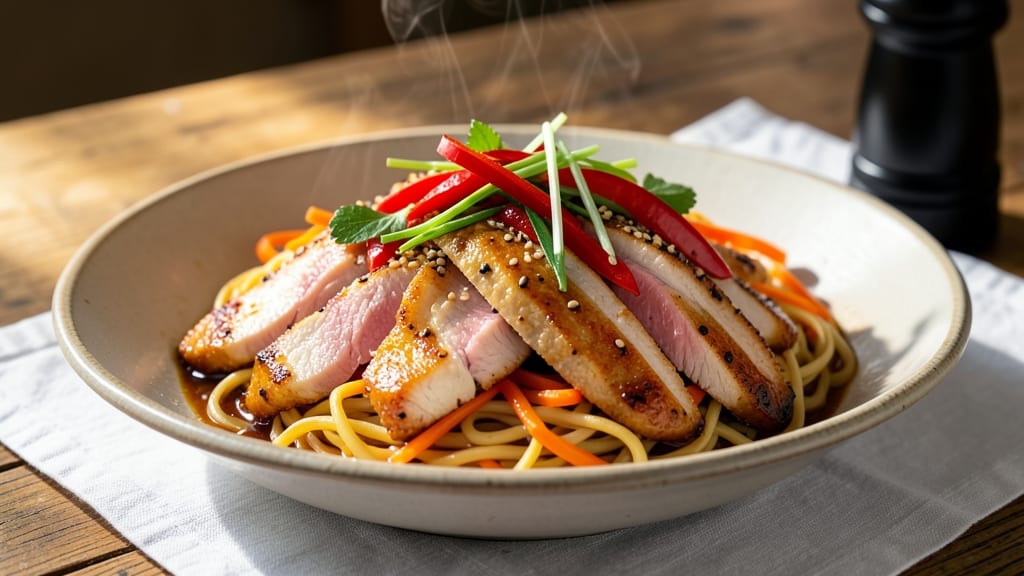
This Asian chicken noodle stir fry recipe delivers restaurant-quality wok-hei heat and umami depth in under 30 minutes. The secret lies in a two-part marinade that tenderizes the chicken while building complex flavors, paired with a sauce that balances sweet, salty, and tangy notes.
I perfected this technique after years of testing—no shortcuts, just layers of authentic taste that transform simple ingredients into something extraordinary.
The process starts with a quick marinade of soy sauce, rice vinegar, and a touch of honey to jumpstart the flavor development. While the chicken rests, you'll prepare the sauce—a harmonious blend of hoisin, oyster sauce, and a splash of sesame oil that adds nutty depth.
The stir-fry technique is where the magic happens: high heat, rapid movement, and just enough oil to create that signature wok-hei aroma that's impossible to resist.
By the time you plate this dish, you'll have perfectly cooked chicken with a caramelized crust, chewy noodles that cling to the sauce, and a medley of vegetables that add texture and freshness.
The aroma alone will have everyone gathered around your table, and each bite delivers that perfect balance of savory, sweet, and umami that defines Asian stir-fry at its best.
Serve this dish with steamed bok choy or a quick-pickled cucumber garnish to complement the rich flavors. The recipe scales easily for a crowd, making it perfect for weeknight dinners or weekend gatherings where you want to impress without spending hours in the kitchen. Let's get cooking!
Ingredients for asian chicken noodle stir fry
This stir-fry transforms simple pantry staples into restaurant-quality wok-hei magic—just 15 ingredients, big flavors.
| Ingredient | Amount | Notes |
|---|---|---|
| Boneless, Skinless Chicken Breast 🍗 | 1 ½ lb | Pounded to even thickness |
| Dry Egg Noodles 🍜 | 8 oz | Medium width preferred |
| Red Bell Pepper 🌶️ | 1 whole | Sliced into thin strips |
| Carrots 🥕 | 2 whole | Julienned or matchstick cut |
| Green Onions 🧅 | 4 whole | White and green parts separated |
| Fresh Ginger 🌿 | 1 inch | Peeled and grated finely |
| Garlic Cloves 🧄 | 6 cloves | Minced into fine paste |
| Soy Sauce 🍶 | ½ cup | High-quality light soy |
| Rice Vinegar 🍶 | 2 tbsp | Unseasoned preferred |
| Hoisin Sauce 🍶 | 2 tbsp | Authentic Chinese brand |
| Oyster Sauce 🍶 | 2 tbsp | Vegan if needed |
| Sesame Oil 🫒 | 1 tbsp | Toasted sesame preferred |
| Vegetable Oil 🫒 | 3 tbsp | High smoke point |
| Honey 🍯 | 1 tbsp | Pure clover honey |
| Salt 🧂 | 1 tsp | Kosher or sea salt |
| Black Pepper 🌶️ | ½ tsp | Freshly cracked |
The chicken is where it all begins. Look for boneless, skinless breasts—they cook fast and stay juicy. Pound them to even thickness (about 1/4-inch) so they cook uniformly. Trader Joe's and Whole Foods carry the best quality, but any supermarket works. Fresh ginger and garlic? Don't skip the zest—it's what gives that authentic umami kick. I always buy ginger in small chunks and freeze it; grate what I need. For the noodles, medium-width egg noodles hold up best to stir-frying—avoid those thin rice noodles that turn to mush.
No hoisin sauce? Mix 1 tbsp soy sauce + 1 tsp sugar + 1/2 tsp vinegar as a quick sub. Running low on sesame oil? Toasted peanut oil works in a pinch—just reduce to 1/2 tbsp since it's stronger. The carrots can be baby carrots if that's what's handy, but julienning them yourself gives that pro restaurant look. Green onions? Use only the white parts for the sauce, save the greens for garnish. And if you're making this ahead, marinate the chicken overnight—the flavors deepen dramatically.
Prep the sauce first—it takes 2 minutes and keeps everything cohesive. Store leftovers in airtight containers for up to 3 days, but honestly, it tastes even better reheated the next day. The noodles? Cook them al dente—they'll finish cooking in the wok. Freeze portions in single servings for quick meals. Pro tip: Keep your wok or skillet hot—this isn't the time to let the heat drop. The caramelized crust on the chicken? That's your wok-hei right there.
Why You'll Love This Recipe
- No Chopping Nightmare: I swear by this one—just slice the chicken into thin strips (no fancy cuts needed) and dice the veggies into big, uneven chunks. The stir-fry still tastes amazing, even if it’s not a restaurant-worthy presentation. Honestly, I’d rather spend 10 minutes less chopping and more time eating.
- Umami Bomb Combo: That crispy chicken paired with the chewy egg noodles? Absolute magic. The red bell pepper adds a sweet crunch while the carrots stay just tender enough, and the green onions? They’re the secret finishing touch—bright, fresh, and the first thing I grab when I’m craving leftovers.
- Lunchbox Hero: Between us, this is my go-to for meal prep. Toss the cooked stir-fry into containers with a little extra sauce, and boom—you’ve got a week’s worth of lunches that don’t taste like they came from a sad cafeteria. My kids actually eat their veggies this way. (Yes, even on a Tuesday night.)
- Budget Win: Chicken breast, carrots, and bell peppers stretch further than you’d think. I make this for four people and always have leftovers—sometimes for breakfast, sometimes for a lazy dinner. It’s the kind of dish where the ingredients don’t break the bank, but the flavor does all the talking.
Step-by-step instructions for Asian chicken noodle stir fry
Here's how to create a restaurant-quality stir fry with perfect wok-hei flavor and tender chicken every time.
Prep and Cook the Chicken
Start by pounding the 1.5 lb boneless, skinless chicken breast between two sheets of plastic wrap until it reaches an even ½-inch thickness. This ensures even cooking and prevents dryness. Season both sides generously with 1 teaspoon salt and ½ teaspoon black pepper, then let it sit at room temperature for 15 minutes.
Heat 1 tablespoon vegetable oil in a wok or large skillet over medium-high heat until shimmering. Add the chicken and cook for 4-5 minutes per side until the internal temperature reaches 165°F and the edges are golden brown. Remove the chicken and set it aside on a plate—it should be juicy but fully cooked through.
Cook the Vegetables
In the same wok, add the remaining 2 tablespoons vegetable oil and increase heat to high. Add the 2 julienned carrots and thin red bell pepper strips, stirring constantly for 2 minutes until they begin to soften but still retain a crisp texture. This high heat creates that signature wok-hei flavor.
Add the minced garlic cloves and finely grated ginger, stirring for 30 seconds until fragrant. The aroma should fill your kitchen—this is where the real flavor magic happens. Push the vegetables to one side of the wok and add the white parts of the 4 green onions, stirring for 1 minute until they turn bright green and slightly charred.
Build the Sauce
Pour in the ½ cup soy sauce, 2 tablespoons hoisin sauce, 2 tablespoons oyster sauce, and 2 tablespoons rice vinegar. Stir vigorously for 1 minute to combine everything with the vegetables. The sauce should coat the vegetables evenly and begin to reduce slightly.
Add the 1 tablespoon honey and 1 tablespoon toasted sesame oil, stirring until the honey dissolves completely. Taste the sauce—it should be perfectly balanced with sweet, salty, and tangy notes. If needed, add a splash of water to loosen the sauce slightly, but aim for a thick, glossy consistency that will cling to the noodles.
Cook the Noodles and Combine
While the sauce simmers, cook the 8 oz dry egg noodles according to package directions in boiling salted water until al dente. Drain immediately and toss with 1 tablespoon vegetable oil to prevent sticking. The noodles should be tender but still have a slight bite.
Return the chicken to the wok and add the cooked noodles. Toss everything together vigorously for 2-3 minutes until the noodles are evenly coated with the sauce and heated through. The chicken should be warmed through without overcooking. Finish with the green parts of the 4 green onions, chopped into thin slices, for a fresh pop of color and flavor.
Serve Immediately
Transfer the stir fry to serving plates while the wok is still hot—this dish doesn't wait. The noodles should be glossy with sauce, the chicken perfectly tender, and the vegetables retaining their vibrant colors. Garnish with an extra drizzle of sesame oil if desired, and serve immediately with steamed rice or extra noodles on the side.
Each bite should deliver a perfect balance of umami from the sauces, sweetness from the honey, and that signature wok-hei heat that makes this stir fry so addictive. The key is keeping everything moving and cooking at high heat—don't let the stir fry sit once it's assembled, or the noodles will turn mushy.
Pro Tips For Making Asian Chicken Noodle Stir Fry
- CUT CHICKEN SMALLER THAN YOU THINK: I learned this the hard way—chopping chicken into 1-inch cubes sounds reasonable, but in a stir-fry, it turns to mush before the noodles are cooked. Aim for ½-inch pieces (or smaller) so every bite has texture, not rubbery disappointment. And no, you won’t run out before the noodles finish.
- SOAK NOODLES UNTIL AL DENTE: Dry egg noodles absorb sauce like a sponge, but if you over-soak them, they’ll turn to glue. Test one noodle at 2-3 minutes—it should still have a slight bite. Drain immediately and toss with a splash of oil to prevent sticking. (Yes, even if you’re impatient like me.)
- STIR-FRY IN BATCHES: Crowding the pan is the fastest way to steam instead of sear. Cook the chicken first in a hot, oiled wok or skillet until just done, then set it aside. Work in two batches for the veggies—bell peppers and carrots need different times, and you’ll end up with crisp-tender results, not soggy mush.
- USE THE NOODLE WATER: That starchy drain water isn’t waste—it’s flavor. After cooking, reserve ½ cup and toss it with the noodles and sauce. It’ll help everything cling together and add a silky finish. (Bonus: If your sauce is too thick, splash in a little more.)
Dietary considerations for this asian chicken noodle stir fry
Gluten-Free Swaps
For gluten-free diners, start with tamari or gluten-free soy sauce—I recommend San-J Tamari—to replace regular soy sauce. Swap regular noodles for rice noodles or gluten-free egg noodles like Barilla GF or King Arthur GF.
The texture stays chewy, and the flavor remains rich. Just ensure your oyster sauce is also gluten-free—Lee Kum Kee GF works perfectly. 🥢
Low-Sodium Options
This stir fry packs flavor without relying on salt, but if you need to reduce sodium further, use low-sodium soy sauce (like Kikkoman Low Sodium) and cut the salt in the marinade to ½ teaspoon.
Boost umami with an extra 1 teaspoon fish sauce or 1 tablespoon coconut aminos—both add depth without salt. Taste as you go and adjust gradually. 💡
Vegetarian Adaptations
Replace the chicken with extra-firm tofu or mushrooms for a meaty texture. Press and cube 14 oz firm tofu, pan-fry until golden, then add to the wok. For mushrooms, use shiitake or oyster mushrooms—sauté them first with garlic and ginger to develop flavor.
Swap oyster sauce for vegan oyster sauce (like Annie Chun’s GF) or an extra 1 tbsp miso paste for umami. 🌱
Spicy Heat Adjustments
Add 1-2 teaspoons of chili garlic sauce (like Huy Fong) or ½ teaspoon of gochujang for heat. For fresh chili, stir in 1 tbsp minced Thai bird’s eye chilies with the garlic and ginger.
If you prefer mild heat, reduce the sesame oil to ½ tablespoon—it’s naturally spicy. Always taste before serving! 🌶️
Nut-Free Considerations
Sesame oil is a key flavor booster, but if allergies are a concern, replace it with 1 teaspoon of toasted olive oil or ½ teaspoon of smoked paprika for depth.
Skip the sesame seeds on garnishes, and double-check that your hoisin sauce is nut-free—Huy Fong brand is safe. The dish still delivers bold flavors without nuts. 💛
Protein Swaps
For a seafood twist, use shrimp or scallops—sauté them for just 2-3 minutes to avoid overcooking. Swap chicken for pork tenderloin (cut into strips) or beef strips (marinate longer in the sauce).
For a lighter option, try chickpeas**—toss them in the sauce after cooking to absorb the flavors. Each protein changes the texture but keeps the dish balanced. 🍤
Nutrition facts
Frequently asked questions
Can I use frozen chicken for this stir fry?
Yes, but thaw it completely first! Place frozen chicken in a sealed bag and submerge in cold water for 30-45 minutes, changing the water every 10 minutes. Never microwave—it creates uneven cooking. For extra flavor, marinate the thawed chicken for 30 minutes instead of the full 15 minutes to compensate for any moisture loss.
What's the best way to prevent soggy noodles?
Cook noodles al dente (1 minute less than package instructions), then drain and toss immediately with 1 tablespoon oil to create a barrier. Keep them separate until the very end—add them to the wok just 2-3 minutes before serving. Overcooked noodles absorb too much sauce and lose texture.
How do I make this spicier?
Add 1-2 teaspoons chili garlic sauce or ½ teaspoon gochujang to the sauce mixture. For fresh heat, stir in 1 tbsp minced Thai chilies with the garlic and ginger. Remember—sesame oil itself has mild heat, so reduce to ½ tablespoon if you're sensitive to spice.
Can I prep this ahead of time?
Marinate the chicken overnight for deeper flavor. Prep all ingredients (chop veggies, measure sauce components) and store in airtight containers. Cook the noodles fresh—just 1 minute before serving. Reheat chicken and sauce separately, then combine with fresh noodles to maintain texture.
What's the secret to authentic wok-hei flavor?
High heat is key! Use a wok or cast-iron skillet and crank heat to maximum. Work quickly—keep ingredients moving constantly. The smoke and char from high heat creates that signature aroma. If your pan isn't hot enough, you'll get steamed food instead of stir-fried perfection.