
Sauces & Condiments
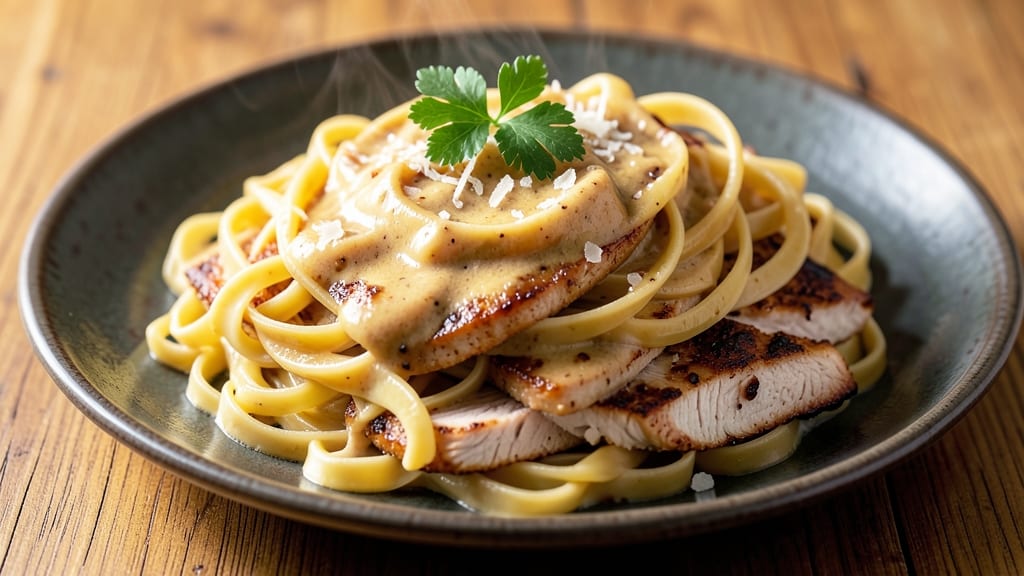
This authentic chicken alfredo sauce recipe delivers the creamy, velvety texture of Roman-style cooking without the dreaded clumps or artificial ingredients.
The secret lies in a proper roux foundation—equal parts butter and flour cooked until golden—that forms the backbone of a sauce that's rich yet balanced, with just enough garlic and Parmesan to elevate every bite.
Unlike heavy cream-based shortcuts, this method builds flavor gradually through a slow reduction, ensuring a sauce that's smooth, luxurious, and perfectly clingable. The chicken adds depth without overpowering, while a splash of white wine brightens the richness.
What sets this apart is the technique: constant stirring, precise timing, and the right balance of dairy to create a sauce that's restaurant-quality at home.
What you'll end up with is a silky, golden sauce that coats pasta effortlessly, its texture so luxurious it feels like a decadent secret. The aroma alone—warm butter, nutty Parmesan, and subtle garlic—transforms any dish into something special.
This isn't just alfredo; it's the kind of sauce that makes you rethink every takeout order.
Perfect for pasta, chicken, or even as a creamy dipping sauce, this recipe delivers authentic Roman-style creaminess without the heaviness. The best part? Once you master this technique, you'll never go back to store-bought versions. Let's create this sauce step by step.
Ingredients for authentic chicken alfredo sauce
Nine essential ingredients transform into a velvety Roman-style alfredo sauce without clumps or artificial ingredients.
| Ingredient | Amount | Notes |
|---|---|---|
| Unsalted Butter 🧈 | ¾ cup | Cold, cubed for roux |
| All-Purpose Flour 🌾 | ¾ cup | Diamond Crystal preferred |
| Heavy Cream 🥛 | 2 cups | Whole milk fat preferred |
| Whole Milk 🥛 | ½ cup | Warmed for smoothness |
| Parmesan Cheese 🧀 | 1 ½ cups | Freshly grated, aged |
| Garlic Cloves 🧄 | 4 cloves | Minced, fresh preferred |
| White Wine 🍷 | ¼ cup | Dry, Pinot Grigio ideal |
| Chicken Breast 🍗 | 1 lb | Boneless, skinless, diced |
| Salt 🧂 | 1 ½ tsp | Diamond Crystal kosher |
| Black Pepper 🌶️ | ½ tsp | Freshly cracked |
The foundation begins with unsalted butter and Diamond Crystal flour—the secret to a proper roux. Whole milk fat in the heavy cream ensures richness without separation, while freshly grated Parmigiano-Reggiano delivers authentic nutty depth. For the garlic, peel and mince just before adding to preserve freshness. Pinot Grigio adds brightness, but any dry white works. Costco or specialty stores carry the best aged Parmesan; avoid pre-shredded versions. The chicken should be boneless, skinless cuts—thighs work better than breasts for moisture retention.
No heavy cream? Full-fat coconut milk mimics the texture, though flavor differs slightly. Substitute white wine with chicken stock if avoiding alcohol. For Parmesan, Pecorino Romano offers a sharper alternative. Diamond Crystal flour absorbs differently than other brands—use 1/4 cup extra if your pantry has generic all-purpose. The garlic can be roasted for a sweeter profile if preferred. Freshly cracked black pepper adds subtle heat without overpowering the delicate sauce. Diamond Crystal kosher salt dissolves cleanly, preventing graininess.
Store the sauce in an airtight glass container with a thin layer of olive oil on top to preserve freshness. Keeps for up to 5 days in the refrigerator or 3 months frozen. For best texture, reheat gently on low heat, stirring constantly. The sauce thickens as it cools—add warm milk if needed. Portion into ice cube trays for easy single-use servings, perfect for pasta or dipping. Never boil—this breaks the emulsion and causes separation.
Why You'll Love This Recipe
- Pantry-Friendly Magic: I swear by this recipe because it uses what’s already in my fridge—no fancy ingredients, just butter, flour, and a splash of milk. The moment that roux hits the pan, the whole kitchen smells like comfort, and I’m hooked.
- Velvet Creamy Payoff: That perfect balance of rich heavy cream and sharp Parmesan? It’s the kind of sauce where the first bite makes you pause. Honestly, the texture is so silky it almost feels wrong to eat it—until you do.
- Weeknight or Date Night: Toss it over chicken for a quick weeknight dinner, or drizzle it on fettuccine for a restaurant-worthy meal. Between us, it’s my go-to when I need something impressive but still feels like mealtime, not a production.
- Leftovers That Don’t Suck: Make a big batch—it reheats like a dream and tastes even better the next day. My kids beg for it cold in sandwiches, and I’ve even used it to jazz up mashed potatoes. (Yes, even on a Tuesday night.)
Step-by-step instructions for authentic Roman-style chicken alfredo
Master this classic technique for velvety, clump-free sauce that stays true to Roman tradition.
Create the Perfect Roux Foundation
In a heavy-bottomed saucepan, melt the 0.75 cup unsalted butter over medium-low heat. Once fully melted and foaming subsides, whisk in the 0.75 cup all-purpose flour all at once. This creates a roux that will form the thickener for your sauce.
Cook the roux for 2-3 minutes, stirring constantly with a wooden spoon, until it turns a rich golden brown color. This color change indicates the flour has fully cooked out its raw taste and developed nutty depth. Be patient—rushing this step creates a grainy texture. The roux should smell toasty and nutty when properly cooked.
Deglaze with Wine and Build the Base
Immediately pour in the 0.25 cup white wine and whisk vigorously to incorporate. The alcohol will sizzle briefly as it evaporates, carrying away any remaining raw flour taste. Let the mixture simmer gently for 1-2 minutes until the wine has completely evaporated.
Next, gradually whisk in the 2 cups heavy cream and 0.5 cup whole milk over medium heat. Stir continuously to prevent lumps from forming. The sauce will begin to thicken as the starch in the roux absorbs the liquid. This gradual addition ensures a smooth, homogeneous texture without clumps.
Incorporate Aromatics and Seasonings
Add the 4 minced garlic cloves and cook for 30 seconds until fragrant—don't let them brown, or they'll turn bitter. Then stir in the 1.5 tsp salt and 0.5 tsp black pepper. The sauce should now be thick but still pourable. If it's too thick at this stage, whisk in 1-2 tablespoons of warm water to adjust consistency.
Reduce heat to low and let the sauce simmer gently for 5 minutes, stirring occasionally. This slow cooking allows the flavors to meld together while preventing the sauce from breaking or curdling. The sauce should now have a velvety texture with no visible lumps.
Finish with Cheese for Authentic Flavor
Remove the saucepan from heat and gradually whisk in the 1.5 cups freshly grated Parmesan cheese in 3 additions. The residual heat from the sauce will help melt the cheese completely. If the sauce thickens too much, whisk in additional warm milk or water, 1 tablespoon at a time, until you reach a smooth, creamy consistency.
Return the sauce to low heat and let it warm through for 1-2 minutes, stirring constantly. The cheese should be fully incorporated, creating a rich, nutty depth. Taste and adjust seasoning if needed—Roman-style Alfredo is balanced, not overly salty or peppery.
Cook the Chicken and Combine
In a separate skillet, heat 1 tablespoon olive oil over medium-high heat. Add the 1 lb diced chicken breast and cook for 5-6 minutes until the chicken is fully cooked through and lightly browned. Season with an additional pinch of salt and black pepper if needed.
To serve, pour the warm sauce over the chicken and toss gently to coat. The sauce should cling to the chicken without making it soggy. For an authentic Roman touch, serve immediately with freshly cooked fettuccine or tagliatelle, allowing diners to twirl their pasta through the sauce for maximum flavor.
Pro Tips For Making Authentic Chicken Alfredo Sauce
- Whisk Like You Mean It: The roux is where flavor hides—or gets ruined. Use a wooden spoon at first to break up the butter and flour, then switch to a whisk when it’s bubbling. I learned this the hard way—lumpy roux means lumpy sauce, and no one wants that. Keep the heat medium-low until it smells nutty (about 3-4 minutes), or you’ll burn the butter and taste regret.
- Grate Your Own Cheese: Pre-shredded Parmesan is coated in anti-caking agents that turn your sauce into a grainy mess. Freshly grated cheese dissolves smoothly and adds depth. Buy a block, use a microplane for the last tablespoon—it makes a real difference. (Yes, even if you’re impatient like me.)
- Temper the Cream: Dumping cold heavy cream into a hot roux curdles it faster than you can say “disaster.” Warm the cream and milk together (just heat them in a separate pot until steaming, then let sit 2 minutes) before slowly whisking it into the roux. Your sauce will thank you—no clumps, no scrambling.
- Salt the Butter First: Unsalted butter needs seasoning, and the roux is the perfect place to start. Mix in ½ teaspoon of salt with the melted butter before adding flour—it dissolves evenly and cuts through the richness. Skip this, and your sauce will taste flat, even if you add salt later. (Your future self will notice.)
Essential equipment for great authentic chicken alfredo sauce
Heavy-Bottomed Saucepan
This is my non-negotiable tool for Alfredo sauce—Le Creuset's 3-quart round saucepan is my go-to because it distributes heat evenly and prevents scorching. A stainless steel saucepan like All-Clad's 3-quart version is another fantastic choice, especially if you prefer a lighter weight.
The key is thick, heavy base that maintains consistent temperature during the roux stage. Avoid thin, aluminum pans—they heat too quickly and create hot spots that burn your sauce. 🔥
Whisk for Smoothness
A balloon whisk with siliconized wire is essential for this recipe—I use the OXO Good Grips model because it handles the sauce's thickness without bending. The whisk's flexibility lets you scrape the bottom of the pan constantly, preventing lumps from forming.
For the roux stage, a wooden spoon works too, but switch to the whisk immediately when adding liquids. Pro tip: Keep a second whisk handy for stirring while you scrape the pot's sides.
Microplane for Cheese
Freshly grated Parmesan makes all the difference, and a Microplane is the only tool that gives you that fine, powdery texture without clumps. I recommend the OXO Good Grips Microplane—it's durable and easy to clean.
Avoid pre-shredded cheese (it contains anti-caking agents that make your sauce grainy) and never use a box grater. For extra efficiency, grate the cheese directly into the warm sauce so it melts instantly. 🧀
Instant-Read Thermometer
While not strictly necessary, an instant-read thermometer helps you monitor the sauce's temperature during the roux stage. I use the Thermoworks ThermoPop—it's fast and accurate. The ideal roux temperature is between 160-170°F, where the flour fully cooks without burning.
This precision prevents that "raw flour taste" that ruins homemade sauces. For most home cooks, visual cues (golden color, nutty aroma) work fine, but this tool takes your sauce to restaurant-quality level.
Wooden Spoon Set
Invest in a high-quality wooden spoon set—I love the Lodge Pre-Seasoned Wooden Spoons because they're heat-resistant and gentle on your saucepan. The natural wood helps distribute heat evenly while stirring. Keep one spoon dedicated to your sauce to avoid cross-contamination with other dishes.
A long-handled spoon is ideal for reaching the bottom of deep pans without burning your hand. Never use metal utensils at the roux stage—they can scratch your pan and create hot spots.
Fine-Mesh Strainer
For an ultra-smooth sauce, strain it through a fine-mesh strainer before serving. I use the Heston Blumenthal Fine Mesh Strainer—it catches any stray cheese particles or flour bits without affecting the sauce's texture.
This step is optional but elevates the sauce to restaurant-perfect consistency. If you're serving immediately, skip this—just
Nutrition facts
Frequently asked questions
Why does my homemade chicken Alfredo sauce get lumpy?
Lumps happen when flour doesn't fully cook or liquid is added too quickly. Always cook the roux to a golden brown color (about 2-3 minutes on medium-low heat) before adding liquids. Whisk continuously when incorporating cream and milk, and add them slowly to prevent clumping. For extra smoothness, strain the finished sauce through a fine-mesh strainer.
Can I make this sauce without white wine?
Replace the 0.25 cup white wine with an equal amount of dry chicken stock or apple cider vinegar (1 tablespoon). The wine adds brightness, but these substitutes prevent the sauce from tasting flat. For a non-alcoholic version, use dry vermouth if you have it. The key is maintaining acidity to balance the richness.
How do I store leftover chicken Alfredo sauce?
Transfer the cooled sauce to an airtight glass container and refrigerate for up to 5 days. To preserve freshness, add a thin layer of olive oil on top before sealing. For longer storage, freeze in ice cube trays (thaw in the fridge) or silicone molds. Reheat gently on low heat, stirring constantly—never microwave directly, as it can break the emulsion.
What's the best pasta to pair with this sauce?
Roman-style Alfredo pairs perfectly with fettuccine or tagliatelle—their wide, flat surfaces catch the sauce beautifully. For extra authenticity, use bronze-die pasta (like De Cecco or Barilla), which holds sauce better than smooth surfaces. Avoid thin noodles like angel hair—they get overwhelmed. Pro tip: Toss the pasta with sauce immediately after cooking to prevent sticking.
Can I use half-and-half instead of heavy cream?
Not recommended—half-and-half has less fat (12% vs. 36% in heavy cream), which can make the sauce separate or taste watery. If you must substitute, use full-fat coconut milk (for a dairy-free version) or blend whole milk with 1 tablespoon melted butter per cup to mimic richness. The sauce will be slightly lighter but still delicious.