
Soups & Stews
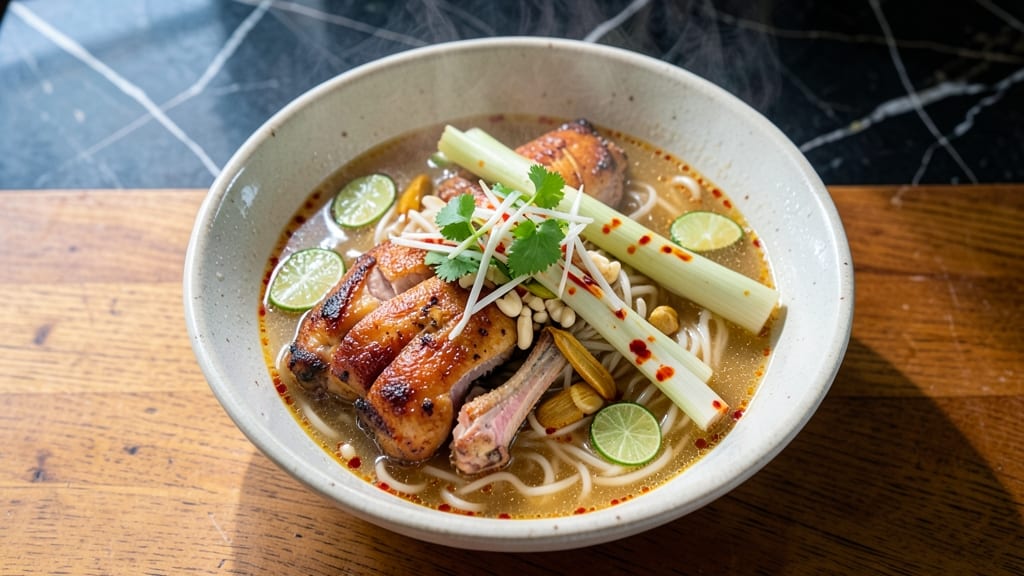
This authentic Thai chicken noodle soup recipe delivers the aromatic, complex flavors of street-side Thai cuisine right to your kitchen. The secret lies in balancing sweet, sour, salty, and umami notes through lemongrass, galangal, kaffir lime leaves, and fish sauce—a harmony that transforms simple ingredients into something extraordinary.
I've perfected this recipe over years of travel and testing, ensuring every spoonful transports you to Bangkok's bustling markets.
The broth is the heart of this dish, simmered low and slow with chicken, ginger, and fragrant herbs until it develops deep, layered flavors. Thin rice noodles soak up the aromatic liquid while maintaining their delicate texture, and a final touch of lime and fresh herbs brightens each bowl.
This isn't just soup—it's a complete meal in one comforting package.
What makes this recipe truly authentic is the attention to traditional techniques: proper herb preparation (bruising lemongrass and galangal), precise seasoning balance, and the right noodle-to-broth ratio.
The result is a soup that's rich yet light, savory with just enough heat, and fragrant enough to make your kitchen smell like a Thai restaurant. Serve with lime wedges and fresh cilantro for that final restaurant-quality touch.
Perfect for chilly evenings or when you need comfort food with depth, this recipe delivers restaurant-quality results at home. The beauty of Thai cuisine is its adaptability—use chicken thighs for richer flavor or swap in shrimp for a seafood version. Here's how to make it authentically delicious.
Ingredients for authentic thai chicken noodle soup
Authentic Thai flavors start with these fragrant, carefully balanced ingredients for a soup that transports you to Bangkok's markets.
| Ingredient | Amount | Notes |
|---|---|---|
| Chicken Thighs (bone-in, skin-on) 🍗 | 1 ½ lb | Skin-on for richer flavor |
| Lemongrass Stalks 🌿 | 4 whole | Bruised and cut into 2-inch pieces |
| Galangal (Thai Ginger) 🧄 | 3 oz | Peel and slice thinly |
| Kaffir Lime Leaves 🍋 | 4 whole | Bruised and torn into pieces |
| Fresh Ginger Root 🧅 | 2 oz | Peel and sliced into coins |
| Garlic Cloves 🧄 | 6 cloves | Minced for aromatic depth |
| Fish Sauce 🍶 | 2 tbsp | Red Boat preferred |
| Thai Bird's Eye Chilies 🌶️ | 2 whole | Adjust for heat preference |
| Rice Noodles (Thin, Flat) 🍜 | 8 oz | Soaked in warm water |
| Coconut Milk (Full-Fat) 🥥 | 1 cup | For creamy richness |
| Lime Juice 🍋 | 2 tbsp | Freshly squeezed |
| Fresh Cilantro 🌿 | ¼ cup | Chopped for garnish |
| Diamond Crystal Kosher Salt 🧂 | 1 ½ tsp | Adjust to taste |
| White Peppercorns 🌶️ | ½ tsp | Freshly ground |
| Sugar 🍯 | 1 tsp | Balances flavors |
The herbs are non-negotiable for authenticity. Lemongrass and galangal should be vibrant and firm—skip if they smell musty. I source mine at Asian markets like 99 Ranch or H Mart, where the selection is freshest. Galangal has a peppery, citrusy kick—it's the soul of this soup. If you can't find it, extra ginger at double the amount works in a pinch, but it won't be the same. Kaffir lime leaves? Freeze extras to preserve their aroma. For the chicken, thighs stay juicier than breasts during the long simmer—bone-in, skin-on for maximum flavor extraction.
Fish sauce is where umami magic happens. Red Boat brand is the gold standard—avoid cheaper versions that can taste harsh. No fish sauce? Soy sauce plus a dash of anchovy paste mimics it, but you'll lose that authentic depth. The chilies should be fresh and plump; Trader Joe's carries them year-round. For heat control, remove seeds before mincing. Coconut milk matters too—full-fat canned gives the best texture. Shake the can before opening to distribute the cream. Need a dairy-free option? Coconut cream works, but reduce the amount slightly to avoid heaviness.
Prep the herbs first—bruising releases their oils. Wrap galangal and ginger in plastic wrap and pound with a meat mallet for maximum flavor. The broth keeps 3 days refrigerated or 3 months frozen in airtight containers. Noodles soak up liquid fast—add them last and serve immediately. For meal prep, cook the broth and chicken separately, then assemble before serving. Garnish with lime and cilantro just before eating—they brighten the dish instantly. Leftovers reheat beautifully; just add a splash of water to restore texture.
Why You'll Love This Recipe
- One-Pot Magic: I swear by this—just toss everything into a single pot and let it simmer. The bone-in thighs melt into the broth while you prep the lemongrass and galangal, no fancy techniques required. (Yes, even on a Tuesday night.)
- Herb-Packed Punch: That first sip? Chef’s kiss. The galangal and kaffir lime leaves give it a bright, citrusy depth, while the lemongrass adds a floral note that lingers. It’s the kind of flavor that makes you slow down and savor every spoonful.
- Leftover Goldmine: This soup only gets better the next day—flavors meld into something richer, and the broth thickens just enough to cling to the noodles. I make a double batch on Sundays because it’s my go-to for lazy afternoons or when guests drop by unexpectedly.
- Budget-Friendly Luxury: Bone-in chicken thighs and root vegetables stretch this recipe far without breaking the bank. Honestly, I’ve never spent more than $15 for a pot that feeds four heartily. Plus, the galangal and lime leaves freeze perfectly, so you’re not scrambling for substitutions later.
Step-by-step instructions for authentic Thai chicken noodle soup
Master the layered aromatics and precise technique that define this fragrant Thai classic.
Prepare the Aromatic Base
In a large pot, combine the 4 whole lemongrass stalks (bruised and cut into 2-inch pieces), 3 oz galangal (peeled and sliced thinly), 4 whole kaffir lime leaves (bruised and torn), 2 oz fresh ginger root (peeled and sliced into coins), and 6 cloves garlic (minced). This aromatic bundle forms the soul of the soup—don't skip bruising the lemongrass and lime leaves, as this releases their essential oils.
Add 1.5 lb chicken thighs (bone-in, skin-on) and 2 cups water (enough to cover the chicken by about 1 inch). Bring to a gentle simmer over medium-high heat and cook for 10 minutes, skimming off any foam that rises to the surface. This initial simmer extracts the chicken's natural flavors while building a fragrant base.
Build the Broth with Precision
Reduce heat to low and add 2 whole Thai bird's eye chilies (adjust for heat preference), 1.5 tsp diamond crystal kosher salt, 0.5 tsp white peppercorns, and 1 tsp sugar. The sugar isn't just for sweetness—it helps balance the acidity from the lime later. Let the broth simmer gently for 30 minutes, partially covered, until the chicken is tender and the aromatics have infused deeply.
Here's the thing—don't rush this step. The longer the aromatics steep, the more complex the flavor becomes. You'll know it's ready when the broth smells intensely of lemongrass and lime, with just a hint of coconut from the chicken fat rendering. Remove the chicken and set aside, reserving the broth.
Create the Signature Creamy Texture
Shred the cooked chicken thighs using two forks, discarding skin and bones. Return the shredded chicken to the pot along with 1 cup coconut milk (full-fat). Stir gently to combine—this is where the soup transforms from clear broth to creamy, velvety perfection. The coconut milk should blend smoothly without separating, creating that signature Thai richness.
Add 2 tbsp fish sauce and 2 tbsp lime juice (freshly squeezed). Taste and adjust seasoning—this is your quality checkpoint. The soup should balance sweet, sour, salty, and umami perfectly. If it needs more depth, add another ½ tsp fish sauce. If it's too acidic, a pinch of sugar helps.
Cook the Noodles to Al Dente
Soak the 8 oz rice noodles (thin, flat) in warm water for 10-15 minutes until pliable but still firm to the bite. Drain and add them to the soup just before serving. The noodles cook in the hot broth in 2-3 minutes—this is critical. Overcooking makes them mushy; undercooking leaves them chewy. Stir gently to distribute the noodles evenly throughout the broth.
Real talk: I've learned the hard way that adding noodles too early makes the broth watery. The proper technique is to cook them in the hot broth at the very end, where they absorb just enough liquid to soften without turning to mush.
Finish with Fresh Herbs and Garnish
Remove from heat and let the soup rest for 2 minutes. This brief resting period allows the flavors to meld completely. Ladle into bowls and garnish with 0.25 cup chopped fresh cilantro. The bright green color not only looks stunning but also adds a fresh, slightly peppery contrast to the rich broth.
Serve immediately with lime wedges on the side—each diner can adjust the acidity to their preference. The soup should be aromatic when you lift the spoon, with visible strands of lemongrass and lime leaves floating in the broth, and the noodles perfectly al dente.
Pro Tips For Making Authentic Thai Chicken Noodle Soup
- CRACK THE THIGHS FIRST: Don’t skip browning the chicken thighs—render that skin until it’s golden and crispy (about 8-10 minutes). I used to rush this, and the broth lacked depth. High heat. Seriously, crank it up.
- CHAR THE GALANGAL: Bruise the galangal with the flat side of your knife before slicing—it releases oils that make the broth sing. After burning three batches, I finally figured out this step isn’t optional.
- SIMMER LOW AND SLOW: Once the broth starts, reduce to the gentlest simmer possible. A rolling boil kills the delicate aromatics of lemongrass and kaffir lime leaves—you want flavor, not bitterness.
- REMOVE LIME LEAVES LATE: Toss in kaffir lime leaves only in the last 10 minutes of cooking. Sounds weird, but it works: they infuse the broth without turning it bitter. (Yes, even if you’re impatient like me.)
Regional styles of this authentic thai chicken noodle soup
Bangkok Street Style
This is how street vendors in Bangkok make it—bold, fragrant, and packed with texture. The key difference? They use shallots instead of garlic for a sweeter base and add Thai basil at the end for a peppery finish.
I like to toast 2 tbsp shallots in coconut oil until golden before adding them to the broth. For extra authenticity, serve with prik nam pla (Thai chili jam) on the side—just a ½ tsp adds tangy heat. 🌶️
Southern Thai Creamy
In Thailand's southern regions like Phuket, the soup gets a richer, almost curry-like texture. Replace the coconut milk with Thai coconut cream (the thick stuff from the top of the can) and add 1 tbsp red curry paste (like Maesri) when building the broth.
Simmer for an extra 10 minutes to let the spices meld. The result is a velvety, slightly spicy broth that feels luxurious. Garnish with Thai eggplant slices (quick-pickled in lime juice) for a unique crunch. 🥥
Northern Thai Herbal
Up in Chiang Mai, they focus on earthy herbs and less coconut. Swap the coconut milk for mushroom broth (simmer 4 oz shiitake mushrooms in the broth) and add 1 stalk lemongrass and 1 tsp white pepper to the aromatics.
Finish with Thai mint instead of cilantro—its bright, almost spearmint flavor cuts through the richness. The texture stays lighter, but the herbal depth is incredible. 🌿
Isaan Spicy Kick
Isaan-style soup is all about heat and fermented flavors. Boost the broth with 1 tbsp Isaan-style fermented soybean paste (like taotao) and add 1 extra Thai chili (seeds in!). Finish with fermented soybean sprouts (available at Asian markets) for a funky, umami punch.
The noodles should be wide rice noodles instead of thin ones—they hold up better to the bold flavors. Serve with chili crisp on top for extra heat. 🔥
Modern Fusion Twist
For a contemporary take, I sometimes add crispy shallots (fry 3 tbsp sliced shallots in oil until golden) and crumbled fried chicken on top. The contrast of crispy and creamy is next-level.
Another fun twist? Swap the rice noodles for zucchini noodles (spiralized) and add them with the regular noodles for a low-carb option. The zucchini absorbs the broth beautifully while adding freshness. 🥗
Vegetarian Adaptation
To make this vegetarian, replace the chicken with shiitake mushrooms (sliced) and tofu (pressed and cubed). Boost umami with 1 tbsp soy sauce and ½ tsp MSG (trust me, it elevates everything).
Use vegetable broth instead of water and add 1 packet vegetarian fish sauce substitute (like Red Boat's vegan version). The broth still develops that signature depth—just without meat. 🌱
Nutrition facts
Frequently asked questions
Can I substitute galangal if I can't find it?
Yes, but the flavor won't be identical. Use extra ginger (double the amount)—about 6 oz—and add 1 tsp coriander seeds toasted and ground for a closer approximation. Galangal has a unique citrusy, peppery kick that ginger can't fully replicate, but it works in a pinch. For best results, source galangal at Asian markets where it's fresher and more aromatic.
Why does my soup taste too salty?
Fish sauce is potent—start with 1.5 tbsp and taste as you go, adding just ½ tsp at a time. If it's already too salty, dilute with ½ cup warm water or balance with 1 tbsp lime juice (acid cuts saltiness) and a pinch of sugar. The key is tasting during the process, not just at the end.
How do I make this soup less spicy?
Remove the seeds and membranes from Thai chilies before adding them to the broth. For milder heat, reduce to 1 chili (or none if you prefer no spice). If already cooked, stir in 1 tbsp coconut milk to mellow the heat. Always taste the broth before adding noodles—this is your chance to adjust!
Can I make this ahead of time?
Prepare the broth and shredded chicken up to 3 days ahead—store in airtight containers. Reheat gently on the stove, then add fresh noodles and garnishes just before serving. For longer storage, freeze the broth (without noodles) for up to 3 months. Always reheat slowly to preserve texture.
What's the best way to serve this soup?
Serve immediately in deep bowls with lime wedges on the side for squeezing. Garnish with fresh cilantro and a sprinkle of crushed peanuts for texture. In Thailand, it's common to eat with Thai pickled vegetables on the side. For extra drama, flame a bit of rum or brandy over the top just before serving—it adds a smoky aroma!