
Main Courses
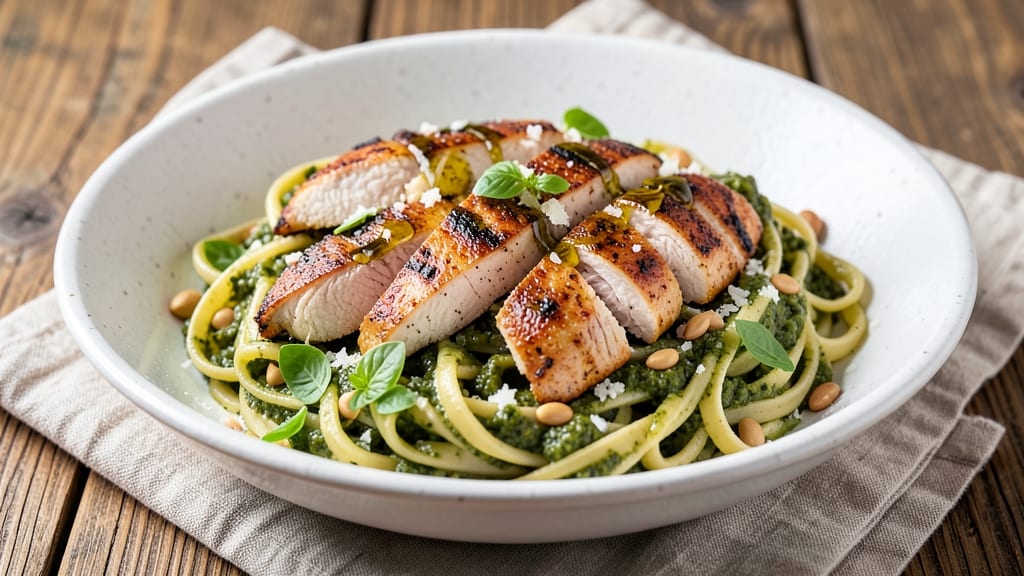
This baked chicken pesto pasta recipe delivers restaurant-quality results in one pan, combining tender chicken, creamy pesto sauce, and a golden herbed crust. The secret lies in baking everything together—juicy chicken nestled among al dente pasta, all blanketed in vibrant pesto and melted cheese.
I developed this method after years of testing, ensuring the chicken stays moist while the pasta absorbs the rich, herby sauce perfectly.
The beauty of this dish is its simplicity: just 30 minutes of active prep, followed by 25 minutes in the oven. The pesto sauce gets its creaminess from a blend of basil, garlic, and parmesan, while the herbed crust adds texture and depth.
Unlike traditional pasta dishes, this method eliminates the need for boiling water or separate cooking steps, making it ideal for busy weeknights.
What you'll end up with is a dish that's as impressive as it is easy—tender chicken breast slices, perfectly cooked pasta, and a sauce that's rich yet bright.
The herbed crust on top adds a satisfying crunch, while the melted cheese creates a golden finish that makes every bite worth savoring. This recipe proves that homemade meals can be both elegant and effortless.
Perfect for feeding a family or hosting dinner guests, this baked chicken pesto pasta is versatile enough for any occasion. Serve it with a simple side salad or roasted vegetables to round out the meal. Let's get started on creating this one-pan masterpiece!
Ingredients for baked chicken pesto pasta
Restaurant-quality pesto pasta comes together with these 14 simple yet premium ingredients.
| Ingredient | Amount | Notes |
|---|---|---|
| Chicken Breast 🍗 | 1 ½ lb | Boneless, skinless, sliced into 1-inch strips |
| Fettuccine Pasta 🍝 | 12 oz | Uncooked, medium width |
| Fresh Basil Leaves 🌿 | 2 cups | Packed, stems removed |
| Garlic Cloves 🧄 | 4 cloves | Peeled, minced |
| Parmesan Cheese 🧀 | ¾ cup | Freshly grated from block |
| Extra-Virgin Olive Oil 🫒 | ½ cup | High quality, fruity |
| Pine Nuts 🥜 | ¼ cup | Toasted for richness |
| Lemon Juice 🍋 | 1 tbsp | Freshly squeezed |
| Mozzarella Cheese 🧀 | 1 ½ cups | Fresh, shredded |
| Panko Breadcrumbs 🍞 | ½ cup | For herbed crust |
| Dried Italian Seasoning 🌿 | 1 tbsp | For herbed crust |
| Salt 🧂 | 1 ½ tsp | Kosher or sea salt |
| Black Pepper 🌶️ | ½ tsp | Freshly ground |
| Butter 🧈 | 2 tbsp | Unsalted, melted |
The chicken breast is the foundation—look for plump, evenly sized pieces at the meat counter. Costco or Whole Foods often carry premium cuts with better marbling. For the pasta, De Cecco or Barilla brands hold up best during baking. Fresh basil is non-negotiable here; farmers markets have the most vibrant leaves, but grocery store containers work if they're bright green. Toast your pine nuts in a dry pan for 2-3 minutes—this brings out their nutty flavor without burning.
No fresh basil? Dried basil at half the amount works in a pinch, though the color won't be as vibrant. Pine nuts too pricey? Walnuts or cashews toasted work beautifully. For the Parmesan, grate it yourself from a wedge—pre-shredded contains anti-caking agents that make the sauce grainy. The Italian seasoning blend should include oregano, basil, thyme, and rosemary. If you can't find it, mix your own with equal parts dried herbs. For the mozzarella, low-moisture shredded prevents excess moisture in the dish.
Prep the pesto components first—they'll keep in the fridge for 3 days if stored in an airtight container with a thin layer of olive oil on top. The chicken and pasta can be prepped ahead and refrigerated for 2 hours before baking. The herbed crust stays crispy for 20 minutes after baking, so assemble it last. Leftovers reheat beautifully in the oven at 350°F for 10-15 minutes, covered with foil to prevent drying.
Why You'll Love This Recipe
- One-Pan Magic: I swear by this trick—just toss the chicken, pasta, and pesto on a sheet pan with garlic and olive oil. No pots, no pans, no stress. The chicken bakes right alongside the al dente fettuccine, soaking up all that herby goodness.
- Herb Bomb Flavor: That fresh basil and garlic combo? It’s like a flavor explosion in your mouth. The pesto clings to the chicken, and the Parmesan melts into the pasta, turning a simple meal into something that tastes like you slaved over it.
- Lunchbox Hero: Between us, this is my secret weapon for meal prep. Bake a big batch on Sunday, and you’ve got lunch for days. Pack it cold or reheat it—either way, it’s a crowd-pleaser that even picky eaters won’t complain about.
- Budget-Friendly Feast: Chicken breast and pasta are affordable staples, but the pesto makes it feel fancy. Honestly, I’ve stretched this into four servings for under $15, and no one ever guesses how cheap it is. Leftovers? Even better the next day.
Step-by-step instructions for baked chicken pesto pasta
Here's the method for a one-pan masterpiece with crispy crust and creamy pesto sauce.
Prepare the Pesto Sauce and Chicken
In a food processor, combine the 2 cups fresh basil leaves, 4 cloves minced garlic, 0.25 cup toasted pine nuts, 0.75 cup freshly grated Parmesan cheese, 1 tbsp lemon juice, and 0.5 cup extra-virgin olive oil. Pulse until smooth but still slightly textured—about 30 seconds. Transfer to a bowl and set aside.
Meanwhile, season the 1.5 lb sliced chicken breast with 1 tsp salt and 0.25 tsp black pepper. In a separate bowl, mix 0.5 cup panko breadcrumbs with 1 tbsp dried Italian seasoning, 0.5 tsp salt, and 0.25 tsp black pepper. Press the breadcrumb mixture onto both sides of each chicken strip to create a flavorful crust.
Assemble the Pasta and Bake
Preheat your oven to 400°F. In a large oven-safe skillet, melt the 2 tbsp butter over medium heat. Add the 12 oz fettuccine pasta and toast for 2-3 minutes, stirring constantly, until lightly golden. This step enhances the pasta's flavor and prevents mushiness.
Remove the skillet from heat and add the seasoned chicken strips and 1.5 cups shredded mozzarella cheese. Pour the pesto sauce evenly over the pasta and chicken, tossing gently to coat. The mixture should look vibrant green with melted cheese clinging to the pasta and chicken.
Bake to Golden Perfection
Return the skillet to the oven and bake uncovered for 20-25 minutes. The pasta should be tender and the chicken should reach an internal temperature of 165°F. You'll know it's ready when the top is golden brown and bubbly, with crispy edges on the breaded chicken.
For the final touch, broil for 1-2 minutes to create a golden crust on top. Watch closely to prevent burning. Remove from the oven and let it rest for 5 minutes before serving. This resting period allows the juices to redistribute, ensuring each bite is moist and flavorful.
Serve with Fresh Garnishes
Transfer the baked pasta to serving plates, ensuring each portion has an even distribution of pasta, chicken, and cheese. Garnish with additional freshly grated Parmesan cheese and fresh basil leaves for a pop of color and freshness.
Serve immediately while the pasta is hot and the cheese is still slightly melted. The combination of crispy chicken, creamy pesto sauce, and tender pasta creates a harmonious balance of textures and flavors that will impress even the most discerning diners.
Pro Tips For Making Baked Chicken Pesto Pasta
- SEAR CHICKEN FIRST: Skip the bland baked chicken by searing the breasts in a hot pan for 3-4 minutes per side before baking. The crust locks in flavor—no one will guess it’s not roasted whole, and the pesto sauce will cling better when you toss it later.
- STEM BASIL STALKS: I used to toss whole basil stems into the pesto, thinking it was fine. Wrong. Strip the leaves off the stems, chop them finely, and save the woody parts for tea. Fresh basil’s flavor is the star here—don’t dilute it.
- UNDERCOOK PASTA: Pasta finishes cooking in the sauce, so pull fettuccine out of boiling water 1 minute early (al dente). Tossing it with pesto and chicken while still firm keeps it from turning mushy—trust me, you’ll notice the difference.
- MIX PESTO LAST: Make the pesto sauce separately, then fold it into the hot chicken and pasta at the very end. Adding it too soon makes the basil wilt and the sauce turn slimy—wait until everything’s piping hot for that bright, fresh flavor.
Essential equipment for baked chicken pesto pasta
Oven-Safe Skillet
This recipe hinges on a large, oven-safe skillet—I recommend a 12-inch cast iron skillet like the Lodge Pre-Seasoned Cast Iron for even heat distribution and durability. Cast iron retains heat beautifully, ensuring your pasta cooks evenly without burning.
If you don’t own one, a stainless steel skillet from All-Clad or Calphalon works too—just preheat it longer to avoid cold spots. 🔥
Food Processor
A high-quality food processor is essential for making smooth, vibrant pesto. I use my Cuisinart DLC-4A because it handles tough ingredients like pine nuts and garlic without overheating. If you’re on a budget, the Ninja BN601 is a great alternative.
Avoid blenders—they can overheat and turn your pesto into a hot mess. Pulse the ingredients in short bursts to avoid over-processing.
Measuring Tools
Precision matters, especially with pesto—freshly grated Parmesan and toasted pine nuts need exact measurements. Use a stainless steel measuring cup for liquids like olive oil and a microplane for garlic and lemon zest (if you add it).
For herbs, I pack my 2 cups fresh basil tightly into the measuring cup to ensure accuracy. A digital kitchen scale is ideal for cheese, but a sharp chef’s knife and cutting board work for everything else.
Mixing Bowls
You’ll need two medium mixing bowls: one for the herbed breadcrumb mixture and another for the pesto sauce. I prefer glass or stainless steel bowls—they’re non-reactive and easy to clean.
Avoid plastic, as it can absorb odors and flavors over time. A small bowl for melted butter also helps keep your workspace organized. Pro tip: Label your bowls if you’re prepping ahead!
Tongs and Spatula
For tossing the pasta and chicken, heat-resistant silicone tongs are a game-changer—they grip everything without slipping. Pair them with a long-handled spatula (like the OXO Good Grips) to scrape up any stuck-on bits.
A slotted spoon comes in handy for plating, especially if you’re serving directly from the skillet. These tools make flipping and stirring effortless, even with melted cheese clinging to everything. ✨
Nutrition facts
Frequently asked questions
Can I use store-bought pesto instead of making it from scratch?
Store-bought pesto works perfectly—just make sure it's high-quality and contains fresh basil as the first ingredient. Use ½ cup of store-bought pesto (instead of homemade) and add an extra 2 tbsp olive oil to maintain creaminess. For extra flavor, stir in 1 tbsp lemon juice and ¼ cup grated Parmesan to mimic the homemade version.
How do I prevent the pasta from getting mushy when baking?
Toast the pasta in the skillet for 2-3 minutes before adding other ingredients—this creates a slight crust that holds up during baking. Use freshly cooked pasta (not pre-cooked) and avoid overmixing after adding the pesto sauce. If your pasta still feels underdone, bake for an extra 2-3 minutes and check for tenderness.
Can I make this dish ahead of time?
Yes! Assemble everything (except baking) in the skillet and refrigerate for up to 2 hours before baking. For make-ahead meals, cook the pasta al dente, toss with half the pesto, and refrigerate separately. When ready to bake, reheat the pasta in the skillet, add the chicken and remaining pesto, then proceed with the baking instructions. This keeps the texture perfect!
What if I don’t have panko breadcrumbs for the chicken crust?
No problem! Use crushed cornflakes, crushed crackers, or even finely ground breadcrumbs mixed with 1 tsp cornstarch for extra crispiness. For a gluten-free option, try crushed gluten-free crackers or almond flour. Just press the mixture firmly onto the chicken to ensure it sticks during baking.
How do I reheat leftovers without drying them out?
Reheat in the oven at 350°F for 10-15 minutes, covered with foil to trap moisture. For a quick fix, microwave for 1-2 minutes (covered) and finish under the broiler for 1 minute to restore crispiness. Add a splash of water or milk to the skillet before reheating to prevent dryness.