
Main Courses
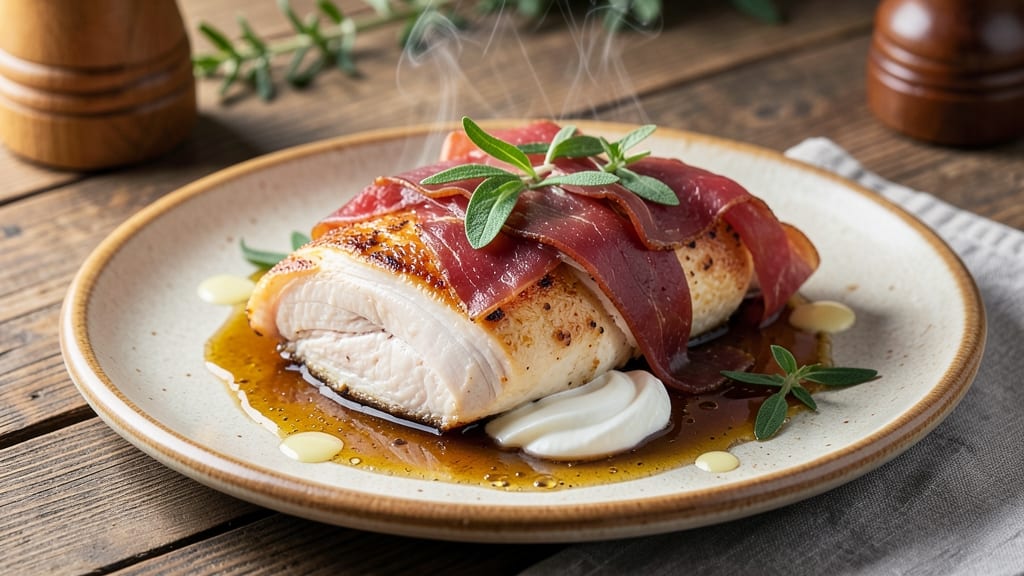
This baked chicken saltimbocca recipe delivers restaurant-quality Italian perfection with tender chicken wrapped in prosciutto and sage, baked to golden perfection. The secret lies in balancing traditional techniques with modern accessibility—no fussy rolling required.
I've perfected this method to ensure crispy prosciutto and herb layers that stay intact while the chicken remains juicy and tender.
The beauty of this dish is its simplicity: just a few high-quality ingredients transform into an elegant meal that feels special without requiring advanced skills. A light butter and white wine sauce elevates the dish further, adding brightness that cuts through the richness.
What you'll achieve is a plate that looks as impressive as it tastes—ideal for date nights or impressing guests.
Cooking at 375°F for just 20 minutes ensures the chicken reaches perfect doneness while keeping the prosciutto crisp and the sage fragrant. The dish pairs beautifully with creamy mashed potatoes or a simple arugula salad, balancing the richness with freshness. This is comfort food elevated to something extraordinary.
Whether you're serving it as a main course or the centerpiece of a dinner party, this recipe delivers foolproof results every time. The combination of salty prosciutto, earthy sage, and buttery chicken creates a harmony that's both comforting and sophisticated. Let's get started on creating this Italian classic at home.
Ingredients for baked chicken saltimbocca
High-quality ingredients transform simple techniques into restaurant-quality Italian perfection.
| Ingredient | Amount | Notes |
|---|---|---|
| Boneless, Skinless Chicken Breast 🍗 | 1 ½ lb | Even thickness, pounded to 1/4-inch |
| Prosciutto di Parma 🥓 | 8 oz | Thinly sliced, high-quality |
| Fresh Sage Leaves 🌿 | 12 whole | Large, vibrant leaves preferred |
| Unsalted Butter 🧈 | 4 tbsp | Cold, cut into small cubes |
| Dry White Wine 🍷 | ¼ cup | Sauvignon Blanc or Pinot Grigio |
| Heavy Cream 🥛 | ¼ cup | Full-fat for richness |
| Fresh Lemon Juice 🍋 | 1 tbsp | Bright, freshly squeezed |
| Extra-Virgin Olive Oil 🫒 | 1 tbsp | For brushing chicken |
| Diamond Crystal Kosher Salt 🧂 | 1 tsp | Fine grain preferred |
| Freshly Ground Black Pepper 🌶️ | ½ tsp | Coarsely ground |
| All-Purpose Flour 🌾 | 1 tbsp | For dredging chicken |
| Garlic Cloves 🧄 | 2 cloves | Minced for sauce |
The prosciutto and sage are non-negotiable for authentic flavor. Prosciutto di Parma delivers the best quality—look for thin, delicate slices at specialty stores like Eataly or high-end grocers. Fresh sage should be vibrant green with no brown edges; Whole Foods or local farmers markets carry the best. Chicken breasts must be evenly pounded to ensure consistent cooking. For the wine, Sauvignon Blanc or Pinot Grigio adds brightness without overpowering the dish. I always grab extra prosciutto—half goes on the chicken, half gets folded into the sauce for depth.
No prosciutto? Thinly sliced pancetta or high-quality ham works in a pinch, though the flavor won't be identical. Fresh sage wilted? Dried sage at one-third the amount suffices, but toast it first for better aroma. Running low on white wine? Chicken broth with a splash of lemon juice mimics the acidity. The butter should be cold when cutting—microwave for 10 seconds to soften if needed. For the flour, King Arthur brand creates the lightest crust. Prefer your chicken extra crispy? Brush with an additional tablespoon of olive oil after wrapping.
Prosciutto and chicken keep best in the coldest part of your fridge, wrapped in parchment paper for up to 3 days. The sauce can be made ahead and reheated gently—30 seconds in the microwave preserves its silky texture. For make-ahead meals, assemble the wrapped chicken and refrigerate for up to 12 hours before baking. The dish reheats beautifully, making it perfect for meal prep. Store leftovers in an airtight container for 3 days or freeze for 2 months. Always let it come to room temperature before serving for optimal texture.
Why You'll Love This Recipe
- Foolproof Assembly: I swear by this—just butter the chicken, layer prosciutto and sage like a sandwich, and pop it in the oven. No fussy searing, no complicated timing, just hands-off perfection while you stir a quick salad or toss together pasta.
- Umami Bomb: That prosciutto melts into the chicken, while the white wine deglazes into a silky sauce—salty, herby, and bright all at once. It’s the kind of flavor combo that makes you pause mid-bite, like, "Wait, did I just cook?"
- Weeknight to Weekend: Same recipe works when you’re scrambling for dinner or hosting a dinner party. Double the batch, reheat slices in a pan the next day, or serve it chilled for picnic sandwiches. (Yes, even on a Tuesday night.)
- Budget Luxe: Prosciutto feels fancy, but a few slices stretch across two meals easily—leftovers reheat beautifully under the broiler with fresh butter. It’s my go-to for making a simple protein taste like a splurge without breaking the bank.
Step-by-step instructions for baked chicken saltimbocca
Master this classic Italian technique for restaurant-quality results at home.
Prepare the Chicken and Assemble the Packages
Begin by placing the 1.5 lb boneless, skinless chicken breast between two sheets of plastic wrap. Using a meat mallet, pound it to an even ¼-inch thickness—this ensures even cooking and prevents dryness. Season both sides generously with 1 tsp Diamond Crystal kosher salt and ½ tsp freshly ground black pepper, pressing the seasoning into the meat.
Lay out 8 oz prosciutto di Parma and 12 whole fresh sage leaves on a clean work surface. Place one chicken breast on a slice of prosciutto, then top with 3 sage leaves. Roll tightly, tucking in the sides as you go, and secure with kitchen twine. Repeat with remaining chicken, prosciutto, and sage. The prosciutto will act as both a flavor carrier and a moisture barrier during baking.
Dredge and Sear the Packages
Lightly dust the assembled packages with 1 tbsp all-purpose flour, shaking off any excess. Heat 1 tbsp extra-virgin olive oil in a large oven-safe skillet over medium-high heat. Once shimmering, add the chicken packages and sear for 2-3 minutes per side until golden brown. The flour creates a delicate crust while the prosciutto renders slightly, adding depth of flavor.
Transfer the skillet to the preheated oven. Bake at 375°F for 18-20 minutes, or until the chicken reaches an internal temperature of 165°F. The prosciutto should be crisp at the edges while the chicken remains tender inside. Remove from the oven and let rest for 5 minutes before slicing—this resting period ensures juicy, evenly cooked meat.
Prepare the Sage-Wine Sauce
While the chicken rests, reduce heat to medium and add 2 minced garlic cloves to the same skillet. Sauté for 30 seconds until fragrant. Pour in ¼ cup dry white wine and scrape up any browned bits from the bottom of the pan. Let it simmer for 2-3 minutes until reduced by half, intensifying the wine's flavor.
Stir in 4 tbsp cold unsalted butter, cut into small cubes, and allow it to melt completely. Add ¼ cup heavy cream and 1 tbsp fresh lemon juice, then simmer for 1-2 minutes until the sauce thickens slightly. Season with additional salt and pepper if needed. The sauce should coat the back of a spoon with a velvety texture—this is the signature element that elevates simple chicken to fine dining.
Slice and Serve with Sauce
Carefully remove the kitchen twine and slice each package diagonally into ½-inch thick pieces. Arrange the chicken on warmed plates, spooning the sage-wine sauce generously over the top. Garnish with additional fresh sage leaves for color and aroma. The prosciutto will crisp slightly upon contact with the hot sauce, adding another layer of texture.
Serve immediately with mashed potatoes or creamy polenta to soak up the rich sauce. Each bite should deliver perfectly balanced flavors: tender chicken, salty prosciutto, earthy sage, and the bright acidity of the wine-lemon sauce. The key to success lies in the precise timing of searing, baking, and sauce reduction—all working together to create a harmonious dish.
Pro Tips For Making Baked Chicken Saltimbocca
- Trim That Butter: Use cold, cubed butter—not melted—so it browns into a fragrant crust instead of dissolving into a greasy mess. I used to melt it first, and the dish just tasted flat. Cold cubes release flavor gradually and create that golden, buttery finish you crave.
- Salt the Chicken First: Season the chicken breasts before wrapping them in prosciutto and sage—salt draws out moisture, and you want that flavor locked in, not trapped under layers. Skip this, and your chicken tastes bland no matter how much butter you add.
- Don’t Overcrowd the Pan: Bake the saltimbocca in a single layer, even if it means two batches. Stacking them steams the bottom pieces instead of browning, and that’s when the prosciutto turns soggy. Tight quarters ruin the texture—give them space to crisp.
- Deglaze with Wine Early: Pour the white wine into the hot pan right after removing the chicken, while the butter’s still sizzling. Scrape up those browned bits—this pan sauce is where all the flavor hides. Let it reduce by half before basting the chicken back in.
Troubleshooting perfect results
Prosciutto Not Holding
If your prosciutto unravels during baking, the chicken likely wasn't rolled tightly enough. I always use kitchen twine to secure the packages—wrap it around the prosciutto-wrapped chicken twice before tying into a tight knot.
For extra security, place the assembled packages on a wire rack over a baking sheet to prevent steam buildup, which can soften the prosciutto prematurely. 🌟
Chicken Overcooking
Your chicken may dry out if it exceeds 165°F internal temperature. Use a meat thermometer to monitor the thickest part—remove it 2-3°F before it reaches doneness, then let it rest.
For thicker breasts, reduce oven time to 16-18 minutes at 375°F. If using a cast-iron skillet, preheat it for 5 minutes before searing to ensure even heat distribution. ✨
Sauce Too Thin
A watery sauce usually means the wine wasn't reduced enough. After adding the white wine, simmer it until it reduces by half—this takes about 3-4 minutes on medium heat.
For extra thickness, whisk in 1 tsp cornstarch mixed with 1 tbsp cold water at the end. Always use cold butter when adding it to the sauce to prevent curdling. 🔥
Sage Burning
Fresh sage leaves can burn if exposed to high heat too long. Place them inside the prosciutto wrap (not on top) to protect them during baking. If they brown too quickly, reduce oven temperature to 350°F and increase baking time by 2-3 minutes.
For extra flavor, add 1 tsp dried sage directly to the sauce instead of relying solely on fresh leaves. 🌿
Prosciutto Too Soft
If your prosciutto stays limp after baking, it likely didn't render enough fat. Use high-quality prosciutto di Parma—thinner slices crisp better than thick cuts. For extra crispiness, sear the packages 5 minutes longer before transferring to the oven.
If using pancetta as a substitute, pat it very dry with paper towels before wrapping to remove excess moisture. 🥓
Uneven Cooking
Thicker edges or undercooked centers happen when chicken isn't pounded evenly. Always pound to ¼-inch thickness using a meat mallet—press firmly in a circular motion. For extra insurance, place the chicken packages seam-side down in the skillet to prevent rolling during searing.
If using a convection oven, reduce temperature by 25°F to compensate for faster heat circulation. 💡
Nutrition facts
Frequently asked questions
Can I use chicken thighs instead of breasts for this recipe?
Yes, but with adjustments! Chicken thighs stay juicier and can handle the prosciutto wrapping beautifully. Increase baking time to 25-30 minutes at 375°F and check for 165°F internal temperature. The skin will crisp up nicely—just brush with olive oil before baking. For even cooking, trim excess fat and pound to ½-inch thickness.
How do I make this dish ahead of time?
Assemble the prosciutto-wrapped chicken packages up to 12 hours ahead and refrigerate uncovered on a wire rack. For the sauce, make it completely (without butter) and refrigerate for up to 3 days. Reheat the sauce gently on the stove, whisking in cold butter at the end. Bake the chicken from cold at 375°F for 25-30 minutes to account for the cooler start.
What's the best way to reheat leftovers?
Slice the leftovers and reheat in a skillet over medium-low heat with 1 tbsp butter and 2 tbsp white wine for 3-4 minutes. Avoid microwaving—it makes the prosciutto soggy. For extra crispiness, broil for 1-2 minutes at the end. Store leftovers in an airtight container for 3 days or freeze for 2 months.
Can I substitute pancetta for prosciutto?
but expect a slightly saltier, fattier flavor. Use 8 oz pancetta and pat it very dry with paper towels before wrapping. For extra crispiness, sear the packages 5 minutes longer before baking. The fat renders beautifully, but pancetta won't have the delicate sweetness of prosciutto di Parma.
What wine works best if I don't have Sauvignon Blanc?
Any dry white wine with acidity works—try Pinot Grigio, Chardonnay, or even dry Riesling. Avoid sweet wines like Moscato. For a non-alcoholic version, use ½ cup chicken broth + 1 tbsp lemon juice. The key is acidity to balance the richness. If your wine is too oaky, reduce it longer to intensify the flavor.