
Main Courses
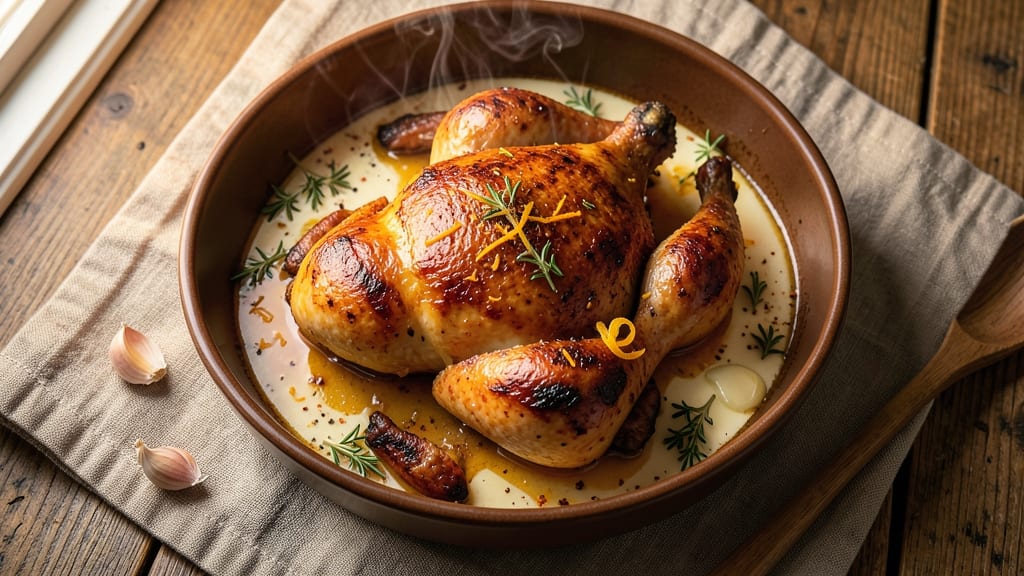
This baked orange whole chicken recipe delivers restaurant-quality results with crispy, crackling skin and juicy centers—all thanks to a bright citrus marinade that infuses every bite.
The secret lies in a simple brine and basting technique that transforms an ordinary roast chicken into something extraordinary, with a perfect balance of savory and sweet flavors. I’ve perfected this method over years of hosting dinner parties, ensuring the chicken stays moist while developing that irresistible golden-brown crust.
The process starts with a flavorful brine that tenderizes the meat and locks in juices, followed by a drying step that guarantees crispy skin. You’ll baste the chicken with orange juice and butter throughout baking, creating a glaze that caramelizes into a sticky, aromatic crust.
This isn’t just a recipe—it’s a foolproof method for achieving juicy, flavorful chicken every time, even if you’re not an experienced cook.
By the time it emerges from the oven, your chicken will be golden and crackling, with meat so tender it falls off the bone. The citrus notes brighten the dish without overpowering, making it versatile enough for weeknight dinners or special occasions.
Serve with roasted vegetables or a simple citrus glaze for a complete meal that’s sure to impress.
What sets this recipe apart is the attention to detail—proper resting time, precise basting, and the right oven temperature—all of which ensure juicy results. Whether you’re feeding a family or hosting guests, this method delivers restaurant-quality chicken with minimal effort. Let’s get started!
Ingredients for baked orange whole chicken
The citrus-forward ingredients that transform ordinary chicken into restaurant-quality perfection.
| Ingredient | Amount | Notes |
|---|---|---|
| Whole Chicken 🍗 | 4 lb | Fresh, preferably free-range |
| Orange Juice 🍊 | 1 cup | Freshly squeezed, no pulp |
| Unsalted Butter 🧈 | ½ cup | Cold, cubed for basting |
| Orange Zest 🍊 | 1 tbsp | From 1 large orange |
| Garlic Cloves 🧄 | 6 cloves | Smashed, not minced |
| Kosher Salt 🧂 | 2 tbsp | Diamond Crystal preferred |
| Black Peppercorns 🌶️ | 1 tbsp | Freshly cracked |
| Fresh Thyme 🌿 | ½ cup | Stems removed, chopped |
| Fresh Rosemary 🌿 | ¼ cup | Needles only, chopped |
| Brown Sugar 🍚 | 2 tbsp | Light or dark |
| Olive Oil 🫒 | 2 tbsp | For drying chicken |
| Ice ❄️ | 2 cups | For brine bath |
The chicken is the star, so pick a 4-pound bird—not too big, not too small. Local butchers or Whole Foods often have excellent free-range options that stay juicier. Look for bright, plump skin and avoid any with a strong ammonia smell. For the orange juice, fresh-squeezed is non-negotiable—bottled lacks the bright acidity that cuts through the fat. I always grab Valencia oranges from the grocery store in late winter—they’re sweeter and more aromatic. The zest is where the magic happens, so use a microplane to get fine, fragrant strips without the bitter white pith.
No fresh thyme? Dried works at one-third the amount, but fresh is ideal here. Running short on butter? Vegan butter or coconut oil keeps the same richness, though traditional butter gives that unmatched caramelization. The ice in the brine might seem odd, but it’s key for even chilling. Skip it only if you’re in a rush—the chicken will still cook, but the skin won’t be as crisp. For the sugar, brown sugar adds depth, but white works in a pinch. The olive oil for drying? Any light oil works, but avoid heavy ones like coconut—they can make the skin greasy.
The brine keeps 2 days in the fridge if you prep ahead, but the chicken should go straight from brine to oven. Fresh herbs? Wrap them in damp paper towels and store in a sealed container for up to 5 days. The zest can be frozen for 3 months in an ice cube tray with oil—just add a cube to your next marinade. Leftovers? Shred the meat and use within 3 days for sandwiches or salads. The bones make amazing stock—simmer with veggies for 2 hours for a citrusy base.
Why You'll Love This Recipe
- Fewer Ingredients, Bigger Impact: Honestly, I swear by this recipe because it’s that simple—just a chicken, some orange juice, butter, zest, and garlic. No fancy marinades or last-minute shopping runs. The citrus does all the work while you sip your coffee.
- Juicy, Not Dry: That crispy skin? The garlic-infused butter melting into every bite? And the orange zest? It’s like a bright, tangy hug for your taste buds—no sad, dry chicken here. My kids fight over the drumsticks.
- Weeknight Hero: Between us, this is my secret weapon for busy nights. Throw it in the oven while you prep sides, and boom—dinner’s ready. Even my picky husband doesn’t complain. (Yes, even on a Tuesday night.)
- Leftovers That Don’t Suck: The best part? The chicken stays moist for days. Shred it for tacos, slice it for sandwiches, or just reheat it—no one will guess it’s not fresh. My freezer’s full of these, and I don’t even feel guilty.
Step-by-step instructions for citrus-basted whole chicken
This method delivers perfectly juicy meat with skin that crackles under the knife.
Prepare the Brine Bath for Maximum Juiciness
In a large bowl, combine the 2 cups ice, 1 cup orange juice, 2 tbsp kosher salt, and 2 tbsp brown sugar. Stir until the ice melts and the salt and sugar fully dissolve, creating a flavorful brine. This step ensures the chicken stays moist throughout baking while infusing it with bright citrus notes.
Place the 4 lb whole chicken in the brine, making sure it's fully submerged. Cover and refrigerate for 30 minutes—this short brine time prevents the chicken from becoming waterlogged while still delivering incredible flavor. After brining, pat the chicken completely dry with paper towels, including the cavity. Dry skin is essential for crispy, crackling results.
Create the Citrus-Herb Butter Basting Mixture
In a small bowl, mix the 0.5 cup cold unsalted butter with the 1 tbsp orange zest, 6 smashed garlic cloves, 0.5 cup chopped fresh thyme, 0.25 cup chopped fresh rosemary, 1 tbsp cracked black peppercorns, and 2 tbsp olive oil. This aromatic compound butter will be your secret weapon for flavor and moisture.
Form the mixture into a log by rolling it between two sheets of plastic wrap and refrigerate until ready to use. The cold butter ensures it holds its shape while basting, and the herbs will infuse the chicken with layers of flavor as it cooks.
Season and Preheat for Perfect Browning
Preheat your oven to 425°F with a rack positioned in the lower third of the oven. This high heat is crucial for developing that signature crackling skin. While the oven heats, season the chicken cavity with 1 teaspoon kosher salt and ½ teaspoon cracked black peppercorns. Stuff the cavity with the remaining herb mixture, then secure the legs with kitchen twine.
Place the chicken breast-side up on a wire rack set inside a rimmed baking sheet. This elevation allows hot air to circulate underneath, preventing soggy skin. Rub the outside of the chicken with any remaining herb butter mixture, pressing it gently into the skin for maximum adhesion.
Baste and Roast to Juicy Perfection
Transfer the chicken to the preheated oven and roast for 20 minutes to establish a golden-brown crust. After this initial sear, reduce the oven temperature to 375°F. This two-stage approach creates a perfect balance of crispy skin and tender meat.
Every 20 minutes, baste the chicken with the rendered juices and any remaining herb butter mixture. Continue roasting until the internal temperature reaches 165°F when measured in the thickest part of the thigh (about 1 hour 15 minutes total). The skin should be deep golden brown with visible crackling, and the juices should run clear when pierced with a meat thermometer.
Rest and Serve with Citrus Glaze
Remove the chicken from the oven and transfer it to a cutting board. Tent loosely with foil and let it rest for 15 minutes—this crucial step allows the juices to redistribute throughout the meat, ensuring each slice remains moist and flavorful.
For presentation, strain the pan juices and return them to the oven-safe skillet. Simmer over medium heat until reduced by half, then whisk in 1 tablespoon orange zest and 1 tablespoon cold butter to create a glossy glaze. Drizzle this citrusy sauce over the sliced chicken before serving.
Pro Tips For Making Baked Orange Whole Chicken
- USE A THERMOMETER: I learned this the hard way—chickens don’t always brown evenly, and by the time the skin looks done, the breast might still be pink. Pull it at 165°F in the thickest part of the thigh, even if the skin isn’t golden. Overcooking dries out the meat, and undercooking is a risk no one wants.
- ZEST FIRST, JUICE LATER: Fresh orange zest packs way more flavor than bottled, but it loses potency fast. Grate it right before basting—don’t prep it hours ahead. For the juice, use freshly squeezed (yes, it’s a pain) or at least chilled store-bought, but skip the pulp unless you like gummy chicken. Strain it if you’re picky.
- DON’T SKIP THE GARLIC: I used to treat garlic like an afterthought—just a few cloves tossed in with the butter. Now I mince it fine and mix it directly into the melted butter before rubbing it under the skin. That’s where the magic happens. Also, don’t overdo it: 4-5 cloves max, or you’ll taste nothing but garlic.
- BASTE MIDWAY, NOT JUST AT THE END: The orange-butter glaze is useless if you only slap it on once. After 45 minutes, pull the chicken out, flip it, and spoon that sticky orange-butter mix all over—inside the cavity, under the skin, everywhere. The high heat will caramelize it into a crispy, fragrant crust. (Yes, even if you’re impatient like me.)
Dietary considerations for baked orange whole chicken
Gluten-Free Adaptations
This recipe is naturally gluten-free since it relies on simple, whole-food ingredients. The only potential concern comes from the brown sugar—opt for a gluten-free granulated sugar like Wholesome! Sweet Life if you're avoiding all traces of gluten.
The kosher salt and herbs are inherently safe, and the orange juice and butter pose no risks. Just double-check your olive oil label for gluten-free certification if you're highly sensitive. 🌱
Dairy-Free Substitutions
For a dairy-free version, replace the unsalted butter with vegan butter (like Miyoko's) or coconut oil—both work beautifully for basting. The citrus glaze at the end can be made with vegan butter or simply olive oil to maintain the glossy finish.
Just note that coconut oil has a distinct flavor, so use it sparingly if you prefer a neutral taste. The rest of the recipe remains unchanged. 🥥
Allergen-Friendly Notes
If you're dealing with nut allergies, this recipe is already safe—no nuts are involved. For egg allergies, the only potential concern is the kitchen twine used to secure the legs. Opt for vegetable-based twine or skip it entirely, using a chicken truss instead.
The orange zest is also safe, but if you're highly sensitive to citrus, you can reduce it to ½ tablespoon or omit it altogether. Always check labels on olive oil and vegan butter for cross-contamination warnings. 🚫
Low-Sodium Options
To reduce sodium, cut the kosher salt in half—use 1 tablespoon instead of 2 tablespoons. You can also replace the brown sugar with unsweetened applesauce (¼ cup) for natural sweetness without added salt.
The orange juice provides natural acidity, so no additional salt is needed for flavor balance. Just taste the brine before adding the chicken to adjust seasoning. 🧂
Keto-Friendly Adjustments
This recipe is already keto-friendly with minimal tweaks. Skip the brown sugar entirely—its carbs aren’t essential for flavor. The orange juice adds acidity without significant carbs, and the herbs/butter provide rich, low-carb flavor.
Watch your portion size: a 4-pound chicken serves 4 people with ~20g net carbs per serving (mostly from natural sugars in the orange). Pair with roasted Brussels sprouts or cauliflower mash for a fully keto meal. 🥦
Nutrition facts
Frequently asked questions
Why does the recipe call for brining the chicken in ice water?
The ice water creates an instant cold bath that helps the chicken absorb the citrus brine more evenly and quickly. This method also keeps the meat cold during the short brining time, preventing any pre-cooking that could make the skin soggy. The cold water also helps set the skin for that perfect crispy texture later. Think of it as a flavor jumpstart while keeping the chicken safe to handle.
Can I use bottled orange juice instead of fresh?
While bottled orange juice will work in a pinch, fresh-squeezed juice delivers brighter flavor and better acidity that cuts through the fat. The pulp in fresh juice also adds subtle texture to the basting liquid. If you must use bottled, choose 100% pure orange juice without added sugars or preservatives for the best results.
How do I know when the chicken is done without a meat thermometer?
For a whole chicken, look for these visual cues: the skin should be deep golden brown with crispy patches, the juices running clear when pierced with a knife, and the thigh meat should pull away from the bone with gentle pressure. The leg should also move freely in its socket. If you're unsure, err on the side of undercooking slightly—chicken continues cooking for a few minutes after coming out of the oven.
What's the best way to reheat leftover baked orange chicken?
Never microwave leftover chicken as it makes the skin rubbery. Instead, reheat in a 350°F oven for 15-20 minutes on a wire rack over a baking sheet to maintain crispiness. For extra moisture, add a splash of orange juice to the pan. You can also shred the meat and reheat it gently with a little broth or sauce for sandwiches or salads.
Can I make this recipe in a convection oven?
Yes, but you'll need to adjust the temperature and time. For convection ovens, reduce the temperature by 25°F (use 375°F instead of 400°F) and reduce cooking time by about 10-15 minutes. The convection fan circulates air more efficiently, so the chicken will cook faster. Monitor closely after the initial 20-minute sear to prevent overcooking.