
Main Courses
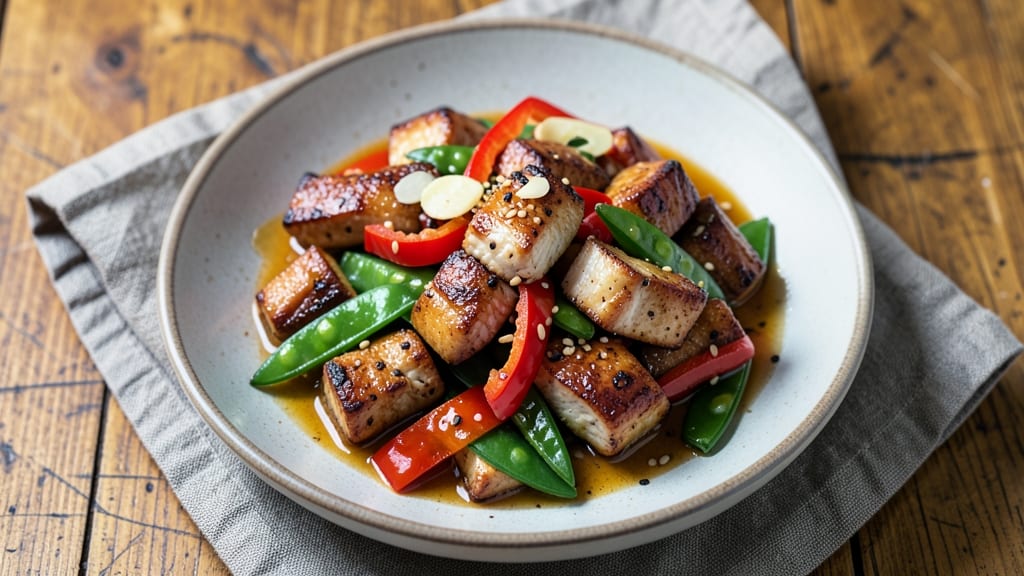
Creating a Campbell’s-inspired chicken stir fry that delivers restaurant-quality velvety sauce in one pan is simpler than you’d expect. This recipe transforms tender chicken and crisp vegetables into a rich, flavorful dish using Campbell’s broth as the secret weapon—though it works beautifully without it too.
I developed this method during a busy week when I needed a weeknight dinner that felt special without requiring hours in the kitchen.
The magic happens in the sauce, where Campbell’s chicken broth (or homemade substitute) simmers with garlic, ginger, and a touch of soy sauce to create a silky, aromatic base. Chicken pieces cook just until tender, while bell peppers and snap peas achieve that perfect crisp-tender texture.
The one-pan technique keeps cleanup minimal while delivering maximum flavor—no complicated techniques required. This is the kind of meal that transforms a simple dinner into something memorable.
By the time you plate it, you’ll have golden-brown chicken with glossy, velvety sauce clinging to every bite, paired with vibrant vegetables that pop against the rich sauce. The aroma alone will have everyone at the table asking what’s for dinner.
Serve over steamed jasmine rice or fluffy cauliflower rice for a lighter option, and you’ve got a complete, satisfying meal ready in under 40 minutes.
This recipe scales effortlessly for a family dinner or meal prep, and the sauce freezes beautifully for future use. Whether you’re using Campbell’s broth or a homemade version, the result is a stir fry that tastes like it came from a wok, not a weeknight kitchen. Let’s get cooking!
Ingredients for campbell's chicken stir fry
Pantry staples plus a few fresh ingredients—this stir fry comes together faster than takeout.
| Ingredient | Amount | Notes |
|---|---|---|
| Boneless Chicken Thighs 🍗 | 1 ½ lb | Cut into 1-inch pieces |
| Campbell's Chicken Broth 🍲 | 1 ½ cups | Low-sodium preferred |
| Bell Peppers 🌶️ | 2 whole | Any color, sliced thin |
| Snap Peas 🌱 | 1 cup | Fresh or frozen |
| Garlic Cloves 🧄 | 4 cloves | Minced for sauce |
| Fresh Ginger 🌿 | 1 tbsp | Grated finely |
| Low-Sodium Soy Sauce 🍶 | 2 tbsp | For umami depth |
| Honey 🍯 | 1 tbsp | For sauce balance |
| Vegetable Oil 🫒 | 2 tbsp | For high-heat cooking |
| Cornstarch 🌾 | 1 tsp | For sauce thickening |
| Salt 🧂 | ½ tsp | Adjust to taste |
| Black Pepper 🌶️ | ¼ tsp | Freshly ground |
| Sesame Oil 🫒 | ½ tsp | For finishing |
| Green Onions 🧅 | 2 whole | Sliced thin for garnish |
| Jasmine Rice 🍚 | 1 ½ cups | Uncooked, for serving |
The Campbell’s chicken broth is the secret weapon here—it gives that restaurant-quality depth without extra effort. Grab the low-sodium version if you're watching salt, or make your own by simmering chicken bones with aromatics. Chicken thighs stay juicier than breasts during stir-frying, and cutting them into even pieces ensures consistent cooking. For the veggies, farmers markets usually have fresher snap peas and bell peppers than the grocery store, but whatever you find works. Just slice the peppers thin so they cook quickly—they should stay crisp-tender, not soggy.
No Campbell’s broth? Homemade chicken broth or even vegetable broth works in a pinch—just add a splash of soy sauce to mimic the umami. Fresh ginger is ideal, but ground ginger at half the amount gets you close. The sesame oil might be hiding in your spice aisle—Trader Joe's carries it in tiny bottles that last forever. For extra crispiness, toss your veggies in a little cornstarch before cooking. And if you're feeling fancy, swap the jasmine rice for cauliflower rice to lighten things up. The sauce will thicken as it sits, so if it's too thin right away, just simmer uncovered for another minute.
This sauce freezes beautifully—portion it into ice cube trays for easy future meals. Store leftovers in airtight containers for 4-5 days, or freeze for up to 3 months. The rice reheats best in a steamer basket over simmering water. For meal prep, I always double the sauce and freeze half—it’s perfect for quick weeknight dinners. And if you’ve got extra veggies, just toss them in with the chicken—the sauce will cling to everything.
Why You'll Love This Recipe
- No Chopping Needed: Honestly, I just slice the bell peppers into fat strips and dump the snap peas straight from their pod—no knife skills required. The chicken thighs stay juicy because they’re seared just until golden, then simmered in that rich Campbell’s broth until tender. That’s my kind of dinner where the prep feels like a warm hug.
- Umami Bomb: Between us, the Campbell’s chicken broth is the MVP here—salty, savory, and packed with depth without any weird aftertaste. Add a splash of soy sauce and a crushed garlic clove, and suddenly you’ve got a flavor profile that tastes like you slaved over it for hours. (Spoiler: I didn’t.)
- Lunchbox Hero: I swear by this for meal prep because it reheats like a dream—no soggy veggies, no dry chicken. Pack it in containers with rice, and it’s a grab-and-go lunch that even my picky teenager won’t complain about. (Yes, even on a Tuesday.)
- Budget Win: Chicken thighs are cheaper than breasts, and you’re using one pantry staple (that broth) to make the whole dish sing. Leftovers? Even better—freeze half for another night when you’re too tired to cook. That’s 20 bucks saved and zero guilt.
Step-by-step instructions for Campbell's chicken stir fry
Here's how to create a restaurant-worthy stir fry with that velvety Campbell's chicken broth sauce.
Prepare the Chicken and Vegetables
Cut the 1.5 lb boneless chicken thighs into 1-inch pieces and pat them dry with paper towels. This helps them sear properly instead of steaming. In a large bowl, toss the chicken with 0.5 tsp salt and 0.25 tsp black pepper until evenly coated.
Slice the 2 whole bell peppers into thin strips and trim the ends from the 1 cup snap peas. Peel and finely grate the 1 tbsp fresh ginger, then mince the 4 cloves garlic cloves. Keep these ingredients separate for now - we'll add them at different stages to build flavor layer by layer.
Cook the Chicken Until Golden
Heat 1 tablespoon of the 2 tbsp vegetable oil in a large skillet or wok over medium-high heat until shimmering. Add half of the chicken pieces in a single layer and cook undisturbed for 3-4 minutes until golden brown on the bottom. This creates that beautiful crust we want.
Flip the chicken and cook for another 2-3 minutes until cooked through. Remove the chicken to a plate and repeat with the remaining chicken using the second tablespoon of oil. The chicken should be fully cooked but still juicy - if it releases easily from the pan, it's ready.
Stir-Fry the Vegetables
In the same skillet, add the sliced bell peppers and snap peas. Stir-fry for 3-4 minutes until the bell peppers soften slightly but still retain some crunch. This quick cooking preserves their texture while developing flavor.
Add the minced garlic and grated ginger, stirring constantly for 30 seconds until fragrant. You'll smell that wonderful aromatic punch - this is where the real flavor foundation happens. If the vegetables are sticking too much, add a splash of water and scrape up any browned bits from the bottom of the pan.
Create the Velvety Sauce
Pour in the 1.5 cups Campbell's chicken broth, scraping up any browned bits from the pan. Bring to a gentle simmer, then stir in the 2 tbsp low-sodium soy sauce and 1 tbsp honey. Let it simmer for 3-4 minutes until slightly reduced.
In a small bowl, whisk together the 1 tsp cornstarch with 1 tablespoon of water until smooth. Slowly pour this mixture into the simmering sauce while stirring constantly. The sauce will thicken beautifully into that velvety consistency we're after - keep stirring until it coats the back of a spoon.
Combine and Finish
Return the chicken to the skillet and stir everything together. Cook for 2-3 minutes until the chicken is heated through and coated in the sauce. Taste and adjust seasoning if needed - you might want to add a bit more soy sauce or honey depending on your preference.
Remove from heat and stir in the 0.5 tsp sesame oil. This adds that final aromatic touch that makes the dish truly special. Garnish with sliced green onions and serve immediately over 1.5 cups of cooked jasmine rice. The sauce should be thick enough to coat the rice beautifully while still being light enough to let the chicken and vegetables shine through.
Pro Tips For Making Campbell'S Chicken Stir Fry
- CRISP THE PEPPERS FIRST: The Campbell’s broth is salty enough that raw bell peppers will taste bland if you toss them in too soon. Sear sliced peppers in a dry pan for 3–4 minutes until just softened and slightly charred—this concentrates their flavor and cuts down on cooking time later. (Yes, even if you’re in a hurry.)
- CUT CHICKEN SMALLER THAN YOU THINK: Boneless thighs stay juicy, but thick chunks won’t cook through evenly in the stir-fry. Aim for ½-inch pieces—smaller than a poker chip. I learned this the hard way when my first batch had a rubbery center while the edges were dry. Trust the process.
- DEGLAZE WITH BROTH IMMEDIATELY: After browning the chicken, don’t just dump the broth in. Splash in ¼ cup of water first, scrape up those golden bits stuck to the pan, then add the full broth. Those bits pack flavor, and skipping this step means losing half the taste—like building a house without a foundation.
- SALT THE BROTH LAST: Campbell’s Chicken Broth is already seasoned, but the snap peas and peppers absorb liquid fast. Hold off on adding extra salt until the very end—after everything’s cooked and you’ve tasted it. You’ll save yourself from over-salting and guessing later. (I know, it feels counterintuitive.)
Essential equipment for great campbell's chicken stir fry
Wok vs. Skillet
For authentic stir-fry texture, a carbon steel wok is my top choice—its sloped sides and high heat retention create that classic wok hei (breath of the wok) flavor. But don’t stress if you don’t own one: a 12-inch cast iron skillet (like my vintage Lodge) works perfectly.
Just make sure it’s well-seasoned to prevent sticking. If you’re using non-stick, avoid high heat—it can degrade the coating and ruin your sauce. 🔥
High-Heat Tools
Your pan needs to get smoking hot—I mean 400-450°F—to get that perfect sear on the chicken. A thermometer probe (like the ThermoWorks Dot) helps monitor heat precisely. For extra insurance, preheat your pan for 2-3 minutes before adding oil.
If your pan isn’t hot enough, the chicken will steam instead of sear, and your sauce will lose its depth.
Essential Utensils
Skip the wooden spoons—tongs and a heatproof spatula are non-negotiable. I use stainless steel tongs (like OXO Good Grips) to flip chicken without piercing it, and a silicon-coated spatula to scrape up those flavorful browned bits from the pan.
A fine-mesh strainer also comes in handy if you’re making homemade broth to strain out impurities. 💡
Sauce Thickening
The cornstarch slurry is your secret weapon for that velvety sauce. Whisk it in a small bowl (I use Corelle) with water to avoid lumps—nothing ruins a sauce faster than clumps. For extra smoothness, strain the sauce through a fine-mesh sieve if you’re feeling fancy.
A rubber scraper helps get every last drop of sauce from the pan into your dish. Pro tip: Keep a baste brush nearby to coat the chicken in sauce while it rests.
Garnish Tools
Fresh green onions and sesame seeds elevate the dish, but presentation matters. Use a sharp chef’s knife (like Wüsthof) to slice onions paper-thin, and a microplane for sesame seeds if you’re not using pre-toasted.
A small offset spatula helps arrange garnishes neatly on the plate. For extra flair, I sometimes drizzle a little extra sauce in a zigzag pattern—it adds visual appeal without extra effort. ✨
Nutrition facts
Frequently asked questions
Can I substitute Campbell's broth with something else?
Use homemade chicken broth (simmer chicken bones with aromatics for 2-3 hours) or even low-sodium vegetable broth—just add 1 extra teaspoon soy sauce to mimic Campbell's umami depth. For a richer flavor, reduce the broth by 1/4 cup before adding other sauce ingredients to concentrate the taste.
Why does my sauce turn out too thin or too thick?
Sauce consistency depends on timing and cornstarch. For thicker sauce, simmer uncovered for 1-2 extra minutes after adding the cornstarch slurry. Too thin? Whisk in 1/4 teaspoon more cornstarch mixed with 1 teaspoon water and stir vigorously. Always cook the sauce on medium heat—high heat can cause lumps or break the emulsion.
How do I make this recipe gluten-free?
Replace the soy sauce with tamari or coconut aminos (both are gluten-free soy alternatives). Check your Campbell's broth label—most are gluten-free, but verify if you have celiac disease. The cornstarch can be swapped for arrowroot powder (use the same ratio) for a gluten-free thickener. All other ingredients are naturally gluten-free.
Can I use chicken breast instead of thighs?
Yes, but cut the breasts into 1/2-inch thick pieces and cook them for 2-3 minutes less than thighs to prevent drying out. Marinate them in 1 tablespoon soy sauce + 1 teaspoon honey for 15 minutes before cooking to help retain moisture. Chicken breast will absorb more sauce, so you may need to add 1-2 tablespoons extra broth at the end.
What are the best sides to serve with this stir fry?
Jasmine rice is classic, but try steamed cauliflower rice for a low-carb option or sushi rice for extra stickiness. For heartier meals, serve with egg fried rice or garlic noodles. To balance the richness, add a simple cucumber salad with rice vinegar or steamed bok choy with sesame seeds. The sauce pairs beautifully with all of these!