
Main Courses
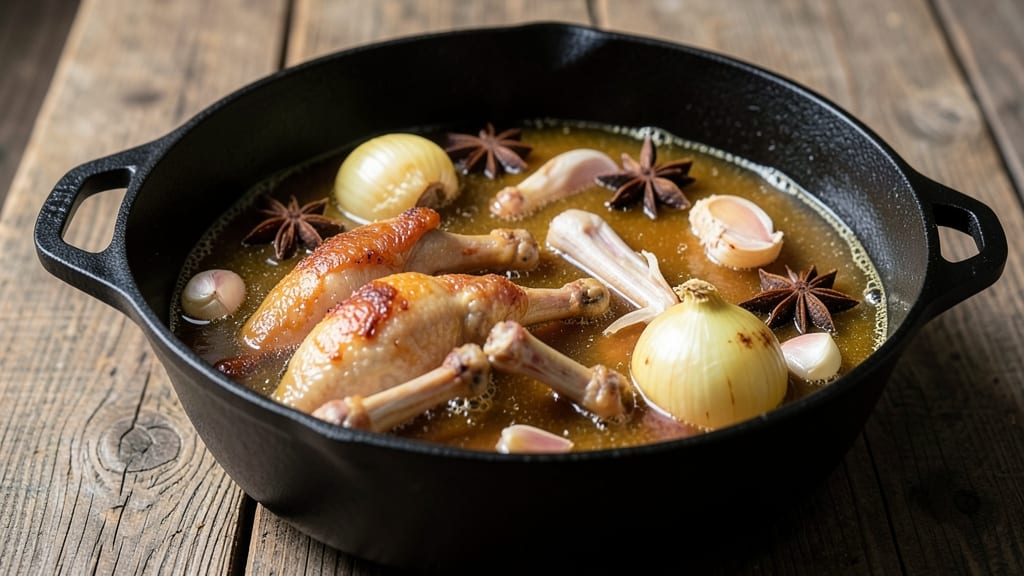
Transforming chicken feet stock into a rich, umami-packed foundation for your cooking starts with a simple yet powerful process that unlocks deep flavors you won’t find in store-bought broths.
This traditional technique—rooted in Asian culinary traditions—turns tough connective tissues into a velvety, gelatinous broth perfect for pho, ramen, or hearty stews. The key lies in slow simmering, where collagen dissolves over hours to create a broth so concentrated it elevates any dish it touches.
What sets this recipe apart is its minimalist yet transformative approach: just chicken feet, bones, aromatics, and time. Unlike quick broths that rely on artificial depth, this method builds flavor layer by layer through caramelization and reduction.
Aromatics like ginger, garlic, and star anise infuse the broth with warmth, while the chicken feet contribute a unique, savory richness that’s impossible to replicate with chicken necks or backs alone.
The result is a golden, gelatinous stock with a depth of flavor that turns simple soups into restaurant-worthy meals. The texture is unmistakably luxurious—thick enough to coat the back of a spoon yet light enough to let the ingredients shine.
Whether you’re making a steaming bowl of pho or a comforting stew, this stock becomes the heart of your dish, delivering umami in every sip.
Modern adaptations, like using a pressure cooker, cut prep time without sacrificing quality—ideal for busy weeknights. The broth keeps well for up to a week in the fridge or months in the freezer, making it a pantry staple worth the effort. Let’s get started on crafting your own umami-rich foundation.
Ingredients for chicken feet stock
Four pounds of collagen-rich chicken feet and bones transform into golden, umami-packed stock.
| Ingredient | Amount | Notes |
|---|---|---|
| Chicken Feet 🦵 | 2 ½ lb | Cleaned, trimmed, jointed if possible |
| Chicken Bones 🦴 | 2 lb | Necks, backs, or wings preferred |
| Yellow Onion 🧅 | 1 whole | Quartered, skin on for color |
| Fresh Ginger 🌿 | 2 inches | Sliced into thick coins |
| Garlic Cloves 🧄 | 8 cloves | Crushed, skin left on |
| Star Anise Pods 🌟 | 4 whole | Lightly crushed for aroma |
| Cinnamon Sticks 🌿 | 2 whole | For subtle warmth |
| Bay Leaves 🍃 | 4 whole | Dried, standard size |
| Black Peppercorns 🌶️ | 1 tbsp | Crushed, not ground |
| Salt 🧂 | 1 tbsp | Kosher or sea salt |
| Cold Water 💧 | 8 cups | Filtered preferred |
The chicken feet are the star—look for plump, clean feet with minimal odor at Asian markets or specialty butchers. Costco often carries them frozen, but fresh is ideal if you can find it. Bones should be a mix of necks and backs for maximum collagen. The ginger? Fresh, knobby root from the produce section—skip the jarred kind. Star anise and cinnamon sticks add depth but aren't mandatory; just omit if you're avoiding them. For the water, cold is key—hot water extracts impurities first.
No star anise? Cardamom pods or cloves work in a pinch, but the anise's licorice note is unique. Substitute dried ginger for fresh at half the amount, but fresh has more punch. Running short on chicken feet? Add an extra pound of chicken backs to compensate. The bay leaves can be omitted entirely if you dislike their flavor, but they add subtle earthiness. For salt, Diamond Crystal kosher dissolves cleanly—no gritty aftertaste. And yes, you can use tap water if filtered isn't available, but spring or bottled water gives the cleanest base.
This stock keeps for 1 week refrigerated or 6 months frozen—freeze in ice cube trays for perfect portions. The gelatin sets beautifully when chilled, so strain through a fine-mesh sieve before storing. For extra richness, reserve the solids and crisp them in a hot pan with oil for a quick pho garnish. The broth tastes even better the next day as flavors meld. Portion into containers so you always have stock on hand for quick soups.
Why You'll Love This Recipe
- Zero-Waste Magic: I swear by this recipe for turning scraps into something better than takeout. Chicken feet and bones? They’re basically flavor goldmines—no fancy prep, just toss them in with onion, ginger, and garlic, and let the pot do the work. My trash bin thanks me every time.
- Umami Bomb: That first sip? Deep, rich, and alive—like a hug in broth form. The collagen from the feet melts into silkiness, while the ginger and garlic add a slow-building warmth. Honestly, my store-bought stock pales in comparison, and I’ve tried the expensive stuff.
- Stockpile Secret Weapon: Freeze it in ice cube trays for instant flavor boosts—soups, stir-fries, even ramen. I keep a stash in my freezer because, between us, it’s the easiest way to make everything taste like you actually cooked it. (Yes, even on a Tuesday night.)
- Budget Game-Changer: For under $10, I get enough stock to feed my family for weeks. Chicken feet are cheap, bones are free if you ask your butcher right, and the rest? Pantry staples. It’s the kind of recipe that makes me feel like a domestic hero without breaking the bank.
Step-by-step instructions for umami-rich chicken feet stock
This method extracts maximum gelatin and flavor from every ingredient—no shortcuts, just deep umami.
Prepare and Blanch the Chicken Components
First, rinse the 2.5 lb chicken feet and 2 lb chicken bones under cold water to remove any debris. Pat them completely dry with paper towels—this prevents cloudiness in the finished stock. In a large stockpot, combine the chicken feet and bones with the 8 cups cold water. Bring to a boil over high heat, then immediately reduce to a rolling boil for exactly 5 minutes. This initial blanch loosens dirt and impurities while partially breaking down connective tissue.
Here's the thing—don't skip this step. The brief boil helps clarify the stock later. After the 5 minutes, drain the water through a fine-mesh strainer, discarding both the liquid and any foam that rises. Rinse the pot thoroughly with hot water to remove any residue. This ensures your final stock starts with a clean slate and maximum flavor extraction potential.
Build the Aromatic Base and Simmer Low
Return the blanched chicken feet and bones to the now-clean pot. Add the 1 whole yellow onion (quartered with skin on), 2 inches fresh ginger (sliced into thick coins), 8 cloves garlic cloves (crushed with skins on), 4 whole star anise pods (lightly crushed), 2 whole cinnamon sticks, 4 whole bay leaves, 1 tbsp black peppercorns (crushed), and 1 tbsp salt. Pour in 8 cups fresh cold water, ensuring all ingredients are fully submerged.
Bring the mixture to a boil over medium-high heat, then immediately reduce to a gentle simmer. This is critical—you want bubbles breaking the surface occasionally, but no vigorous boiling. Cover the pot with a lid and let it simmer for 3 hours. The lid helps retain moisture and prevents evaporation, which concentrates the flavors. Here's what you're waiting for: the chicken feet will break down, releasing collagen that transforms into gelatin as it cools.
Strain and Clarify the Stock
After the 3-hour simmer, turn off the heat and let the stock sit undisturbed for 15 minutes. This resting period allows any remaining impurities to settle at the bottom. Line a fine-mesh strainer with cheesecloth or a coffee filter to create a makeshift filter bag. Carefully ladle the stock through the strainer into a clean pot or bowl, pressing gently on the solids to extract every last drop of flavor without transferring sediment.
For an extra-clear stock, you can skim off any remaining foam or fat that rises to the surface after straining. If you're using this stock for clear soups, this step is non-negotiable. The result should be a deep amber broth with a rich, almost syrupy consistency when chilled. If it's too thin, you can reduce it further over low heat, but be patient—rushing this will make it cloudy.
Cool and Store Properly
Transfer the strained stock to a clean pot or large bowl and let it cool to room temperature within 2 hours. This rapid cooling prevents bacterial growth. Once cooled, transfer it to airtight containers, leaving about 1 inch of headspace at the top. The stock will continue to thicken as it chills, so don't fill the containers to the brim—this gives the gelatin room to form properly.
Real talk: this stock tastes even better after 24 hours of refrigeration. The gelatin will solidify, and when you reheat it gently, you'll get that luxurious, velvety texture that defines a great stock. Store it in the refrigerator for up to 5 days or freeze it in ice cube trays for 3 months. Each cube makes an incredible flavor booster for soups, stews, or even risottos. The umami depth from the chicken feet will elevate any dish—trust the process.
Pro Tips For Making Chicken Feet Stock
- Char the Feet First: I learned this the hard way—skip the charring, and you’ll end up with a stock that tastes like boiled chicken feet, not rich, umami-packed flavor. Toss the cleaned feet in a dry pot over medium-high heat until the skin blackens in spots (about 5-7 minutes). The smoke releases deep, savory notes that turn your stock from basic to next-level—just don’t let them burn into ash.
- Peel the Ginger Rough: Fresh ginger’s pungency is non-negotiable here, but don’t waste time peeling it like an apple. Just scrub off the skin with a spoon or the edge of a knife—it’s faster and leaves enough texture to infuse the stock properly. Thin slices or a rough chop work; no need for perfect uniformity.
- Don’t Rush the Simmer: After adding water, bring the stock to a rolling boil, then immediately drop the heat to the lowest setting where it barely bubbles. I used to let it boil hard for hours, thinking it’d extract more flavor—wrong. A gentle simmer (1-2 bubbles breaking the surface) prevents cloudiness and keeps collagen from breaking down into gluey mess.
- Save the Scum, Use the Fat: The first foam that rises (scum) is gross, but the golden fat that separates later? That’s pure flavor. After skimming the scum, let the stock cool slightly, then scoop off the fat with a ladle and stir it back in at the end. It adds richness without extra oil—like a free upgrade. (Yes, even if you’re impatient like me.)
Regional styles of this recipe
Vietnamese Pho Stock
In Vietnam, this stock is the soul of pho, where chicken feet contribute a deep, almost sweet umami that balances the dish’s aromatic complexity. The Vietnamese version often includes a 3-inch piece of galangal alongside ginger and a splash of fish sauce at the end for brightness.
I’ve made this stock with lemongrass tied in a bundle—it infuses the broth with a citrusy aroma that’s pure magic.
For an authentic touch, simmer the stock with 1 cinnamon stick and 3 star anise pods for 4 hours instead of 3, then strain and reduce it slightly to concentrate the flavors. 🌿
Chinese Five-Spice Adaptation
Chinese households often enhance this stock with Chinese five-spice powder (about ½ teaspoon) and a splash of Shaoxing wine (2 tablespoons) added during the final 30 minutes of simmering. The wine adds a subtle depth that pairs perfectly with dumplings or congee.
I’ve also seen versions where dried shiitake mushrooms are soaked and added to the simmer—about 4-5 mushrooms contributes an earthy umami that’s hard to beat. For extra richness, some cooks add a pork trotter alongside the chicken feet, creating a hybrid stock that’s incredibly versatile. 🥢
Korean Dangmyeok Gukbap
In Korea, chicken feet stock is the base for dangmyeok gukbap, a comforting soup served with rice. The Korean version often includes 1 tablespoon of gochugaru (Korean chili flakes) and a 1-inch piece of pear (yes, pear!) for a subtle sweetness that balances the savory notes.
I’ve found that adding 1 teaspoon of sesame oil during the last 10 minutes of simmering adds a nutty depth that’s uniquely Korean. For a spicier kick, stir in 1 tablespoon of doenjang (fermented soybean paste) at the end—it’s a game-changer for flavor. 🌶️
Thai-Inspired Tom Kha
Thai cuisine takes this stock in a different direction by infusing it with galangal, kaffir lime leaves, and lemongrass for a fragrant, slightly tangy broth perfect for tom kha soup.
The Thai version often includes 1 stalk of lemongrass (bruised), 2 kaffir lime leaves (torn), and 1-inch piece of galangal (sliced) simmered for 2 hours.
I’ve also added 1 tablespoon of coconut milk during the final 15 minutes to create a creamy, aromatic stock that’s a far cry from the classic. For extra depth, a splash of fish sauce and a squeeze of lime at the end brightens the flavors beautifully. 🍃
Modern Fusion Twist
For a contemporary take, I’ve experimented with adding smoked paprika (½ teaspoon) and a 1-inch piece of fresh turmeric to the simmering stock. The result? A stock that’s rich, smoky, and slightly earthy—perfect for a fusion pho or a hearty stew.
Another twist I love is adding 1 teaspoon of miso paste during the last 30 minutes of simmering. It adds a fermented depth that’s unexpected but incredibly satisfying. This version works amazingly well as a base for ramen or even a miso-glazed salmon dish. 💫
Nutrition facts
Frequently asked questions
Why do chicken feet make stock richer than regular chicken bones?
Chicken feet contain collagen-rich cartilage that breaks down into gelatin during slow simmering, creating a velvety texture and deeper umami flavor. Regular bones lack this collagen concentration, resulting in a thinner, less luxurious broth. The feet's unique structure transforms into a silky consistency when properly cooked.
Can I make this stock in a pressure cooker to save time?
Yes! Use the same ingredients but reduce simmer time to 1.5 hours on high pressure. The pressure accelerates collagen breakdown while preserving flavor. Just be sure to let the pressure release naturally for 15 minutes before opening to avoid cloudiness. The result will be nearly identical to stovetop simmering.
What should I do if my stock smells fishy or off?
This usually happens from overcooking or unclean ingredients. If it smells fishy, strain immediately and discard the solids. For future batches, ensure chicken feet are fresh and properly blanched (5-minute boil), and never let the stock boil vigorously after adding aromatics. A 15-minute rest before straining helps impurities settle.
How can I use leftover chicken feet solids?
Don't waste them! Crisp the solids in a hot pan with oil until golden for a pho garnish, or blend with spices for a flavorful chicken feet powder (like Chinese chicken essence). They also make great additions to fried rice or dumpling fillings. Every part of this ingredient is edible and packed with flavor.
Can I substitute chicken feet with other parts?
While chicken feet are ideal, you can use chicken backs or pork trotters (1:1 ratio) for similar collagen. However, the flavor profile will differ slightly. For best results, combine 1 lb chicken feet with 1 lb chicken backs to maintain that signature umami richness. The feet's cartilage is what creates the signature gelatinous texture.