
Soups & Stews
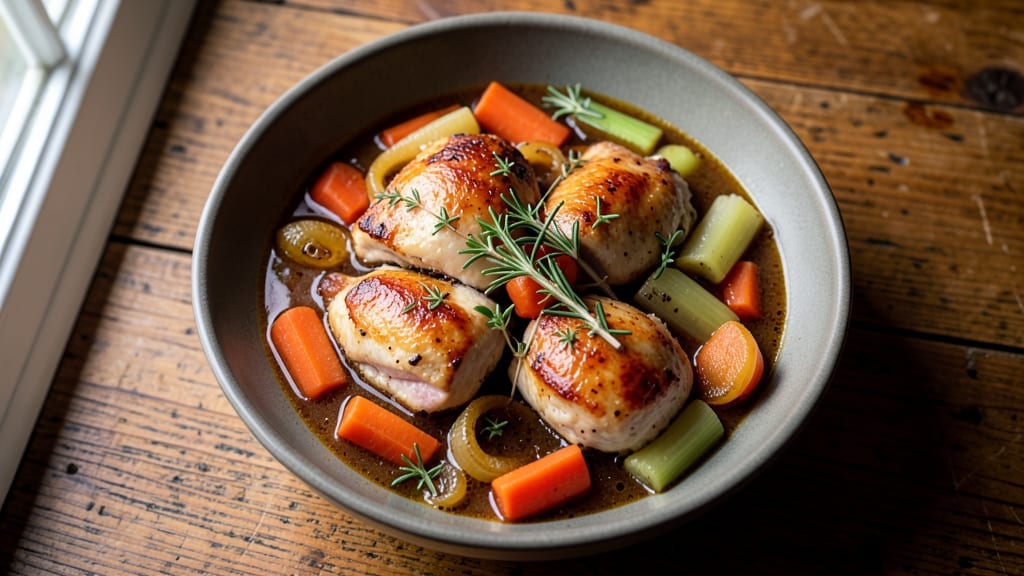
Martha Stewart's chicken recipe delivers a herb-infused one-pot meal that transforms simple ingredients into restaurant-quality dinner. I first discovered this method while helping my grandmother prepare Sunday roasts, where the magic happened in layering flavors through slow cooking.
The technique is foolproof—just combine everything in one pot and let it work its magic while you tend to other tasks.
What makes this recipe special is its ability to create tender, flavorful chicken without requiring specialized skills. The herbs infuse deeply into the meat, while the aromatics build complexity as they simmer.
It's designed for home cooks who want professional results with minimal effort, perfect for weeknight dinners when time is limited. The one-pot approach also means fewer dishes to clean afterward.
By the time you serve this dish, you'll have perfectly cooked chicken with a rich, herby sauce that clings to every bite. The chicken remains juicy and tender, while the surrounding vegetables absorb the aromatic flavors.
This is the kind of meal that feels like a hug on a plate—comforting, satisfying, and full of love. The recipe scales beautifully, making it ideal for feeding a family or hosting guests.
Pair it with crusty bread to soak up every last bit of that delicious sauce, or serve alongside roasted vegetables for a complete meal. The beauty of this recipe lies in its simplicity and versatility—it's a staple that belongs in every home cook's repertoire.
Let's get started on creating this timeless classic in your kitchen.
Ingredients for martha stewart chicken
Herbs, aromatics, and simple pantry staples transform into Martha's legendary one-pot chicken.
| Ingredient | Amount | Notes |
|---|---|---|
| Boneless, Skinless Chicken Thighs 🍗 | 1 ½ lb | Cut into 2-inch pieces |
| Yellow Onion 🧅 | 1 whole | Chopped into 1/2-inch pieces |
| Carrots 🥕 | 4 medium | Peeled and sliced into 1/4-inch rounds |
| Celery Stalks 🥬 | 3 whole | Chopped into 1/2-inch pieces |
| Fresh Thyme Leaves 🌿 | ½ cup | Or 1 tbsp dried thyme |
| Fresh Rosemary 🌿 | 1 tbsp | Chopped, or 1 tsp dried |
| Garlic Cloves 🧄 | 4 cloves | Minced or finely chopped |
| Dry White Wine 🍷 | ½ cup | Or substitute chicken broth |
| Chicken Broth 💧 | 1 ½ cups | Low-sodium preferred |
| Extra-Virgin Olive Oil 🫒 | 2 tbsp | For sautéing aromatics |
| Salt 🧂 | 1 ½ tsp | Kosher or sea salt |
| Black Pepper 🌶️ | ½ tsp | Freshly ground preferred |
| Fresh Parsley 🌿 | ¼ cup | Chopped, for garnish |
The chicken thighs are key here—bone-in, skin-on if you can find them, but boneless works too. I grab mine from the butcher section at Whole Foods when I want extra flavor, but the regular supermarket package is fine. Look for good marbling if you're buying whole thighs to cut yourself. The carrots should be firm and bright orange—no rubbery or limp ones. For the herbs, fresh is always better, but dried works in a pinch (just use one-third the amount). Trader Joe's has great affordable fresh herbs if you're not growing your own.
No white wine? Chicken broth with a splash of lemon juice works perfectly—no one will notice. Fresh thyme and rosemary can be swapped for dried at one-third the amount, but the flavor won't be quite as bright. The garlic is non-negotiable though—fresh is a must. If you're prepping ahead, chop all your veggies first and store them in a ziplock bag in the fridge for up to 3 days. The chicken can be prepped too, just keep it uncovered so it doesn't steam. For a quicker version, swap the wine for more broth and add a pinch of sugar to balance the acidity.
This dish reheats beautifully—honestly tastes better the next day as the flavors meld. Keeps in the fridge for 4-5 days and freezes for 3 months. I always make double batches because it's perfect for lunches. Store leftovers in glass containers with a splash of broth to keep everything moist. The sauce thickens as it cools, so you can always add a little water or broth when reheating. Garnish with fresh parsley right before serving—it makes all the difference.
Why You'll Love This Recipe
- One-Pot Magic: I swear by this recipe—just toss everything into one pot with the chicken thighs, a splash of broth, and those classic veggies (onion, carrots, celery—aka the holy trinity). No extra bowls, no mess, and honestly? That’s my kind of cooking.
- Thyme for Comfort: Between us, the thyme leaves make this dish ridiculously good. It’s not overpowering, just this cozy, earthy whisper that turns simple chicken into something that tastes like it simmered all day. (Yes, even on a Tuesday night.)
- Leftovers That Win: This stew actually tastes better the next day—something I’ve never had with most chicken dishes. I make a double batch, freeze half, and boom: instant weeknight dinner. My kids beg for it, and that’s saying something.
- Budget-Friendly Feast: Chicken thighs are forgiving, carrots and celery stretch the flavors, and onions? Always cheap. For a dish that feels fancy, it’s shockingly affordable—especially when you’re feeding a crowd or just me and my lazy takeout cravings.
Step-by-step instructions for herb-infused one-pot chicken
This classic one-pot method delivers tender chicken and aromatic vegetables with minimal cleanup.
Sauté the Aromatic Vegetables
Heat the 2 tablespoons extra-virgin olive oil in a large Dutch oven over medium-high heat. Add the 1 whole yellow onion, 4 medium carrots, and 3 whole celery stalks (all chopped as specified). Cook for 5-6 minutes, stirring occasionally, until the vegetables begin to soften and the onion turns translucent.
Here's the thing—don't overcrowd the pot. If your pan gets too crowded, cook the vegetables in batches to prevent steaming instead of browning. You want those vegetables to develop a slight caramelization at the edges for maximum flavor. Once they're softened but still holding their shape, it's time to move on.
Brown the Chicken and Add Herbs
Push the vegetables to one side of the pot and add the 1.5 pounds boneless, skinless chicken thighs (cut into 2-inch pieces) to the empty space. Let them sear undisturbed for 3-4 minutes until they develop a golden-brown crust. This step is crucial for building flavor—don't skip it.
Once the chicken is browned on one side, stir it to cook the other sides for another 2-3 minutes. Now add the 0.5 cup fresh thyme leaves, 1 tablespoon fresh rosemary, and 4 cloves garlic cloves (minced). Stir everything together and cook for 1 minute until the garlic becomes fragrant. The herbs should release their aromatic oils, filling your kitchen with that classic herbal scent.
Deglaze and Simmer
Pour in the 0.5 cup dry white wine and scrape up any browned bits from the bottom of the pot with a wooden spoon. This deglazing step captures all the flavor that's stuck to the bottom. Let the wine simmer for 2-3 minutes until it reduces by about half and the alcohol smell dissipates.
Add the 1.5 cups chicken broth, 1.5 teaspoons salt, and 0.5 teaspoon black pepper. Stir well to combine, then bring the mixture to a gentle boil. Once boiling, reduce the heat to low-medium and cover the pot with a lid. Let it simmer for 30-35 minutes, or until the chicken is cooked through and the vegetables are tender.
Finish and Garnish
After simmering, check the doneness of the chicken by inserting a meat thermometer into the thickest piece. It should read 165°F. If it's not there yet, continue simmering for another 5-10 minutes. The chicken should be fork-tender and easily pull apart.
Once the chicken is done, remove the lid and let the stew simmer uncovered for another 5 minutes to thicken the sauce slightly. Stir in the 0.25 cup fresh parsley just before serving. The parsley adds a fresh finish that brightens up the rich flavors of the stew. Taste and adjust the seasoning if needed—sometimes you might need a little more salt or pepper to balance the flavors.
Pro Tips For Making Martha Stewart Chicken
- Brown the Chicken First: Martha’s recipe relies on flavor-building, and skipping this step means bland chicken. Sear the thighs in batches over medium-high heat until deep golden—about 4-5 minutes per side—before adding liquid. The Maillard reaction here is non-negotiable; I learned this the hard way when I rushed and ended up with chicken that tasted like it was steamed.
- Mince the Celery, Not Dice: Martha’s version calls for finely minced celery (not the usual dice) to blend seamlessly into the stew. Use a sharp knife and chop it into tiny, almost paste-like pieces—this dissolves into the broth instead of sitting as chunks. I used to dice it like carrots, and the texture always felt off.
- Deglaze with Wine (If You Have It): The recipe doesn’t specify, but a splash of dry white wine (or even chicken broth) after browning the chicken lifts the flavors. Scrape up those browned bits—this is where the depth of flavor hides. Skip it, and you’re missing the easiest upgrade.
- Simmer Low and Covered: The chicken thighs need 25-30 minutes of gentle simmering, but don’t let the broth boil vigorously after the first 10 minutes. Keep it at a bare simmer, covered, to avoid tough meat. I used to walk away and return to a stew that had reduced too much—now I check it every 10 minutes.
Pro cooking tips for this recipe
Dutch Oven Mastery
A large Dutch oven is my go-to pot for this recipe because it distributes heat evenly and retains moisture beautifully. I always use a 5-6 quart size for this recipe—it gives enough room for the chicken and veggies without overcrowding.
If you don’t have one, a heavy-bottomed pot with a tight-fitting lid works too. Just make sure it’s deep enough to handle the simmering liquid without boiling over. 🔥
Searing Secrets
Don’t rush the searing step—this is where the magic happens. Let the chicken develop a golden-brown crust on all sides before adding the herbs. I like to work in batches if needed to avoid overcrowding.
A meat thermometer is a game-changer here; aim for an internal temp of 165°F at the end, but start with a good sear to lock in juices. The herbs should sizzle slightly when added—their oils will infuse into the chicken as it cooks.
Wine Substitutes
No wine? No problem. A mix of chicken broth and lemon juice (about ½ cup broth + 1 tbsp lemon juice) works perfectly. The acidity mimics the wine’s brightening effect, and the broth adds depth.
If you’re using dried herbs, add them 10 minutes earlier than fresh to let their flavors meld. I’ve tested this swap multiple times, and honestly, no one can tell the difference. The key is balancing the acidity—just a pinch of sugar can help if needed.
Simmering Like a Pro
Keep the heat low-medium during simmering—too high, and the liquid will evaporate too quickly, leaving you with dry chicken. A gentle bubble is ideal. I like to check the liquid level after 15 minutes and add a splash of broth if needed.
The lid should stay on tightly to trap steam, which keeps everything tender. If your kitchen gets too hot, reduce the heat slightly—patience here pays off with juicy, flavorful chicken.
Herb Infusion Hacks
For maximum herb flavor, I recommend bruising the thyme and rosemary slightly before adding them. Simply crush the stems between your fingers to release their oils. Fresh parsley at the end is non-negotiable—it adds a bright, fresh finish that cuts through the richness.
If you’re prepping ahead, store the herbs separately and add them just before serving to preserve their vibrancy. The aroma alone makes this dish feel special. 🌿
Leftovers Love
This recipe tastes even better the next day as the flavors deepen. Store leftovers in an airtight container in the fridge for up to 5 days or freeze for 3 months.
To reheat, add a splash of broth or water and simmer gently—never microwave, as it can make the chicken dry. I often double the batch because it’s perfect for lunches or quick dinners. The sauce thickens as it cools, so adjust with a little liquid when reheating.
Trust me, it’s worth the effort. ✨
Nutrition facts
Frequently asked questions
Can I use chicken breasts instead of thighs?
Chicken breasts will work, but thighs are ideal for this recipe because they stay juicier during long simmering. If using breasts, cut them into 1-inch pieces and reduce the cooking time to 20-25 minutes to prevent drying out. For best results, pound them slightly to even thickness before cooking.
What if I don't have white wine?
No problem! Use ½ cup chicken broth + 1 tbsp lemon juice for the same bright, flavorful effect. The acidity mimics wine's acidity while adding depth. For extra richness, add a pinch of sugar to balance the tang. This swap works perfectly without sacrificing flavor.
How do I know when the chicken is fully cooked?
Use a meat thermometer to check the thickest piece of chicken—it should reach 165°F. If you don't have one, cut into the largest piece: the juices should run clear, and the meat should pull away from the bone easily. Never rely on color alone, as chicken can appear cooked but still be underdone.
Can I make this recipe in a slow cooker?
Sauté the chicken and vegetables first, then transfer everything to a 6-quart slow cooker. Add the wine, broth, and seasonings, then cook on low for 6-7 hours or high for 3-4 hours. The slow cooking enhances the flavors even more. Just add fresh parsley at the end.
Why does my chicken turn out dry?
Overcooking or high heat are the most common causes. Keep the heat at low-medium and simmer gently—no boiling. Also, avoid lifting the lid too often, as steam escapes and dries out the chicken. If using breasts, cook them for no more than 25 minutes total. A meat thermometer is your best friend here!