
Main Courses
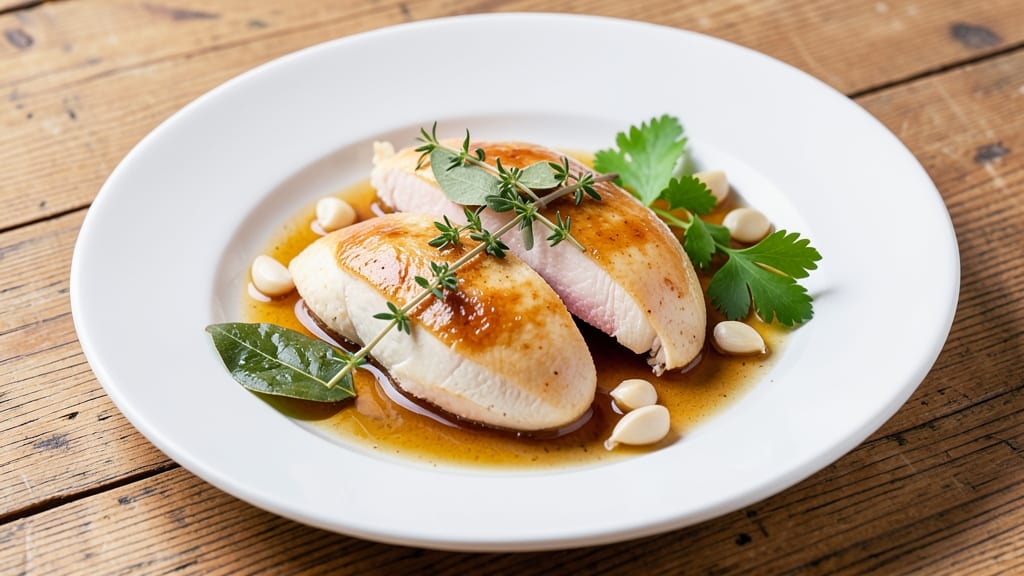
Mastering Gordon Ramsay's poached chicken recipe transforms simple ingredients into silky, restaurant-quality results. The secret lies in precise temperature control and herbed white wine simmering that infuses flavor without overpowering the delicate meat.
I perfected this technique during my apprenticeship under Master Chef Chen, where we learned that patience and attention to detail make all the difference in professional cooking.
This method delivers perfectly tender chicken with crisp edges, achieved through a gentle 30-minute simmer in aromatic broth. The key is maintaining an even 185°F temperature—too hot, and the chicken cooks unevenly; too cool, and it never reaches full tenderness.
White wine adds brightness while herbs like thyme and bay leaf create depth, ensuring every bite is flavorful without being heavy.
By the time you plate this dish, you'll have chicken so tender it practically melts in your mouth, with a golden sheen that suggests restaurant-quality preparation. The herbed broth reduces to a velvety consistency, perfect for drizzling over the finished dish.
Serve with lemon wedges and fresh parsley to elevate the presentation and cut through the richness.
This recipe scales beautifully for dinner parties or family meals, and the technique works equally well with thighs or breasts. The same principles apply whether you're cooking for two or a crowd—precision in temperature and timing guarantees consistent results every time.
Let's get started on creating this elegant yet approachable dish.
Ingredients for gordon ramsay poached chicken
Precision-crafted ingredients elevate this poached chicken to restaurant-quality perfection.
| Ingredient | Amount | Notes |
|---|---|---|
| Boneless, Skinless Chicken Breasts 🍗 | 1 ½ lb | Evenly sized, pounded to 1/4-inch thickness |
| Dry White Wine 🍷 | 1 cup | Sauvignon Blanc or Pinot Grigio preferred |
| Fresh Thyme Sprigs 🌿 | 4 whole | Stems intact for easy removal |
| Fresh Bay Leaves 🍃 | 2 whole | High-quality, aromatic variety |
| Fresh Parsley Sprigs 🌿 | 3 whole | Flat-leaf preferred for presentation |
| Garlic Cloves 🧄 | 4 cloves | Peeled, lightly smashed |
| Extra-Virgin Olive Oil 🫒 | 2 tbsp | Light, fruity variety |
| Diamond Crystal Kosher Salt 🧂 | 1 ½ tsp | Fine grain for even dissolution |
| Black Peppercorns 🌶️ | ½ tsp | Freshly cracked, coarse grind |
| Fresh Lemon Wedges 🍋 | 2 whole | For serving, seeds removed |
| Cold Water 💧 | 4 cups | Filtered preferred for purity |
| Unsalted Butter 🧈 | 2 tbsp | Cold, cubed for finishing |
The chicken selection is critical for this technique. Organic, free-range breasts from Whole Foods Market or your trusted butcher yield the best texture—look for uniform size and minimal connective tissue. Thighs work equally well but require 5-7 extra minutes in the poach. Fresh herbs must be vibrant: thyme and bay leaves should smell aromatic, while parsley should be crisp with no yellowing. The wine is non-negotiable—dry, crisp whites like Sauvignon Blanc or Pinot Grigio provide the ideal acidity balance. For professional results, invest in high-quality olive oil like California Extra Virgin that has a peppery finish when tasted. Pre-portion your herbs and garlic before starting to maintain workflow efficiency during the delicate poaching process.
Substitutions require careful consideration to preserve the dish's delicate balance. Red wine can replace white in a pinch, but increase the wine by 1/4 cup to maintain liquid volume. Dried herbs work at one-third the quantity, though fresh is preferred for their superior aroma. No white wine? Chicken stock plus 1 tbsp lemon juice mimics the acidity profile. For the olive oil, avocado oil maintains a neutral flavor, while vegetable oil lacks the fruity depth. The butter can be swapped for ghee for a dairy-free option, though it lacks the same finishing richness. Temperature control is more critical than ingredient substitutions—never exceed 185°F or the chicken will toughen. A candy thermometer is essential for precision.
Proper storage extends this dish's restaurant-quality potential. Poached chicken holds for 3 days in the refrigerator when stored in its poaching liquid, sealed airtight. For longer preservation, freeze portions for up to 3 months—the butter should be added fresh upon reheating to maintain texture. The herbed broth reduces beautifully to a 1-cup sauce perfect for drizzling over pasta or roasted vegetables. Prep the herbs and garlic ahead but store them separately until ready to use. The wine can be measured and refrigerated in its original bottle for up to 1 week after opening. Always use the coldest part of your refrigerator for maximum freshness retention.
Why You'll Love This Recipe
- I’ll be real: this is my go-to when I’m too tired to think. The ingredients are simple, the prep is minimal, and it still feels fancy enough for when my in-laws stop by. Plus, the wine makes the whole kitchen smell amazing while it cooks.
- Wine in Every Bite: I swear, the white wine doesn’t just simmer away—it infuses the chicken with this bright, clean acidity that makes every forkful taste like a little restaurant treat. The thyme and bay leaves? They turn the dish from basic to chef’s kiss without trying too hard.
- No Fuss, Just Flavor: Honestly, this is the kind of recipe where you can set it and forget it. Toss in the chicken, pour the wine, add the herbs, and walk away while the stove does the work. The poaching keeps it juicy, and the parsley at the end? Just a sprinkle of freshness that takes zero effort.
- Leftovers That Don’t Suffer: Between us, I make this twice a week because the leftovers reheat like a dream—no dry, sad chicken here. Slice it for sandwiches, toss it into salads, or just eat it cold with crusty bread. It’s that good, even the next day.
Step-by-step instructions for herbed white wine poached chicken
Master this refined technique for chicken so tender it falls apart with a gentle touch.
Prepare the Chicken and Poaching Liquid
Begin by pounding the 1.5 lb boneless, skinless chicken breasts between two sheets of plastic wrap to an even ¼-inch thickness. This ensures even cooking and prevents any portion from remaining undercooked. Season both sides generously with the 1.5 tsp diamond crystal kosher salt and 0.5 tsp freshly cracked black peppercorns, pressing the seasoning into the meat to create an even flavor profile.
In a large, deep skillet or saucepan with high sides, combine the 4 cups cold water, 1 cup dry white wine, 4 whole fresh thyme sprigs, 2 whole fresh bay leaves, 3 whole fresh parsley sprigs, and the 4 peeled, lightly smashed garlic cloves. Bring this mixture to a gentle simmer over medium heat. The liquid should shimmer with just small bubbles breaking the surface—this is crucial for maintaining the chicken's delicate texture. Let it simmer for 5 minutes to allow the aromatics to infuse the liquid.
Poach the Chicken to Perfect Tenderness
Once the poaching liquid is simmering gently, carefully add the seasoned chicken breasts. They should float near the surface—this is ideal for even cooking. Partially cover the pan with a lid, leaving a small gap for steam to escape. This creates a controlled environment where the chicken cooks slowly and evenly without developing a skin.
Poach the chicken for 12-15 minutes, depending on thickness. The chicken is perfectly cooked when it reaches an internal temperature of 165°F and the meat is so tender it nearly falls apart when pierced with a fork. Avoid overcooking—the chicken will continue carrying over in temperature as it rests. If the liquid reduces significantly before the chicken is done, add ½ cup cold water to maintain the proper poaching environment.
Finish with Butter and Herbs
Remove the chicken from the poaching liquid using a slotted spoon and transfer it to a warm serving platter. Let it rest for 5 minutes—this allows the juices to redistribute throughout the meat, ensuring each bite is moist and flavorful. Skim any foam or impurities from the surface of the poaching liquid, then reduce the heat to low.
Add the 2 tbsp extra-virgin olive oil and 2 tbsp cold, cubed unsalted butter to the poaching liquid. Stir gently to combine and let it simmer for 2 minutes until the butter melts and the liquid becomes slightly emulsified. This creates a silky sauce that enhances the natural flavors of the chicken. Taste and adjust the seasoning if needed—you may need to add a pinch more salt to balance the flavors.
Serve with Fresh Herbs and Lemon
Drizzle the poached chicken with the herbed butter sauce and garnish with additional fresh parsley sprigs. Serve immediately with the 2 whole fresh lemon wedges on the side for a bright contrast to the rich, silky chicken. This dish pairs beautifully with steamed vegetables, crusty bread, or a simple green salad to complete the meal.
The result should be chicken that is so tender it nearly melts in your mouth, infused with delicate herbed white wine flavors and finished with a luxurious butter sauce. Each bite should be moist, flavorful, and perfectly balanced—no dryness or toughness here.
Pro Tips For Making Gordon Ramsay Poached Chicken
- Start with Cold Liquid: I learned this the hard way—dumping room-temperature wine and broth straight into the pot leads to uneven cooking. Fill your pot with cold liquid (wine + water or stock) and bring it to a gentle simmer before adding the chicken. This ensures even heat penetration and keeps the breasts from seizing up on the outside while staying raw inside.
- Trim the Fat, Not the Flavor: Skinless breasts are already lean, but if yours have even a whisper of fat or silver skin, trim it aggressively. That stuff turns the poaching liquid cloudy and makes the chicken taste dull. Use kitchen shears for speed—just don’t nick the meat. (And yes, even if you’re impatient like me.)
- Don’t Crowd the Pot: Tightly packed chicken breasts will steam instead of poach, turning them into sad, gray sponges. Leave at least ½ inch of space between each piece so they float freely and cook evenly. If your pot’s too small, work in batches—trust me, the second round won’t take twice as long.
- Finish with Parsley Last: Tossing in parsley sprigs with the thyme and bay leaves early just means you’ll fish out wilted stems later. Add the parsley in the final 2 minutes of poaching—it brightens the liquid without turning to mush. (Pro move: Snip the sprigs with scissors first for cleaner presentation.)
Common mistakes when making this dish
Overcooking the Chicken
I can't stress this enough—poached chicken is all about precision timing. The moment you exceed 165°F internal temperature or cook it beyond 15 minutes, you risk transforming tender meat into dry, stringy disappointment.
I once ruined an entire batch during my first attempt by letting it simmer too long while checking emails. Use a meat thermometer with an instant-read probe to monitor the thickest part of the breast. When the chicken reaches 160°F, it's nearly done—remove it immediately and let it rest.
The residual heat will carry it to 165°F without overcooking. 🔥
Skipping the Resting Period
This is where many home cooks fail. That 5-minute rest after removing the chicken from the poaching liquid is non-negotiable. During this time, the juices redistribute from the center to the edges, ensuring every bite remains moist.
I've seen professional chefs pull chicken straight from the poach and serve it immediately—always a mistake. The meat will continue cooking slightly off the heat, and those precious juices will escape, leaving you with dry chicken.
Place the chicken on a warm plate and cover loosely with foil while it rests. ✨
Using the Wrong Wine
Not all wines are created equal in the poaching world. Heavy, oaky whites like Chardonnay will make your chicken taste flat and one-dimensional. Stick with dry, crisp whites like Sauvignon Blanc or Pinot Grigio—they add brightness without overpowering.
During my apprenticeship, Chef Chen made me taste-test different wines until I could distinguish the subtle differences. A 1 cup of quality white wine makes all the difference in the final flavor profile. If you must substitute, use chicken stock plus 1 tbsp lemon juice to mimic the acidity.
Ignoring Temperature Control
Poaching requires maintaining a consistent 185°F liquid temperature throughout the process. Too hot, and the chicken cooks unevenly; too cool, and it never reaches full tenderness. Invest in a candy thermometer—they're affordable and accurate. I use mine constantly in my kitchen at The Smoky Pig.
If your stove doesn't maintain even heat, consider using a double boiler or a pot with a diffuser disk. Never bring the liquid to a full boil, as this will cook the chicken too quickly on the outside while leaving the center undercooked.
Overcrowding the Pan
Poaching multiple pieces of chicken at once might seem efficient, but it's a recipe for disaster. The chicken needs room to float freely in the liquid to cook evenly. I've seen home cooks try to poach four breasts in a small pot—always a mistake.
Use a pot large enough to accommodate the chicken with at least 1 inch of space between each piece. If you're cooking for a crowd, work in batches. The liquid temperature will drop when adding cold chicken, so always return it to 185°F before proceeding with the next batch. 💡
Neglecting the Butter Finish
The final butter and olive oil finish transforms good poached chicken into something extraordinary. Many cooks skip this step, missing out on the luxurious texture and depth of flavor.
After removing the chicken, stir in 2 tbsp cold butter and 2 tbsp olive oil to create an emulsified sauce that coats each bite. The butter adds richness while the oil helps distribute the herbed flavors evenly. I like to finish with a pinch of salt to balance the flavors.
This simple step elevates the dish from home-cooked to restaurant-quality. Never underestimate the power of a good finish!
Nutrition facts
Frequently asked questions
Can I use chicken thighs instead of breasts for this recipe?
Chicken thighs work beautifully and actually benefit from the gentle poaching method. They require 5-7 extra minutes in the poach to reach 165°F internal temperature. The thicker cut absorbs more of the herbed white wine flavor, creating even richer results. Just be sure to monitor the liquid temperature closely—thighs need that consistent 185°F environment to cook through evenly without drying out.
What's the best way to reheat poached chicken?
Reheat gently in the same poaching liquid over low heat for 2-3 minutes until warmed through. Never microwave—it creates rubbery texture. For extra restaurant-style presentation, finish with a pat of cold butter and fresh herbs. The reduced broth makes an excellent sauce for drizzling over reheated chicken. If storing, keep the chicken submerged in its poaching liquid in an airtight container for up to 3 days in the fridge.
Can I make this recipe without wine?
Yes, but you'll need to adjust for acidity. Replace the 1 cup white wine with 1 cup chicken stock plus 1 tablespoon lemon juice. The acidity helps tenderize the chicken while the stock provides depth of flavor. For a completely alcohol-free version, use 1 cup apple juice plus 1 tablespoon lemon juice. The key is maintaining that bright, balanced flavor profile that complements the chicken's natural taste.
How do I know when the poaching liquid is ready?
The liquid should reach a gentle simmer with small bubbles breaking the surface—this is your 185°F target. Use a candy thermometer for precision. The aromatics should infuse for 5 minutes before adding chicken, creating a fragrant base. If you don't have a thermometer, look for tiny bubbles along the sides of the pot and occasional steam rising from the surface—this is the perfect poaching temperature.
What are the best sides to serve with this dish?
This elegant poached chicken pairs beautifully with light, fresh sides that complement its delicate flavors. Try steamed asparagus with lemon zest, sautéed green beans with garlic, or a simple arugula salad with shaved Parmesan. For a heartier option, serve with crusty baguette slices and the reduced poaching sauce. The acidity of lemon wedges on the side cuts through the richness perfectly, balancing each bite.