
Main Courses
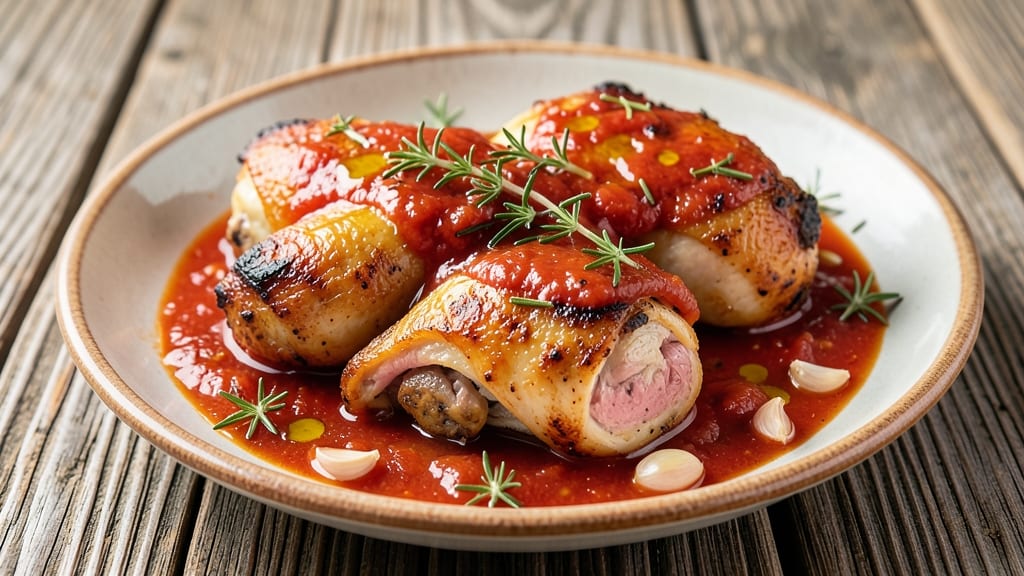
Baked chicken thighs in tomato sauce transform simple ingredients into a restaurant-worthy meal with minimal effort. The secret lies in slow-browning the chicken first to develop deep flavor, then simmering it in a rich, herbed tomato sauce until tender and golden.
This technique ensures juicy meat with a crisp herbed crust that holds up beautifully—no dry, tough chicken here.
What makes this recipe stand out is the balance of simplicity and depth. You'll start with bone-in thighs for maximum flavor, then build a sauce from canned tomatoes, garlic, and fresh herbs that simmers until thick and aromatic.
The key steps—browning, deglazing, and slow cooking—create layers of taste that turn a weeknight dinner into something special without requiring fancy techniques.
The result is chicken thighs with crispy, herbed edges and fork-tender meat that falls apart slightly when cut, all swimming in a velvety tomato sauce. The aroma alone will have everyone gathering at the table, and the sauce clings perfectly to the chicken, making every bite flavorful and satisfying.
This dish pairs beautifully with crusty bread to soak up every last drop.
Perfect for feeding a family or hosting dinner guests, this recipe delivers professional-quality results with just one baking dish and 45 minutes of active time. The sauce can be made ahead and reheated, making it ideal for meal prep or when you want to impress without stress.
Let's get started on creating this comforting, flavorful dish.
Ingredients for baked chicken thighs in tomato sauce
Bone-in thighs, aromatic herbs, and simple pantry staples create restaurant-quality flavor with minimal effort.
| Ingredient | Amount | Notes |
|---|---|---|
| Bone-In Chicken Thighs 🍗 | 1 ½ lb | Skin-on for crispy edges |
| Canned Crushed Tomatoes 🍅 | 14 ½ oz | San Marzano preferred |
| Garlic Cloves 🧄 | 4 cloves | Minced for sauce base |
| Fresh Rosemary 🌿 | ¼ cup | Chopped, stems removed |
| Fresh Thyme 🌿 | ⅛ cup | Leaves only, chopped |
| Olive Oil 🫒 | ¼ cup | Extra-virgin for richness |
| Dried Oregano 🍃 | 1 tsp | Or 1 tbsp fresh |
| Salt 🧂 | 1 ½ tsp | Kosher or sea salt |
| Black Pepper 🌶️ | ½ tsp | Freshly ground preferred |
| Red Wine 🍷 | ½ cup | Dry variety like Cabernet |
| Chicken Broth 💧 | ½ cup | Low-sodium preferred |
| All-Purpose Flour 🌾 | 2 tbsp | For dredging chicken |
| Fresh Parsley 🌿 | ⅛ cup | Chopped for garnish |
The bone-in thighs are non-negotiable here—they stay juicy while the skin crisps beautifully. Look for thighs with good marbling at the grocery store's meat counter, and ask for them bone-in. Trader Joe's and Whole Foods often have excellent quality, but any reputable butcher will do. Fresh herbs make all the difference, so grab rosemary and thyme sprigs instead of dried if you can. The crushed tomatoes? San Marzano is ideal for its sweetness, but any good-quality canned tomatoes will work. If you're short on time, pre-minced garlic saves steps, but fresh is always better.
No red wine? Substitute extra chicken broth—just add 0.25 cup more. Fresh herbs wilt fast, so dried oregano at half the amount works in a pinch. The flour is just for dredging the chicken before browning—skip it if you prefer a less crispy crust. For the chicken broth, low-sodium versions prevent over-salting, and homemade is best if you have it. If your tomatoes are watery, drain them first. The parsley is purely for garnish, but if you're out, fresh basil works too. This sauce thickens as it bakes, so don't worry if it looks thin at first.
The chicken thighs keep best in the fridge for 2 days before cooking, but you can prep the sauce ingredients ahead and store them separately for up to 5 days. Once baked, the dish reheats beautifully—just warm the sauce gently and cover the chicken to keep it moist. The sauce actually tastes better the next day as the flavors meld. For meal prep, portion the chicken and sauce into containers and freeze for up to 3 months. The herbs and wine can be omitted until reheating if prepping ahead, but add them back just before serving for maximum freshness.
Why You'll Love This Recipe
- One-Pan Magic: I swear by this recipe—just toss the thighs, sauce, and herbs on a sheet pan, and you’re done. No pots, no pans, no stress. The tomatoes caramelize right alongside the chicken, so you get that deep, sticky glaze without lifting a finger.
- Herb-Packed Punch: That rosemary and thyme? They’re not just garnish—they infuse the chicken until every bite tastes like a Mediterranean vacation. The garlic? Oh, it’s there, but it’s balanced—no overpowering bite, just rich, savory depth that makes you reach for seconds.
- Weeknight to Weekend: This dish works for lazy Tuesday dinners or impressing guests on Saturday. Serve it with crusty bread for a casual meal, or plate it with pasta for a heartier spread. Honestly, I’ve even used the leftovers to stuff into pitas the next day—zero waste, all flavor.
- Budget-Winning Leftovers: Bone-in thighs keep costs down, and the sauce stretches for days. Reheat them in the oven or microwave, and they taste just as good cold in sandwiches. Between us, this is my go-to for feeding the family without breaking the bank—or spending hours in the kitchen.
Step-by-step instructions for baked chicken thighs in tomato sauce
Here's the professional method for tender, herb-crusted chicken thighs bathed in a rich tomato-wine sauce.
Prepare the Chicken Thighs for Perfect Crispiness
Pat the bone-in chicken thighs completely dry with paper towels—this is crucial for crispy skin. I like to work with them skin-side down on a cutting board to avoid tearing the delicate membrane. Season both sides generously with 1.5 teaspoons salt and 0.5 teaspoon black pepper, pressing the seasoning into the meat so it adheres well.
Next, dredge the thighs lightly in 2 tablespoons all-purpose flour, shaking off any excess. This creates a golden crust that locks in moisture while adding texture. Place them skin-side up in a single layer on a parchment-lined baking sheet. Let them sit at room temperature for 15 minutes before baking—this ensures even cooking from the start.
Build the Herb-Infused Tomato Sauce Base
In a large oven-safe skillet, heat 0.25 cup olive oil over medium heat. Add the 4 minced garlic cloves and sauté for 30 seconds until fragrant—don't let it brown or it'll turn bitter. Stir in the 0.25 cup chopped fresh rosemary and 0.125 cup chopped fresh thyme, cooking for another 1 minute until the herbs release their aromatic oils.
Pour in the 14.5 ounces canned crushed tomatoes and 1 teaspoon dried oregano, stirring to combine. Let this mixture simmer gently for 5 minutes until slightly thickened. This step develops the sauce's depth of flavor before the chicken joins.
Sear the Chicken and Deglaze the Pan
Carefully transfer the seasoned chicken thighs to the skillet with the tomato mixture. Nestle them skin-side down into the sauce, spooning some of the mixture over the tops. Increase heat to medium-high and cook for 5-6 minutes until the skin begins to crisp and turn golden brown.
Here's where the magic happens: pour in the 0.5 cup red wine and 0.5 cup chicken broth, scraping up any browned bits from the bottom of the pan. These bits, called fond, pack intense flavor that will infuse your sauce. Let the liquid simmer for 2 minutes until slightly reduced.
Slow-Bake for Tender, Saucy Perfection
Transfer the skillet to a preheated 375°F oven and bake uncovered for 35-40 minutes. The thighs are done when they reach an internal temperature of 165°F and the skin is crispy and golden. I check the temperature with an instant-read thermometer inserted into the thickest part of the meat.
During the last 10 minutes of baking, the sauce will thicken beautifully as it reduces. If you prefer an even richer sauce, you can transfer the thighs to a plate, return the skillet to the stovetop, and simmer the sauce alone for 5 minutes to reduce further. Just be careful not to overcook the chicken.
Rest and Serve with Fresh Herbs
Remove the chicken from the oven and let it rest for 5 minutes before serving. This resting period allows the juices to redistribute throughout the meat, ensuring each bite stays moist and flavorful. During this time, you can garnish the dish with 0.125 cup chopped fresh parsley for a pop of color and freshness.
Serve the chicken thighs directly from the skillet, spooning the rich tomato-wine sauce over the top. The combination of crispy skin, tender meat, and aromatic sauce creates a restaurant-quality dish that's perfect over polenta, crusty bread, or with a side of roasted vegetables. The herbs in the sauce will continue to infuse their flavors as the dish sits, making every bite even more delicious.
Pro Tips For Making Baked Chicken Thighs In Tomato Sauce
- SEAR FIRST, BAKE SECOND: I learned this the hard way—skipping the sear means bland, soggy skin instead of crispy, golden edges. Heat a skillet until it’s smoking hot, then brown the thighs skin-side down for 4-5 minutes before transferring to the baking dish. The extra effort locks in flavor and texture that baking alone can’t match.
- STRIP THYME STEMS: Fresh thyme’s tiny leaves pack the punch, but those tough stems turn to mush in tomato sauce. Pinch the stems between your fingers and pull them out like taffy—no need for scissors, and you’ll end up with a sauce that tastes like it simmered for hours, not 30 minutes.
- DON’T OVERCROWD THE PAN: I used to jam all four thighs into one baking dish, thinking it’d cook faster. Wrong. They steam instead of crisp, and the sauce turns watery. Space them ½ inch apart on the tray—even if it means two batches—and you’ll get thighs with caramelized skin and a sauce thick enough to coat the back of a spoon.
- SALT THE TOMATO SAUCE: The crushed tomatoes in this recipe are already salty, but that doesn’t mean you should skip seasoning the sauce itself. Taste it raw—yes, really—and add a pinch of salt, a squeeze of lemon, or even a splash of pasta water if it’s too thick. Your future self will notice the difference when the dish comes together.
Regional styles of these flavors
Italian Comfort Style
In Italy, this dish transforms into a rustic Cotoletta alla Milanese twist with tomato sauce. Start by pounding bone-in chicken thighs to an even thickness, then coat them in flour, egg wash, and breadcrumbs for a crispy crust.
Use San Marzano tomatoes and white wine (like Pinot Grigio) instead of red, along with lemon zest for brightness. Finish with fresh basil and a sprinkle of Parmigiano-Reggiano for that authentic Italian touch. 🍷
Southern U.S. Twist
For a Southern-inspired version, swap the red wine for apple cider and add smoked paprika and a pinch of cayenne to the sauce. Use buttermilk instead of flour for dredging the chicken, and finish with crispy fried onions on top.
Serve with cornbread or mashed potatoes for a hearty meal. I love adding a splash of hot sauce at the table for those who enjoy heat. 🌶️
Mediterranean Herb Focus
In Mediterranean regions, this dish often features fresh oregano, dill, and lemon in the sauce. Use olive oil as the base and add sun-dried tomatoes for extra depth. Garnish with feta cheese and kalamata olives for a bright, tangy finish.
The herbs are usually added fresh at the end to preserve their aroma. This version pairs beautifully with warm pita bread or couscous. 🌿
French Bistro Adaptation
For a French bistro feel, replace the wine with dry vermouth and add shallots to the sauce base. Use herbes de Provence instead of rosemary and thyme, and finish with a splash of cognac for depth.
Serve with crusty baguette and a side of ratatouille for a complete bistro experience. The French version often includes a touch of Dijon mustard in the sauce for complexity. 🥖
Mexican-Inspired Version
Give it a Mexican flair by adding chipotle peppers in adobo, cumin, and a splash of lime juice to the sauce. Swap the rosemary and thyme for cilantro and fresh jalapeños.
Top with avocado slices and crumbled cotija cheese for a fresh, zesty twist. Serve with warm corn tortillas or cilantro-lime rice. 🌶️
Spicy Asian Fusion
For an Asian-inspired take, add ginger, garlic, and a dash of soy sauce to the tomato base. Use hoisin sauce and a splash of rice vinegar for depth, and finish with sesame seeds and sliced green onions.
Serve over jasmine rice or with steamed bok choy for a fusion dish that’s bold and flavorful. 🌶️✨
Nutrition facts
Frequently asked questions
Why do you use bone-in chicken thighs instead of boneless?
Bone-in thighs stay juicier and develop richer flavor during cooking. The bone acts as a natural insulator, keeping the meat moist while the skin crisps beautifully. Plus, the bone adds depth to the sauce as it simmers, creating a more complex taste profile. For best results, always choose thighs with skin-on too!
Can I make this recipe without red wine?
Simply replace the 0.5 cup red wine with an equal amount of chicken broth or apple cider for a similar depth of flavor. The sauce will still develop rich, herby notes—just without the wine's complexity. For extra richness, add 1 teaspoon balsamic vinegar to mimic the wine's acidity.
How do I prevent the chicken skin from burning before the sauce is ready?
Start by patting the thighs completely dry to help crisp the skin faster. Then, sear them skin-side down at medium-high heat for just 5-6 minutes until golden. Once they're browned, immediately pour in the wine and broth to deglaze the pan—this stops further browning while building flavor. If your oven runs hot, reduce the temperature to 350°F during baking.
Can I use dried herbs instead of fresh?
Yes, but adjust the amounts. Use 1 teaspoon dried rosemary and 1 teaspoon dried thyme (about 1/3 the amount of fresh). Toast the dried herbs in the olive oil for 30 seconds before adding tomatoes to wake up their flavors. For oregano, 1 teaspoon dried replaces 1 tablespoon fresh. Fresh herbs add vibrant aroma, but dried works in a pinch!
What's the best way to reheat leftovers?
Gently reheat the sauce in a saucepan over low heat until warm, then place the chicken in a skillet with the sauce. Cover and heat for 5-7 minutes at 350°F to restore crispiness. Avoid microwaving—it makes the skin soggy. For extra flavor, add 1 tablespoon water or broth to the skillet to help steam the chicken while reheating.